
Table of Contents
UpViral has become one of the most popular viral marketing platforms for businesses looking to amplify their reach through referral campaigns and social sharing mechanics. Whether you’re a Shopify store owner, content creator, or marketing agency, understanding UpViral’s pricing structure is essential before committing to the platform. The investment required can vary significantly depending on your business size, growth ambitions, and campaign complexity.
In 2026, the landscape of viral marketing tools continues to evolve, and pricing strategies have become increasingly competitive. Many businesses struggle with determining whether UpViral’s cost justifies the potential return on investment, especially when numerous alternatives exist in the marketplace. This comprehensive guide breaks down exactly what you’re paying for, how the pricing tiers compare, and whether UpViral represents genuine value for your specific business needs.
Throughout this article, we’ll explore the intricate details of UpViral’s pricing model, examine how different business types benefit from various plans, and provide practical insights to help you make an informed decision. Whether you’re considering UpViral for the first time or evaluating a plan upgrade, this guide will equip you with the knowledge needed to maximise your marketing budget effectively.
What Is UpViral Pricing?
UpViral pricing refers to the structured cost model the platform uses to provide access to its viral marketing and referral campaign tools. The platform operates on a subscription-based model with multiple tiers designed to accommodate businesses at different growth stages. Understanding the pricing framework requires examining both the base costs and the additional features included at each level.
“UpViral’s pricing model is designed to scale with your business, ensuring you only pay for the features and capacity you actually need.”
UpViral offers flexibility through tiered plans that range from entry-level options for startups to enterprise solutions for established brands. The pricing structure incorporates variables such as monthly visitor limits, campaign capacity, and advanced features availability. Each tier unlocks specific functionality, from basic referral mechanics to sophisticated analytics and integration capabilities.
UpViral Plans Overview
UpViral typically offers four primary pricing tiers: Starter, Professional, Business, and Enterprise. The Starter plan serves as the entry point for small businesses and solopreneurs testing viral marketing strategies. The Professional tier targets growing businesses requiring more campaign capacity and advanced features. The Business plan suits established brands needing robust analytics and integration options. The Enterprise tier provides customised solutions for large organisations with specific requirements and high-volume campaigns.
Each plan includes different levels of support, campaign limits, and feature access. The progression between tiers reflects increasing functionality rather than simply adding capacity. This means upgrading doesn’t just give you more campaigns—it fundamentally changes what your campaigns can accomplish through enhanced tools and analytics capabilities.
UpViral is a powerful viral marketing tool designed to help businesses grow their email lists and increase engagement through referral campaigns and contests. It leverages social sharing to boost brand visibility and generate leads effectively. Upviral’s Review, on the other hand, is a platform focused on providing in-depth analysis and feedback on various products and services, helping consumers make informed decisions through detailed reviews and ratings. Both tools serve distinct purposes but are valuable for enhancing marketing strategies and customer insights.
Pricing Tiers Explained
The pricing differential between tiers reflects the value proposition of additional features and support levels. Entry-level plans focus on essential viral mechanics and basic reporting, whilst higher tiers introduce advanced segmentation, custom branding options, and priority customer support. The cost per campaign generally decreases as you move to higher tiers, benefiting businesses running multiple simultaneous campaigns.
Pricing also considers your anticipated traffic volume, as each tier accommodates a specific number of monthly visitors. Exceeding these limits typically requires upgrading to the next tier, making it crucial to select a plan that matches your expected audience size. Many businesses find that starting with a lower tier and upgrading as they grow proves more cost-effective than over-investing initially.
Why UpViral Pricing Matters for Your Business
Understanding UpViral pricing directly impacts your marketing budget allocation and overall campaign profitability. The cost structure determines whether viral marketing becomes a viable channel for your business or represents an unnecessary expense. For growth-focused brands, the pricing model can either accelerate scaling efforts or create financial constraints that limit campaign ambition.
| Pricing Tier | Monthly Cost Range | Best For | Campaign Limit | Monthly Visitors |
|---|---|---|---|---|
| Starter | £75 | Solopreneurs, testing | 5–10 | Up to 5,000 |
| Professional | £99–£149 | Growing businesses | 15–20 | Up to 25,000 |
| Business | £299–£399 | Established brands | 50–75 | Up to 100,000 |
| Enterprise | Custom pricing | Large organisations | Unlimited | 500,000+ |
Strategic investment in the right UpViral pricing tier directly correlates with campaign success rates and customer acquisition costs. Selecting a plan that is too restrictive limits your campaign potential, while over-investing in unnecessary features wastes capital that could support other marketing initiatives. The UpViral pricing decision requires careful alignment between your current business stage and growth trajectory.
ROI Considerations for Different Business Types
E-commerce businesses typically see strong returns from UpViral investment, particularly when campaigns drive repeat purchases and customer lifetime value increases. Influencers and content creators benefit from audience growth mechanics, making mid-tier plans often optimal for their needs. Marketing agencies require flexibility and multiple campaign capacity, making Professional or Business tiers more suitable despite higher costs.
Service-based businesses face different ROI calculations than product sellers. Lead generation campaigns may require longer conversion timelines, affecting perceived value. However, businesses with high-margin services often achieve exceptional returns even with modest customer acquisition. The key involves selecting a tier that accommodates your campaign volume without creating unnecessary overhead.
Cost-Benefit Analysis for Growth-Focused Brands
Growth-focused brands should evaluate UpViral pricing against their customer acquisition cost targets and projected lifetime value. A brand acquiring customers worth £500+ in lifetime value can justify significantly higher monthly UpViral investments than businesses with lower-value customers. The cost-benefit analysis becomes clearer when you calculate backwards from desired customer volume to required campaign investment.
Scaling considerations must account for plan limitations at each tier. A brand experiencing rapid growth may find themselves outgrowing their current plan within months, necessitating multiple upgrades. Planning for growth by selecting a tier with headroom prevents disruption to active campaigns and ensures consistent performance during expansion phases. This forward-thinking approach often proves more economical than reactively upgrading when limits are exceeded.
Key Components of UpViral’s Pricing Structure
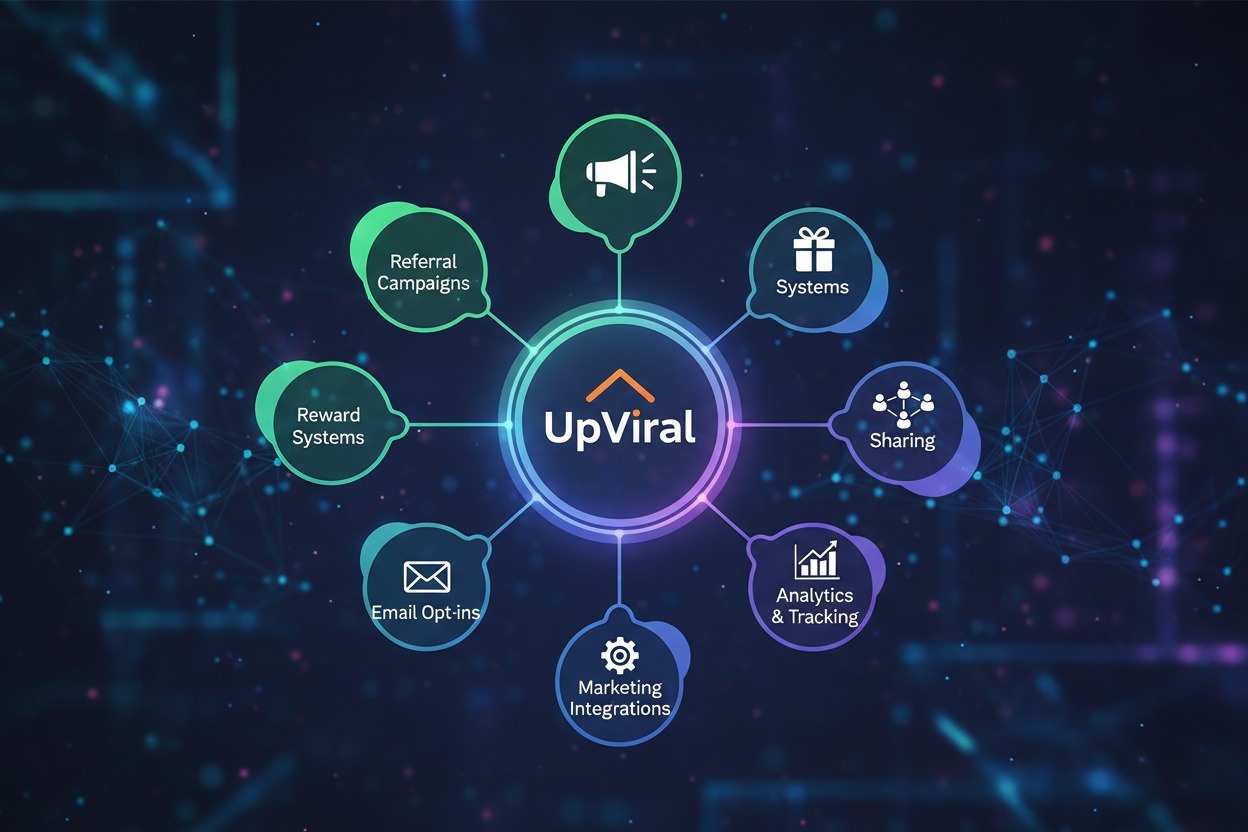
UpViral’s pricing structure comprises several interconnected components that work together to determine your total monthly investment. Understanding each element helps you evaluate whether a particular tier aligns with your business requirements and budget constraints. The platform doesn’t simply charge a flat fee—instead, it builds pricing around specific capabilities and usage limits that directly impact campaign performance.
- Campaign capacity determines how many simultaneous viral campaigns you can run
- Monthly visitor allocation sets the threshold for traffic your campaigns can handle
- Feature access unlocks specific tools like advanced analytics, custom branding, and API integration
- Support tier determines response times and the level of assistance available
- Integration capabilities allow connection with your existing business tools and platforms
- Data retention policies define how long campaign performance data remains accessible
“The true cost of UpViral extends beyond the monthly subscription—it encompasses the value of features you actually utilise and the campaigns you can successfully execute.”
The feature allocation across tiers represents the most significant pricing differentiator. Lower tiers provide essential viral mechanics and basic reporting, whilst higher plans introduce sophisticated segmentation, custom landing pages, and advanced integration capabilities. Each component adds tangible value, but not every business requires every feature.
Feature Allocation Across Price Points
The Starter plan includes fundamental referral mechanics, basic email notifications, and standard analytics dashboards. The Professional tier adds custom branding, advanced segmentation options, and integration with popular email marketing platforms like Mailchimp and ConvertKit. The Business plan introduces API access, dedicated account management, and advanced fraud detection systems. Enterprise solutions provide fully customised feature sets tailored to specific organisational needs.
Feature progression isn’t arbitrary—each tier’s offerings address specific business challenges at that growth stage. Startups don’t require API access or advanced fraud detection initially, making the Starter plan cost-effective. However, as campaigns scale and integration needs emerge, upgrading becomes necessary to maintain operational efficiency and data accuracy.
Hidden Costs and Additional Expenses
Beyond the base subscription, several additional costs may apply depending on your usage patterns. Exceeding your monthly visitor allocation typically triggers overage charges calculated per additional visitor. Custom integrations or API development work often requires additional investment beyond standard plan pricing. Premium support packages, offering priority response times and dedicated support specialists, add to your monthly expenditure.
Transaction fees may apply if you’re using UpViral’s payment processing features for direct sales through campaigns. Whilst the base plan includes standard reporting, advanced analytics packages or custom reporting dashboards sometimes require separate fees. Email sending volume beyond your plan’s allocation may incur additional charges, particularly for businesses running high-frequency campaigns. Understanding these potential expenses prevents budget surprises and allows accurate ROI calculations when evaluating platform investment.
How UpViral Pricing Works in Practice

Implementing UpViral within your marketing workflow involves understanding how billing cycles operate and how your costs scale as your business grows. The practical application of pricing extends beyond simply selecting a tier—it requires ongoing management to ensure you’re optimising your investment and adjusting plans as your needs evolve.
The platform operates on a straightforward monthly subscription model with automatic billing on your chosen billing date. Most businesses pay via credit card, with some enterprise clients arranging alternative payment terms. Your subscription renews automatically unless you manually cancel, providing continuity for active campaigns. The billing cycle resets your monthly visitor allocation and campaign limits, creating predictable monthly expenses for budgeting purposes.
- Select your desired pricing tier based on anticipated visitor volume and feature requirements
- Complete account setup and campaign configuration within your plan’s limitations
- Launch campaigns and monitor performance through your tier’s analytics capabilities
- Track monthly visitor consumption to ensure you remain within allocation limits
- Evaluate performance metrics and ROI at the end of each billing cycle
- Upgrade or downgrade your plan based on actual usage patterns and business growth
Payment Methods and Billing Cycles
Payment flexibility is essential for businesses managing multiple marketing subscriptions. UpViral accepts all major credit cards—Visa, Mastercard, and American Express—with billing processed securely through industry-standard payment gateways. Monthly billing provides the most common option, though some plans offer annual billing discounts of 15–20%, making yearly commitments more economical for committed users.
Enterprise clients can negotiate custom billing arrangements, including quarterly or semi-annual invoicing. This flexibility accommodates larger organisations with specific accounting requirements or budget cycles. Regardless of billing frequency, you maintain access to all plan features throughout your subscription period. Cancellation can typically occur at any time without long-term contracts, though you forfeit any prepaid amounts for cancelled periods.
Scaling Costs as Your Business Grows
| Growth Stage | Recommended Tier | Monthly Cost | Typical Visitor Volume | Campaign Capacity |
|---|---|---|---|---|
| Launch phase | Starter | £75 | 2,000–5,000 | 5–10 |
| Early growth | Professional | £99–£149 | 10,000–25,000 | 15–20 |
| Scaling phase | Business | £299–£399 | 50,000–100,000 | 50–75 |
| Enterprise | Enterprise | Custom | 500,000+ | Unlimited |
Cost escalation follows a predictable pattern as your business grows, but the relationship between cost and value becomes increasingly favourable at higher tiers. A brand growing from 5,000 to 25,000 monthly visitors experiences a threefold traffic increase whilst doubling their monthly UpViral investment—a significantly improved cost-per-visitor ratio. This scaling efficiency makes UpViral increasingly cost-effective as your business expands.
Planning for growth by anticipating visitor volume prevents disruptive mid-campaign upgrades. Businesses experiencing rapid seasonal growth should consider Professional or Business tier plans even during slower months to maintain stability. The marginal cost of maintaining a higher tier during slower periods often proves less expensive than upgrading during peak demand when campaign performance could suffer from transition disruptions.
Common Misconceptions About UpViral Pricing
Several widespread misconceptions about UpViral pricing lead businesses to make suboptimal decisions or underestimate the platform’s value proposition. Clarifying these misunderstandings helps you approach pricing evaluation with accurate expectations and realistic ROI projections.
“Many businesses assume UpViral’s higher price means proportionally better results, when success actually depends on campaign strategy and audience quality rather than plan tier alone.”
The most common misconception involves believing that higher-tier plans automatically generate better campaign results. In reality, campaign success depends primarily on your offer quality, audience targeting, and promotional strategy—not your subscription tier. A Starter plan campaign with excellent positioning often outperforms a Business plan campaign with weak messaging. The tier determines what tools you have available, not how effectively you use them.
Another widespread misunderstanding assumes that UpViral’s pricing includes features that actually require additional investment. Businesses often expect advanced integrations, custom development work, or premium support to be included in their subscription, only discovering additional costs during implementation. Clarifying included versus optional features before committing prevents budget surprises and ensures realistic cost projections.
What’s Actually Included vs. What Isn’t
The included features at each tier are clearly defined in UpViral’s documentation, yet many users discover gaps between expectations and reality. All tiers include basic campaign creation, referral mechanics, and standard analytics. All plans provide email notifications and basic integration with common platforms. However, features like custom domain integration, advanced fraud detection, and priority support require higher tiers or additional purchases.
What remains frequently misunderstood is that exceeding your plan’s visitor allocation doesn’t automatically block your campaigns—instead, overage charges apply. Similarly, campaign limits prevent creating new campaigns once you’ve reached your tier’s maximum, but existing campaigns continue functioning. Understanding these operational boundaries prevents campaign disruptions and unexpected charges.
Comparing UpViral to Competitor Pricing Models
Competitive alternatives like Viral Loops, KickoffLabs, and Gleam offer different pricing approaches worth considering. Viral Loops charges based on monthly visitors rather than fixed tiers, potentially offering better value for high-traffic campaigns. KickoffLabs focuses on enterprise solutions with custom pricing, making it less accessible for smaller businesses. Gleam positions itself as a more affordable entry point but with more limited advanced features.
The comparison becomes meaningful only when evaluating feature parity and your specific requirements. UpViral’s mid-tier pricing often compares favourably to competitors offering equivalent functionality, though entry-level costs may be higher than some alternatives. However, UpViral’s superior analytics capabilities and integration ecosystem frequently justify premium positioning. Businesses should evaluate competitors based on their actual feature needs rather than price alone, as the cheapest option often lacks critical functionality for serious campaign execution.
The best giveaway software offers a seamless and efficient way to manage contests, sweepstakes, and promotions, making it easy to engage audiences and grow your brand. These platforms typically feature user-friendly interfaces, customizable entry methods, fraud detection, and integration with social media channels to maximize reach. Popular options like Rafflecopter, Gleam, and KingSumo provide robust tools to automate winner selection and track campaign performance. Using the right giveaway software can save time, ensure fairness, and boost participation, making your marketing efforts more successful. Read here to discover which giveaway software suits your needs best.
Is UpViral Worth the Investment in 2026?

Determining whether UpViral represents a worthwhile investment depends entirely on your business model, growth objectives, and current marketing performance. For many businesses, the platform delivers exceptional return on investment when campaigns are strategically executed and properly aligned with audience targeting. However, UpViral isn’t universally suitable for every business type or marketing scenario.
The core question isn’t whether UpViral is expensive—it’s whether the customer acquisition costs it generates align with your customer lifetime value. A Shopify store with average order values of £150 and repeat purchase rates of 40% can easily justify £300+ monthly UpViral investment if the platform generates just three additional customers monthly. Conversely, a business with £50 average order value and no repeat purchase potential would struggle to achieve positive ROI even at Starter tier pricing.
Viral marketing effectiveness has matured significantly since UpViral’s early days. The platform now operates in an environment where audiences expect genuine value propositions rather than gimmicky referral mechanics. Businesses that win with UpViral typically combine the platform with compelling offers, quality products, and engaged audiences. The platform amplifies existing appeal rather than creating demand from scratch.
2026 presents a particularly interesting inflection point for UpViral investment. Marketing budget competition has intensified as more channels demand attention, yet viral mechanics remain underutilised by many smaller businesses. This creates genuine opportunity for early adopters within specific niches. However, platform saturation in certain industries means some business types will find diminishing returns compared to five years ago.
Best Use Cases for Each Pricing Tier
Starter tier proves ideal for solopreneurs testing viral mechanics before committing significant budget, content creators building initial audiences, and small service businesses validating whether referral campaigns resonate with their market. The £75 monthly investment creates minimal financial risk whilst providing sufficient campaign capacity to gather meaningful performance data. Businesses in this tier should expect 3–6 months of testing before achieving consistent positive ROI.
The Professional tier suits growing e-commerce businesses with proven product-market fit, established influencers scaling audience growth, and marketing agencies managing campaigns for multiple clients. The expanded feature set and campaign capacity justify the £99–£149 investment for businesses generating £5,000+ monthly revenue. This tier represents the sweet spot for most growth-focused brands, offering robust functionality without enterprise-level pricing.
Business tier becomes appropriate when you’re consistently running 15+ simultaneous campaigns, managing visitor volumes exceeding 50,000 monthly, or requiring advanced analytics for sophisticated optimisation. The £299–£399 monthly investment suits established brands with proven viral marketing success and the operational maturity to leverage advanced features. Agencies managing campaigns for multiple high-value clients typically operate at this tier.
Enterprise solutions address organisations with unlimited campaign requirements, complex integration needs, and dedicated personnel managing viral marketing as a core business function. Custom pricing reflects the extensive customisation, priority support, and unlimited capacity these organisations require. Enterprise tier investment makes sense only for businesses where viral marketing generates millions in annual revenue.
When to Upgrade or Downgrade Your Plan
Upgrade triggers include consistently exceeding your monthly visitor allocation before the billing cycle ends, regularly hitting your campaign capacity limits, or needing features exclusive to higher tiers. If you’re managing these constraints monthly, upgrading typically improves campaign performance and operational efficiency more than the cost increase justifies. Conversely, if you’ve maintained the same visitor volume for three consecutive months with 40%+ unused allocation, downgrading may reduce unnecessary expense.
Seasonal businesses should evaluate tier selection based on peak season requirements rather than average monthly performance. A retail business experiencing 300% traffic increases during November-December should maintain Professional or Business tier throughout the year rather than downgrading during slower months, as mid-peak upgrades risk campaign disruption. The cost of maintaining higher capacity during off-peak periods typically proves less expensive than managing upgrade transitions during peak demand.
Downgrading makes sense when your business genuinely contracts—not simply when monthly performance fluctuates. A brand experiencing a temporary slow month shouldn’t downgrade, as reactivating campaigns after upgrading again creates operational friction. However, if your business model fundamentally changes or you’re pivoting away from viral marketing, downgrading to a lower tier or cancelling entirely makes financial sense. Regularly review your actual usage patterns quarterly to ensure your tier matches your genuine requirements.
Conclusion
UpViral pricing reflects a sophisticated platform designed to scale alongside your business whilst maintaining accessibility for startups and solopreneurs. The tiered structure ensures businesses only pay for capacity and features they genuinely require, creating a fundamentally fair pricing model compared to many marketing tools. However, selecting the appropriate tier requires honest assessment of your anticipated visitor volume, campaign frequency, and feature requirements rather than optimistic growth projections.
The investment decision ultimately hinges on whether viral marketing aligns with your business model and whether you possess the strategic capability to execute campaigns effectively. UpViral provides exceptional tools, but tools alone don’t guarantee success. Businesses combining quality offers, targeted audience selection, and proper campaign optimisation consistently achieve positive ROI. Those expecting the platform to generate results regardless of execution quality will inevitably view the investment as wasteful.
For 2026, UpViral remains a compelling option for businesses serious about viral marketing and customer acquisition. The platform’s continued evolution, expanding feature set, and maturing analytics capabilities justify the investment for appropriate use cases. Whether UpViral specifically suits your business requires evaluating your unique circumstances, growth objectives, and competitive positioning. Start with a lower tier, gather performance data, and scale investment only when results justify increased expenditure.
UpViral offers a powerful platform for creating viral marketing campaigns that help businesses grow their email lists and increase engagement. With its easy-to-use tools, users can design contests, giveaways, and referral programs that encourage sharing and attract new leads. Exploring the 14-day trial allows you to experience first hand how UpViral can boost your marketing efforts without any initial commitment, giving you the opportunity to test its features and see the impact on your audience growth.
Frequently Asked Questions
What is the minimum contract length for UpViral?
UpViral operates on a month-to-month subscription basis with no long-term contracts required. You can cancel your subscription at any time without penalties or early termination fees. However, cancellation takes effect at the end of your current billing cycle, and you forfeit any remaining prepaid balance if you’ve opted for annual billing. This flexibility allows businesses to test the platform with minimal commitment.
Can I upgrade or downgrade my UpViral plan mid-cycle?
Yes, you can change your plan at any time during your billing cycle. Upgrading immediately activates the new tier’s features and increased capacity. The system prorates charges, billing you the difference between your current plan and the upgraded tier for the remainder of your cycle. Downgrading takes effect at your next billing renewal, preventing mid-cycle disruptions to active campaigns. This flexibility accommodates changing business needs without forcing you to wait for cycle completion.
Does UpViral offer discounts for annual billing or long-term commitments?
UpViral typically offers 15–20% discounts when you commit to annual billing rather than monthly subscriptions. These discounts vary by tier and promotional periods. Enterprise clients can negotiate custom pricing and billing arrangements, sometimes securing deeper discounts for multi-year commitments. Contact UpViral’s sales team directly to explore available discounts and payment flexibility options for your specific situation.
What happens if I exceed my monthly visitor allocation?
Exceeding your monthly visitor limit triggers overage charges calculated per additional visitor. Your campaigns continue functioning—the platform doesn’t block traffic or shut down campaigns upon reaching limits. However, accumulated overage charges can significantly increase your monthly bill if you consistently exceed allocation. This makes it essential to monitor your visitor consumption and upgrade proactively rather than reactively managing overages.
Is UpViral pricing transparent, or are there hidden fees?
UpViral publishes its standard pricing and plan features transparently on their website. However, several potential additional costs exist beyond base subscription fees: overage charges for exceeding visitor allocation, custom integrations or API development work, premium support packages, and transaction fees for certain payment processing features. Reviewing your specific use case with UpViral’s team before committing ensures you understand all potential costs and avoid budget surprises.
Leave a Reply