
Table of Contents
In today’s competitive digital marketplace, acquiring new customers through traditional advertising channels has become increasingly expensive and unpredictable. Small business owners, Shopify store operators, and growth-focused brands are constantly searching for cost-effective ways to expand their customer base whilst maintaining profitability. One of the most powerful yet underutilised strategies for sustainable business growth is the referral programme—a system that transforms your existing customers into active brand ambassadors.
Referral programmes have proven remarkably effective across industries, from SaaS platforms to e-commerce stores to service-based businesses. When structured correctly, they leverage the most trusted form of marketing: word-of-mouth recommendations from real people who genuinely believe in your product or service. The beauty of referral programmes lies in their simplicity and efficiency—you only pay for results when a referred customer actually converts, making them one of the highest-ROI marketing channels available.
This guide explores six powerful referral programme examples that have driven significant sales growth for businesses of all sizes. Whether you’re just starting to consider a referral strategy or looking to optimise an existing programme, you’ll discover proven frameworks, real-world case studies, and actionable insights that you can implement immediately. By understanding how successful referral programmes work and what makes them tick, you’ll be equipped to design a system that turns your satisfied customers into your most effective sales force.
What Is a Referral Program?
A referral programme is a structured marketing initiative that incentivises existing customers to recommend your products or services to their friends, family, colleagues, and social networks. Rather than relying solely on paid advertising to reach new audiences, you create a systematic way for customers to become advocates, earning rewards when their recommendations result in new customer acquisitions.
At its core, a referral programme operates on a simple principle: reward customers for introducing others to your brand. The programme typically involves several key elements working in harmony. First, there’s a clear incentive mechanism—what the referring customer receives when their referral converts. Second, there’s a tracking system that identifies which customer brought in each new sale, ensuring proper attribution. Third, there’s an activation mechanism that makes it easy for customers to participate, whether through unique referral links, codes, or shareable content.
What distinguishes referral programmes from casual word-of-mouth marketing is their systematic infrastructure. Instead of hoping customers will mention your business organically, you create formal channels, clear instructions, and measurable outcomes. This structure transforms informal recommendations into a scalable, repeatable acquisition channel that generates consistent results month after month.
Referral programmes can take many forms depending on your business model. Some offer monetary rewards—discounts, cash back, or store credit. Others provide exclusive access, premium features, or special perks. Some programmes reward both the referring customer and the new customer (two-sided incentives), whilst others focus solely on rewarding the existing customer. The most effective programmes align their incentives with what your specific audience values most, whether that’s financial savings, status recognition, or access to exclusive benefits.
Best Referral Marketing Software helps businesses boost customer acquisition by incentivizing existing customers to refer new clients. These platforms typically offer features like automated referral tracking, customizable reward programs, and integration with popular marketing tools, making it easier to manage and optimize referral campaigns. For a comprehensive guide on selecting the right referral marketing software and maximizing its benefits, read the full article.
Why Referral Programs Matter for Your Business
In an era where customer acquisition costs continue to rise across nearly every industry, referral programmes represent a fundamentally different approach to growth. Rather than competing for attention through expensive paid advertising channels, you’re leveraging existing relationships and genuine satisfaction to attract new customers.
“Referred customers have a 16% higher lifetime value than non-referred customers and show significantly better retention rates, making them among the most valuable acquisition channels available to modern businesses.”
The financial case for referral programmes is compelling. Referred customers typically cost significantly less to acquire compared to those sourced through paid advertising, paid search, or social media campaigns. This lower customer acquisition cost directly translates to improved profitability on each new customer. Beyond immediate cost savings, referred customers demonstrate superior behaviour patterns—they tend to have higher conversion rates, make larger initial purchases, and exhibit greater long-term loyalty to your brand.
Referral programmes also provide powerful social proof and credibility benefits. When potential customers hear recommendations from trusted sources rather than seeing corporate marketing messages, they’re far more likely to trust the recommendation and proceed with a purchase. This trust factor reduces purchase friction and accelerates decision-making, particularly important for higher-ticket items or first-time customers unfamiliar with your brand.
From a strategic perspective, referral programmes create a self-reinforcing growth loop. As you acquire more satisfied customers, you gain more potential advocates who can refer additional customers, creating exponential growth potential. This compounding effect means your referral programme becomes increasingly powerful over time, unlike paid advertising where results plateau once you reach budget limits.
Additionally, successful referral programmes generate valuable data about your most satisfied customers and which customer segments produce the highest-quality referrals. This intelligence allows you to refine your product offerings, customer experience, and marketing strategies based on real customer behaviour rather than assumptions. For growth-focused brands and marketing agencies, referral programmes offer a competitive advantage that’s difficult for competitors to replicate quickly, creating sustainable differentiation in crowded markets.
Key Components of Successful Referral Programs
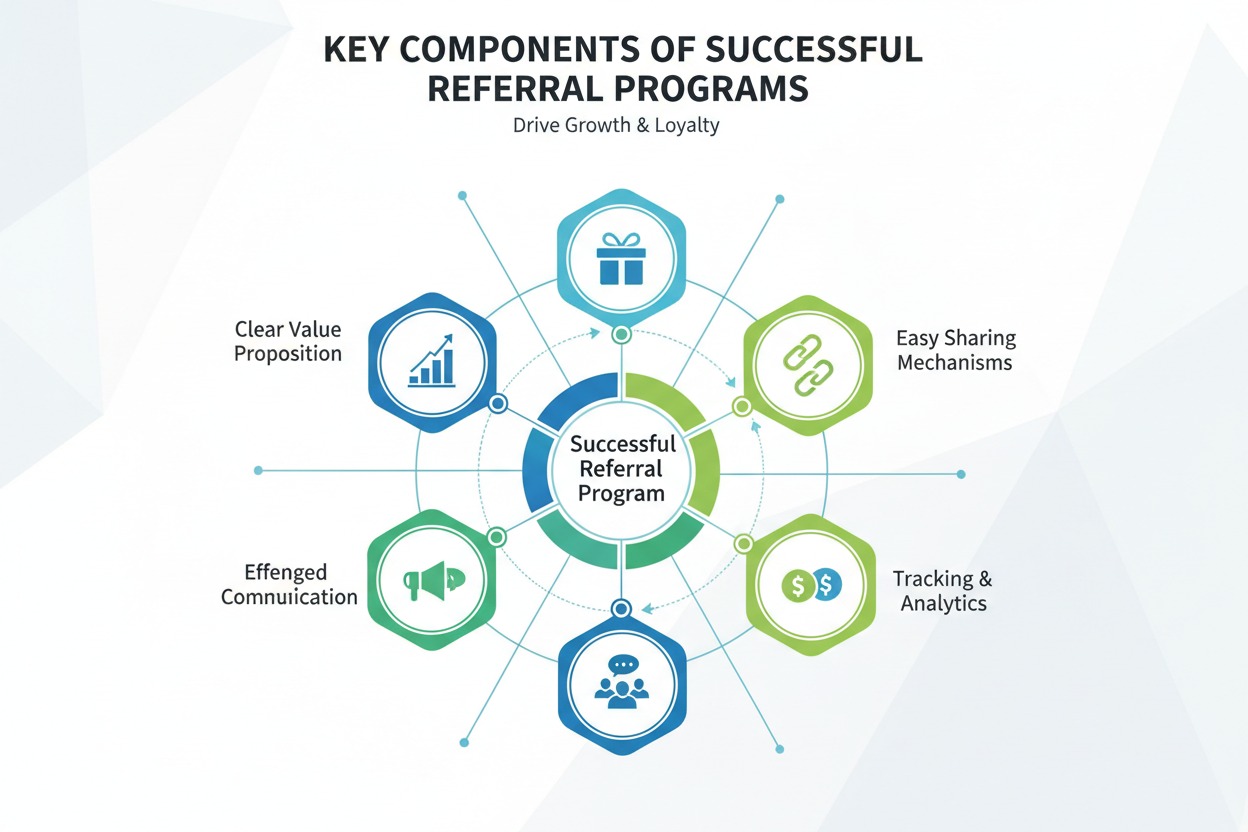
Building an effective referral programme requires careful attention to several critical components that work together to drive participation and results. Understanding these elements allows you to design a programme that resonates with your audience and generates consistent customer acquisitions.
Incentive Structures That Work
The incentive structure forms the foundation of your referral programme’s success. Reward design must balance attractiveness with profitability—offering enough value to motivate participation without eroding your margins. The most effective incentives align with what your specific audience values. For e-commerce businesses, discount codes or store credit often work well. For SaaS companies, extended trial periods or premium feature access can be more compelling than monetary rewards.
Consider whether your programme will offer one-sided incentives (rewarding only the referrer) or two-sided incentives (rewarding both referrer and referred customer). Two-sided programmes typically generate higher conversion rates because new customers receive immediate value, reducing purchase hesitation. Dropbox famously used this approach, offering both existing and new users additional storage space for successful referrals, driving explosive user growth.
The reward magnitude matters significantly. Research suggests incentives should represent approximately 10-20% of your average customer value to feel meaningful without becoming unsustainable. Tiered reward structures—where referrers earn increasing rewards after multiple successful referrals—can encourage sustained participation and higher lifetime referral value.
Tracking and Attribution Systems
Accurate attribution tracking is essential for programme credibility and profitability. Your system must reliably identify which customer generated each referral and ensure rewards are distributed fairly. Modern tracking typically uses unique referral links, promo codes, or account-based identification that automatically credits the referring customer when their referral completes a purchase.
Robust tracking prevents fraud whilst maintaining transparency. Customers need confidence that their referrals will be properly credited, or they’ll lose motivation to participate. Many businesses use integrated tools within their e-commerce platforms or CRM systems to automate this process, reducing manual administration and improving accuracy.
UpViral is a popular viral marketing platform designed to help businesses grow their email lists and increase their online presence through referral campaigns. It enables users to create customizable contests, giveaways, and referral programs that incentivize participants to share with their friends and networks, thereby boosting reach and engagement. Many users appreciate UpViral for its user-friendly interface, robust tracking features, and effective automation tools that simplify campaign management. However, some reviews mention that the pricing can be a bit steep for small businesses or startups. Overall, UpViral is considered a powerful tool for marketers looking to leverage viral marketing strategies to accelerate growth and enhance customer acquisition. Read full review here.
Integration with Your Sales Funnel
Your referral programme must integrate seamlessly with your existing customer journey. This means making referral participation easy at multiple touchpoints—in confirmation emails, customer dashboards, loyalty programmes, or post-purchase follow-ups. The easier you make participation, the higher your activation rates.
| Component | Purpose | Best Practice |
|---|---|---|
| Referral Link | Unique identifier for tracking | Short, branded, easy to share |
| Incentive Trigger | When reward is earned | After referred customer completes purchase |
| Reward Delivery | How incentive is distributed | Automatic within 24-48 hours |
| Communication | Keeping referrers informed | Email updates on referral status |
| Friction Reduction | Simplifying participation | One-click sharing, pre-populated messages |
Integration also means ensuring your referral programme complements rather than competes with other acquisition channels. Your email marketing, social media, and content strategies should all reinforce and support your referral messaging, creating a cohesive growth ecosystem.
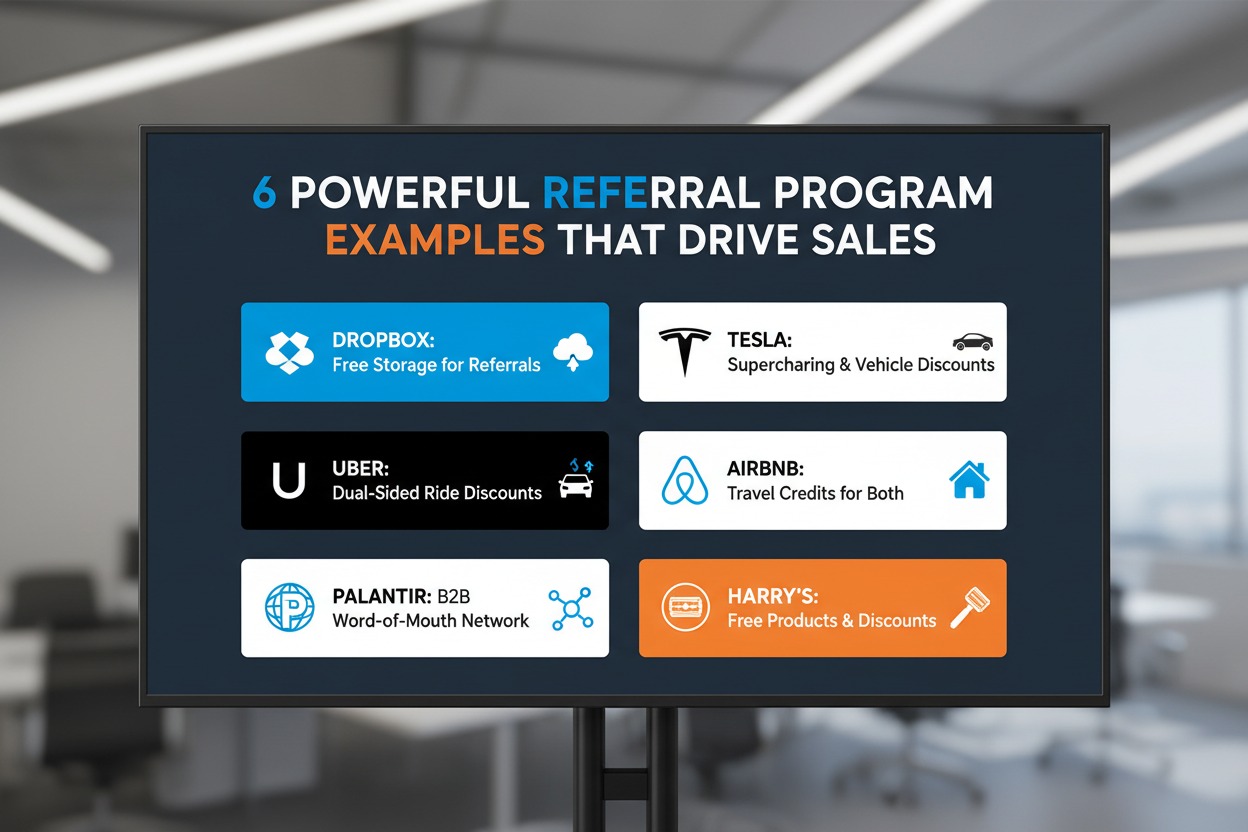
6 Powerful Referral Program Examples That Drive Sales
Real-world referral programmes demonstrate the remarkable potential of well-designed systems. Here are six examples that have driven substantial sales growth across different business models and industries.
- Dropbox’s Storage Incentive Programme – Offering free storage to both referrer and referred user created exponential growth, increasing sign-ups by 60% and becoming a textbook example of effective two-sided incentives.
- Uber’s Ride Credit System – Providing ride credits to both parties made the programme incredibly shareable and lowered barriers to first-time user adoption across multiple markets.
- Tesla’s Referral Rewards Programme – Offering exclusive merchandise, supercharger credits, and the chance to win a vehicle created premium appeal that resonated with environmentally-conscious early adopters.
- Airbnb’s Host Referral Programme – Targeting property owners with cash bonuses for each successful host referral built their supply-side marketplace efficiently and profitably.
- Slack’s Freemium Referral Loop – Integrating referrals into their free tier experience made sharing organic and natural, fuelling rapid team adoption and viral growth.
- Amazon Prime’s Referral Benefits – Offering account credit to existing members who refer friends created a low-friction way to expand their subscription base.
Example 1: The Viral Loop Model
The viral loop model, exemplified by Dropbox and Uber, creates self-perpetuating growth by rewarding both the referrer and the new customer. This approach dramatically increases conversion rates because potential customers receive immediate incentives, removing purchase friction. The referred customer becomes a new advocate themselves, creating exponential growth potential.
“Dropbox’s referral programme was so effective that by 2011, referrals accounted for approximately 35% of their new user sign-ups, demonstrating how powerful two-sided incentives can be when executed strategically.”
Viral loop programmes work best when the incentive directly enhances the core product experience. Dropbox users valued additional storage because it improved their primary use case. Uber riders valued credits because they reduced their next ride cost. This alignment between incentive and product benefit creates natural motivation to participate.
Example 2: The Tiered Rewards System
Tiered rewards programmes increase incentive value as customers achieve higher referral milestones. Tesla’s approach exemplifies this model—early referrals earn merchandise, mid-tier achievements unlock supercharger credits, and top performers gain entry to exclusive experiences or vehicle drawings. This structure motivates sustained participation and rewards your most engaged advocates disproportionately.
Tiered systems work particularly well for higher-value products and services where customer lifetime value justifies escalating rewards. They also create psychological motivation—customers feel they’re working towards increasingly attractive prizes, encouraging continued participation rather than one-time referrals.
How Referral Programs Work: The Complete Process
Understanding the mechanics of how referral programmes operate helps you implement systems that function smoothly and generate consistent results. The process involves several interconnected stages that work together to convert referrals into paying customers.
The referral programme journey begins with activation—making existing customers aware of the programme and motivating them to participate. This typically happens through email announcements, in-app notifications, website banners, or direct outreach to your most engaged customers. Clear communication about rewards, how to participate, and tracking mechanisms is essential at this stage.
Once activated, customers receive their unique referral mechanism—whether that’s a personalised link, promo code, or shareable content. This is where friction reduction becomes critical. The easier you make sharing, the higher participation rates. Many successful programmes offer pre-populated social media messages, email templates, or one-click sharing buttons that require minimal effort from the referrer.
- Customer receives referral link or code
- Customer shares with their network through preferred channels
- New prospect clicks link or uses code when making purchase
- System automatically attributes the sale to the referring customer
- Referrer is notified of successful referral and reward earned
- Reward is delivered (discount applied, credit issued, or payment processed)
- New customer potentially becomes future referrer themselves
| Stage | Timeline | Key Success Factor |
|---|---|---|
| Activation | Day 1-7 | Clear incentive communication |
| Sharing | Day 1-30 | Frictionless sharing mechanisms |
| Conversion | Day 1-60 | Attractive offer to referred customer |
| Attribution | Within 24 hours | Accurate tracking confirmation |
| Reward Delivery | Within 48 hours | Prompt incentive fulfilment |
| Advocacy Loop | Day 30+ | New customer becomes referrer |
Programme maintenance requires ongoing monitoring and optimisation. Track which customer segments generate the highest-quality referrals, which incentives drive the most conversions, and where drop-off occurs in your process. Many businesses discover that their most valuable customers aren’t always their most active referrers—sometimes different segments respond to different incentive structures or sharing channels.
Common Misconceptions About Referral Programs
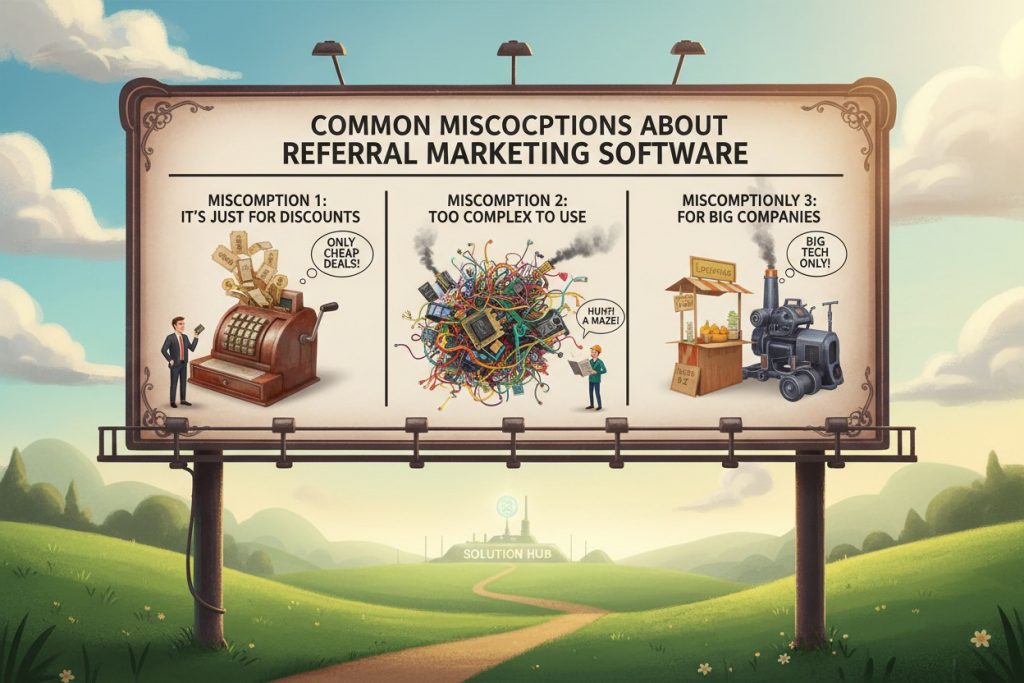
Many business leaders hold misconceptions about referral programmes that prevent them from implementing these powerful growth tools. Understanding and dispelling these myths is essential for building confidence in your referral strategy.
“The biggest misconception is that referral programmes only work for tech companies or viral consumer products, when in reality, effective referral systems have driven growth across industries from professional services to healthcare to luxury goods.”
One widespread myth is that referral programmes require massive budgets or complex technology infrastructure. In reality, many successful programmes operate with minimal technology investment. A simple spreadsheet tracking system combined with email automation can launch an effective referral programme. Tools like Shopify’s built-in referral apps or affordable third-party platforms make implementation accessible for businesses of any size.
Another common misconception involves programme complexity. Some business owners believe that referral systems must be elaborate, multi-tiered structures with sophisticated gamification elements. However, the most effective programmes are often remarkably simple. A straightforward incentive—£10 credit for both referrer and referred customer—can outperform complicated tiered systems with multiple reward levels. Simplicity drives participation because customers understand exactly what they’ll receive and how to participate.
Many entrepreneurs also assume that referral programmes are passive channels requiring no ongoing management. The reality is quite different. Successful programmes demand continuous optimisation, monitoring, and refinement. You must track conversion rates, analyse which customer segments generate the best referrals, test different incentive levels, and adjust your messaging based on performance data. The best-performing programmes receive regular attention and experimentation.
A third misconception suggests that referral programmes cannibalize revenue by offering discounts that reduce profit margins. However, when properly structured, the lower acquisition cost of referred customers more than compensates for incentive costs. A referred customer acquired through a £10 discount often costs 60-70% less than the same customer acquired through paid advertising, whilst demonstrating superior lifetime value and retention.
Finally, some believe that referral programmes only work for acquiring new customers, not for increasing customer lifetime value. Strategic referral design can actually deepen customer relationships and increase spending. Programmes that reward customers for referring others create ongoing engagement touchpoints, reinforce brand loyalty, and position your business as customer-centric rather than purely profit-driven.
Conclusion
Referral programmes represent one of the most powerful yet underutilised growth levers available to modern businesses. The six examples explored throughout this guide—from Dropbox’s viral storage incentives to Tesla’s premium rewards system—demonstrate that referral strategies work across industries, business models, and customer segments when properly designed and executed.
The fundamental appeal of referral programmes lies in their efficiency and alignment with how people actually make purchasing decisions. Customers trust recommendations from people they know far more than corporate marketing messages. By systematising these natural word-of-mouth recommendations and providing meaningful incentives, you transform satisfied customers into active advocates who continuously generate qualified leads.
Success requires attention to three critical elements: compelling incentives that motivate participation, seamless tracking systems that ensure accurate attribution, and frictionless sharing mechanisms that remove barriers to participation. Combined with ongoing optimisation and willingness to test different approaches, these elements create self-reinforcing growth loops that compound over time.
Whether you’re a small Shopify store owner, growth-focused brand, or marketing agency, implementing a referral programme should be a priority in your acquisition strategy. The investment required is minimal compared to paid advertising, the results are measurable and scalable, and the referred customers you acquire demonstrate superior lifetime value and loyalty.
Frequently Asked Questions
How long does it take to see results from a referral programme?
Most businesses begin seeing measurable referral activity within 2-4 weeks of launching their programme, though momentum typically builds over 3-6 months as more customers become aware of the opportunity and participate. Initial results depend heavily on how actively you promote the programme to existing customers. Businesses that proactively email their customer base and feature the programme prominently on their website see faster adoption than those relying on passive discovery.
What incentive amount should we offer?
Incentive levels typically range from 5-20% of your average customer value, depending on your industry and profit margins. E-commerce businesses often use percentage-based discounts (10-15% off), whilst SaaS companies might offer extended trial periods or premium feature access. The key is testing different amounts to find the sweet spot where participation rates justify the cost. Start with a modest incentive, measure results, then adjust upward if conversion rates warrant it.
Should we reward only the referrer or both parties?
Two-sided incentives (rewarding both referrer and referred customer) typically generate 20-30% higher conversion rates because they reduce friction for the new customer. However, one-sided programmes can work effectively for high-ticket items or B2B services where the referred customer already has strong purchase intent. Test both approaches with different customer segments to determine what resonates with your specific audience.
How do we prevent referral fraud?
Implement verification systems that confirm the referred customer is genuinely new and not an existing customer using a different email address. Set limits on reward frequency per customer to prevent gaming the system. Monitor for suspicious patterns like multiple referrals from the same IP address or unusually rapid referral activity. Most modern referral platforms include built-in fraud detection, and your e-commerce system can flag suspicious transactions for manual review.
Can referral programmes work for B2B businesses?
Absolutely. B2B referral programmes often outperform B2C because business decision-makers actively seek trusted recommendations before making significant purchases. Effective B2B referral incentives include account credits, extended service terms, exclusive consulting access, or tiered rewards for multiple referrals. LinkedIn and other professional networks make sharing referral opportunities easier in B2B contexts, and enterprise customers typically have larger networks of potential referrals.
Leave a Reply