Table of Contents
Giveaways have become a cornerstone strategy for businesses looking to grow their audience, build brand awareness, and generate qualified leads. Whether you’re running a Shopify store, managing an influencer account, or leading a growth-focused brand, giveaways promise rapid audience expansion and engagement. However, the reality is far more nuanced. Many campaigns fail to deliver results, leaving businesses frustrated and wondering why their investment didn’t pay off.
The difference between a wildly successful giveaway and a complete flop often comes down to execution. Countless businesses launch giveaways without understanding the critical mistakes that derail campaigns before they even gain traction. These aren’t just minor oversights—they’re fundamental errors that undermine your entire strategy and waste valuable resources.
This guide explores the five biggest giveaway mistakes that kill campaigns, along with practical solutions to help you avoid them. By understanding what goes wrong and how to fix it, you’ll be equipped to run giveaways that actually drive results. Whether you’re new to giveaways or looking to improve your existing campaigns, this article will help you identify weaknesses in your approach and implement changes that matter.
What Are Giveaway Mistakes?
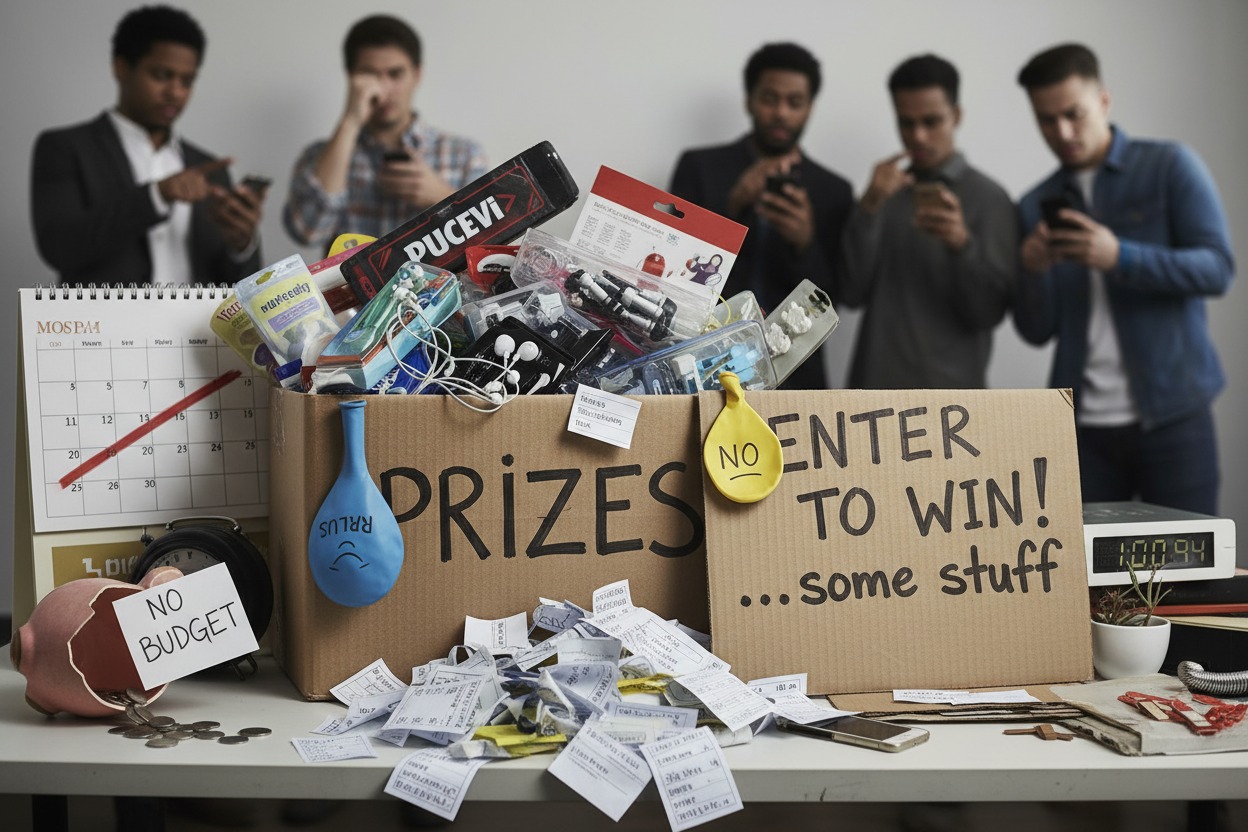
Giveaway mistakes are strategic errors and tactical oversights that undermine the effectiveness of your campaign. These aren’t technical glitches or minor hiccups—they’re fundamental decisions and implementation gaps that prevent your giveaway from achieving its intended goals.
Common giveaway mistakes include poorly defined prize offerings, vague eligibility rules, inadequate audience targeting, weak data collection methods, and insufficient promotion. Each of these issues compounds the others, creating a cascading effect that diminishes your results. What makes these mistakes particularly dangerous is that they’re often invisible until it’s too late. You might launch a giveaway, watch entries trickle in, and only later realise your approach was fundamentally flawed.
The term “giveaway mistakes” encompasses both strategic planning failures and execution problems. A strategic mistake might involve choosing a prize that doesn’t resonate with your target audience. An execution mistake might involve launching your campaign without a clear promotion plan. Both categories have significant consequences.
Understanding what constitutes a giveaway mistake is essential because these errors directly impact your campaign performance, audience quality, and return on investment. Businesses that recognise and address these mistakes see dramatic improvements in their results. Those that ignore them continue to waste time and resources on ineffective campaigns, falling further behind competitors who’ve optimised their approach.
Why Giveaway Mistakes Matter
“A poorly executed giveaway can damage your brand reputation and waste months of potential growth. Getting it right is not optional—it’s essential for sustainable business success.”
Giveaway mistakes matter because they directly affect your bottom line. When you launch a flawed campaign, you’re not just losing the time and money invested in the giveaway itself. You’re also missing the opportunity cost—the potential customers, leads, and revenue you could have generated with a properly executed campaign.
Consider the ripple effects of a single mistake. If your eligibility rules are unclear, you’ll attract entries from people who don’t meet your requirements, resulting in wasted follow-up efforts and poor conversion rates. If you target the wrong audience, you’ll accumulate followers who have no interest in your products or services, inflating your audience size without improving engagement. If you fail to capture quality data, you’ll have a larger list that’s less valuable for future marketing efforts.
The stakes are particularly high for small business owners and growth-focused brands operating on limited budgets. A failed giveaway doesn’t just represent lost money—it represents lost momentum. When campaigns underperform, businesses often become discouraged and abandon giveaways altogether, missing out on a powerful growth tool that, when executed correctly, delivers exceptional results.
Giveaway mistakes also have long-term consequences for your brand reputation. Poorly managed campaigns, unclear communication, or failure to deliver promised prizes can damage trust with your audience. In today’s connected world, negative experiences spread quickly through social media and word-of-mouth, making it harder to attract participants to future campaigns.
Running a viral giveaway requires key steps to boost engagement and reach. Begin by selecting a prize that appeals to your target audience. Set simple entry rules like liking, sharing, and tagging friends to encourage participation and visibility. Promote the giveaway on social media, newsletters, and your website. Partner with influencers to widen your reach. Use eye-catching visuals and compelling copy to attract attention. Lastly, announce the winner publicly to build trust and encourage future entries. With careful planning, you can create a giveaway that grows your brand awareness and audience. Read here How to Run a Viral Giveaway.
Mistake #1: Unclear Prize or Vague Eligibility Rules
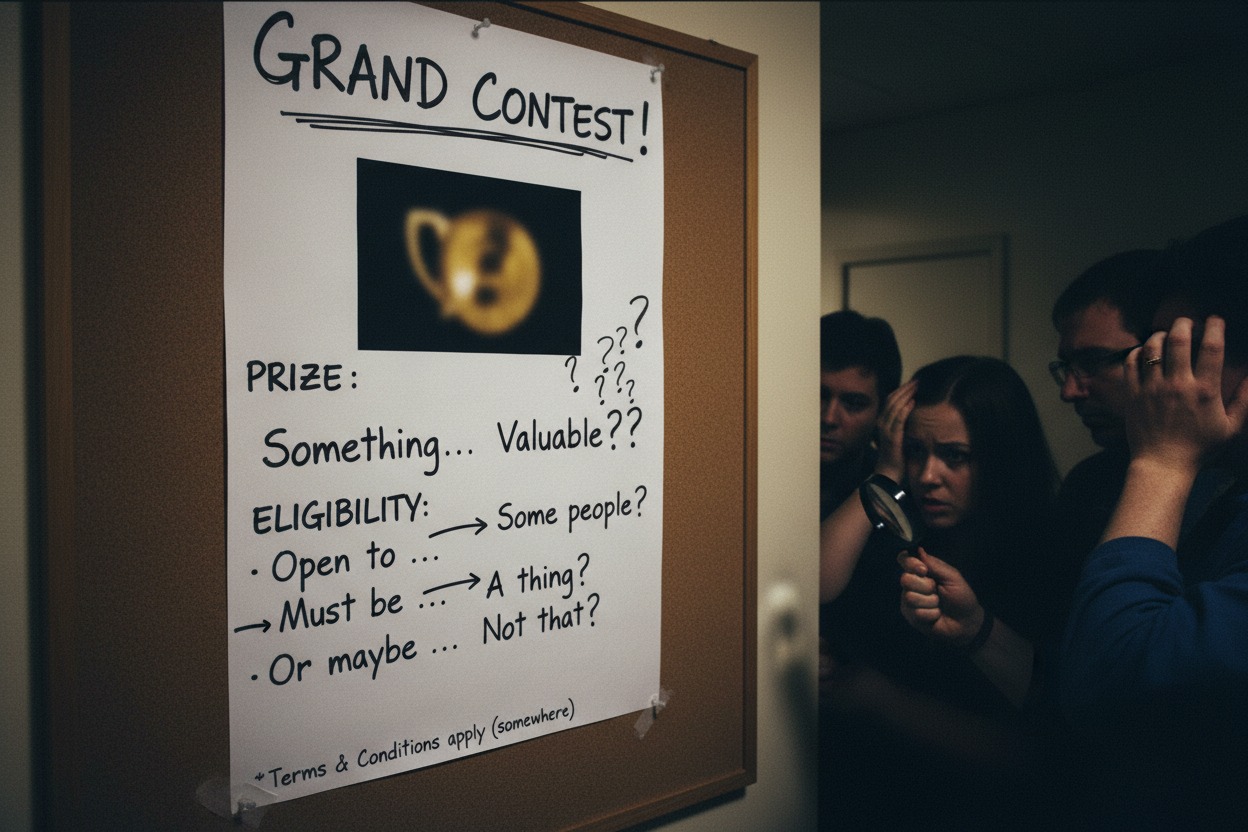
One of the most common giveaway mistakes is failing to communicate your prize and eligibility requirements with absolute clarity. When participants don’t fully understand what they’re entering to win or who can actually participate, confusion spreads quickly. This leads to wasted entries, frustrated participants, and damaged credibility.
Unclear prize descriptions create immediate problems. If you say you’re giving away a “luxury gift package” without specifying contents, participants will make assumptions. Some might expect a high-value item worth £500, whilst others imagine something worth £50. When the winner discovers the actual prize, disappointment sets in. Similarly, vague eligibility rules—such as “must be a customer” without defining whether past or current customers qualify, or “UK residents only” without clarifying whether Northern Ireland is included—create legal and logistical headaches.
How Unclear Terms Confuse Your Audience
Ambiguous language undermines trust in your campaign. Participants need to know exactly what they’re entering to win, the precise eligibility criteria, and any restrictions that apply. When terms are vague, people either skip your giveaway entirely or enter with incorrect expectations.
The confusion multiplies across your audience. Some participants will contact you asking clarifying questions, consuming your team’s time. Others will enter despite being ineligible, requiring you to disqualify them later. Still others will simply avoid your giveaway because the rules seem unclear or potentially unfair.
The Cost of Ambiguous Requirements
The consequences of unclear terms extend beyond initial confusion. Consider these impacts:
- Disqualified entries that waste your review time and disappoint participants
- Legal complications if eligibility rules aren’t clearly defined (particularly regarding age, location, or professional status)
- Reduced participation rates as people avoid campaigns with confusing terms
- Negative reviews and social media comments questioning your professionalism
- Damaged brand reputation that affects future campaign performance
- Increased customer service burden from clarification requests
Mistake #2: Targeting the Wrong Audience
“You can have the perfect prize and flawless execution, but if you’re attracting the wrong audience, your giveaway will fail to deliver meaningful business results.”
Targeting the wrong audience is a catastrophic mistake that undermines everything else you do right. Many businesses focus solely on maximising participation numbers without considering whether those participants align with their ideal customer profile. This creates a false sense of success—your follower count grows, but your engagement and conversion rates plummet.
The wrong audience might include people who have zero intention of buying your products, those outside your geographic market, or individuals who are simply giveaway hunters collecting free items. These participants inflate your metrics without providing genuine business value. Worse, they dilute your audience quality, making it harder to reach actual potential customers in future campaigns.
Attracting Low-Quality Entries
When your targeting is misaligned, you attract giveaway enthusiasts rather than genuine prospects. These individuals enter every giveaway they find, regardless of the brand or product. They’re unlikely to make purchases, engage with your content, or become loyal customers. Their presence on your list creates noise that obscures your actual customer data.
Low-quality entries also skew your analytics. You might celebrate 5,000 new followers whilst missing the fact that only 50 of them represent genuine business opportunities. This false confidence leads to poor decision-making in future campaigns, as you chase vanity metrics instead of meaningful results.
Misaligned Audience Expectations
When you attract the wrong audience, expectations become misaligned from the start. Someone entering your giveaway because they collect free items won’t engage with your marketing emails or product recommendations. They won’t share your content with their networks. They won’t become advocates for your brand.
This misalignment creates a mismatch between audience size and business impact. Your email list grows, but open rates decline. Your social followers increase, but engagement drops. Your customer acquisition cost rises because you’re marketing to people unlikely to convert.
| Audience Type | Likely Behaviour | Business Value |
|---|---|---|
| Ideal Customer | Engages with content, makes purchases, shares brand | High conversion potential |
| Giveaway Hunter | Enters multiple giveaways, ignores marketing | Minimal conversion potential |
| Competitor’s Customer | May compare offerings, price-sensitive | Low loyalty risk |
| Wrong Geographic Market | Cannot use products/services, wastes resources | No business value |
| Brand Enthusiast | Engages deeply, advocates for brand | High lifetime value |
Mistake #3: Failing to Capture Quality Data

Data collection is the hidden goldmine of giveaways. Your giveaway isn’t just about winning new followers—it’s about gathering actionable information that enables future marketing success. Yet many businesses treat data collection as an afterthought, asking for minimal information just to process entries. This represents a massive missed opportunity.
Weak data capture means you end up with email addresses and little else. You don’t know what products interested your winners, what pain points they’re trying to solve, or how to segment them for future campaigns. This information gap makes your follow-up marketing generic and ineffective, reducing conversion rates and customer lifetime value.
Missing Critical Information Points
Most giveaways collect only basic contact information—name, email, and perhaps location. This is insufficient for modern marketing. You should be capturing data that reveals customer intent, product interests, and buying stage.
Critical information points include:
- Product preferences and which offerings interested them most
- Budget range or purchasing power indicators
- Current challenges or pain points they’re trying to solve
- Timeline for making a purchase decision
- Previous experience with your brand or competitors
- Preferred communication channels and content types
- Business type or industry (for B2B giveaways)
Without this information, your post-giveaway marketing becomes spray-and-pray. You’re sending the same message to everyone, knowing some recipients will find it irrelevant. Personalisation suffers, engagement declines, and conversion rates remain disappointingly low.
Weak Lead Qualification Strategies
Many businesses fail to implement qualification mechanisms within their giveaway entry process. Rather than asking questions that reveal whether someone is a genuine prospect, they create friction-free entry that prioritises volume over quality.
The solution is embedding strategic questions into your entry form that qualify leads whilst remaining non-intrusive. Multi-step entry processes, conditional questions based on previous answers, and preference centres all serve this purpose. These approaches gather intelligence that transforms your list from a collection of random email addresses into a segmented, actionable database ready for targeted marketing campaigns.
Mistake #4: Poor Promotion and Visibility
Even the most compelling giveaway fails if nobody knows it exists. Poor promotion is a silent killer that prevents your campaign from reaching critical mass. Many businesses launch giveaways expecting organic reach to carry them, only to watch participation numbers flatline. Without deliberate, multi-channel promotion, your giveaway remains invisible to the audience that matters most.
“A giveaway without promotion is like opening a shop in the middle of nowhere. No matter how great your offer is, if people can’t find it, it won’t succeed.”
Promotion gaps emerge when businesses rely on a single channel—typically their email list or primary social media platform. This narrow approach leaves massive untapped audiences. If your existing followers already know about your business, they’re not the ones who need to discover you. You need to reach new people in new places.
Insufficient Marketing Channels
Effective giveaway promotion requires a multi-channel strategy that meets your audience where they spend time. Different platforms reach different demographics and require tailored messaging.
Essential promotion channels include:
- Email marketing to your existing subscriber base and past customers
- Organic social media posts across all your active platforms (Instagram, TikTok, LinkedIn, Facebook)
- Paid social advertising targeting your ideal customer profile
- Influencer partnerships and collaborations within your niche
- Blog posts and website banner placements that drive traffic
- Partnerships with complementary brands for cross-promotion
- Paid search advertising for high-intent keywords related to your giveaway
Businesses that skip paid promotion channels often see disappointing results. Organic reach alone rarely generates sufficient participation, particularly for new brands with smaller existing audiences. Strategic paid advertising amplifies your message to people actively interested in your category, dramatically increasing entry volume and audience quality.
Timing and Reach Issues
Promotion timing directly impacts giveaway success. Launching a campaign without advance planning means you miss the opportunity to build anticipation. Your promotion window—the period when you actively market the giveaway—should extend across multiple weeks, not just days.
Reach issues compound when you promote at suboptimal times. Posting your giveaway announcement when your audience is offline means fewer people see it. Launching during holidays or competing events means your message gets buried. Strategic scheduling ensures your promotion reaches maximum eyeballs when people are most likely to engage.
Mistake #5: Inadequate Follow-Up and Nurturing
Winning a giveaway should mark the beginning of a relationship, not the end. Yet many businesses treat post-giveaway engagement as optional, missing the critical window when winners are most receptive to your brand. This represents a fundamental failure to convert giveaway participants into customers.
Post-giveaway nurturing is where giveaways deliver their true ROI. The moment someone wins, they’ve demonstrated interest in your brand. They’re primed to receive your message. Failing to capitalise on this moment wastes the entire investment you made acquiring them.
Neglecting Post-Giveaway Engagement
After announcing your winner, what happens next? Too many businesses send a congratulations email, deliver the prize, and move on. This approach leaves money on the table. Winners need a structured engagement sequence that introduces them to your products, builds relationship, and guides them toward purchase.
Effective post-giveaway engagement includes welcome sequences that thank winners and introduce your brand story, product education content that demonstrates value, exclusive offers that incentivise first purchase, and ongoing nurture campaigns that maintain engagement. Without this sequence, winners fade into your general audience, and you lose the conversion advantage their initial interest provided.
Lost Conversion Opportunities
The conversion opportunity window after a giveaway is remarkably short. Winners are excited, engaged, and thinking about your brand. This is precisely when they’re most likely to make a purchase. Yet if you don’t present them with clear next steps and compelling offers, that momentum dissipates.
| Engagement Stage | Action Required | Expected Outcome |
|---|---|---|
| Immediate (Day 1-3) | Welcome email, thank you message | Build excitement, establish relationship |
| Early nurture (Week 1-2) | Product education, brand story | Demonstrate value proposition |
| Mid nurture (Week 3-4) | Exclusive discount or offer | Incentivise first purchase |
| Ongoing nurture (Month 2+) | Regular content, promotions | Establish customer loyalty |
| Re-engagement (Month 3+) | Win-back campaigns if inactive | Recover lost opportunities |
Businesses that implement systematic follow-up see dramatically higher conversion rates. Those that neglect this phase watch winners disappear into their email list, never to convert. The difference between success and failure often comes down to whether you treat post-giveaway engagement as essential or optional.
Common Misconceptions About Giveaways
Several persistent misconceptions lead businesses astray when planning giveaway campaigns. These false beliefs shape decisions that ultimately undermine results. Understanding what’s actually true versus what’s merely assumed is critical for campaign success.
The first major misconception is that bigger prizes automatically generate better results. In reality, prize value matters far less than prize relevance. A £50 prize perfectly aligned with your target audience generates better quality entries than a £500 prize that appeals to deal-seekers. Businesses waste enormous budgets on expensive prizes that attract the wrong people, when strategic prize selection would deliver superior outcomes.
Another common myth is that giveaways should prioritise maximum participation above all else. This leads to strategies that inflate follower counts whilst destroying audience quality. The goal isn’t to accumulate the most entries—it’s to acquire the right entries from people likely to become customers. A giveaway with 500 high-quality entries from ideal prospects outperforms one with 5,000 entries from giveaway hunters.
Many businesses believe that running a giveaway once and forgetting about it represents a complete strategy. In reality, recurring giveaways build momentum and establish your brand as generous and engaged. Seasonal giveaways, quarterly campaigns, and anniversary promotions create touchpoints that keep your brand visible and build community.
The assumption that giveaways are only for consumer brands prevents B2B companies from leveraging this powerful tool. Service providers, SaaS companies, and professional services firms can run highly effective giveaways targeting ideal clients. The mechanics differ slightly, but the principle—offering something valuable to attract qualified leads—applies universally.
Finally, many assume that giveaway success is purely random or depends on luck. This couldn’t be further from truth. Giveaway results are predictable and repeatable when you understand the fundamentals and avoid the mistakes outlined in this guide. Success comes from deliberate strategy, not chance.
How to Avoid These Giveaway Mistakes
Avoiding giveaway mistakes requires a systematic approach grounded in planning, clarity, and intentional execution. The good news is that these errors are entirely preventable when you understand what causes them and implement deliberate safeguards.
Start by establishing crystal-clear campaign parameters before launch. Document your prize description with exhaustive detail—specify exactly what’s included, any conditions or limitations, and the approximate retail value. Write your eligibility requirements in plain language, anticipating questions participants might ask. Have someone outside your team review these documents to identify ambiguities you might have missed.
Next, develop a detailed audience targeting strategy. Create a clear profile of your ideal participant—not just demographics, but psychographics, buying behaviours, and product interests. Use this profile to guide every decision: which channels you promote on, which influencers you partner with, and how you craft your messaging. Ask yourself honestly: “Will this promotion attract people likely to become customers?”
Implement a data collection framework that gathers meaningful information without creating excessive friction. Use conditional questions that reveal intent and interests. Segment your list based on responses so you can personalise future communications. Remember that quality data is worth far more than quantity of entries.
Create a comprehensive promotion calendar that extends across multiple weeks and channels. Identify which platforms your audience frequents and allocate budget accordingly. Plan your messaging variations for different channels rather than simply reposting identical content everywhere.
Finally, develop a post-giveaway engagement sequence before your campaign launches. Plan your welcome email, nurture content, and conversion offers in advance. Schedule these communications to deploy automatically, ensuring consistent follow-up regardless of how busy you become.
UpViral is a powerful viral marketing software designed to help businesses grow their email lists and increase engagement through referral contests and campaigns. It offers an easy-to-use platform where users can create customized contests that incentivize participants to share content with their network, thereby driving organic traffic and boosting brand awareness. With features like real-time analytics, seamless integration with popular email marketing tools, and automated reward distribution, UpViral simplifies the process of running successful viral campaigns.
UpViral often highlight its effectiveness in generating leads and increasing social media reach, though some users mention a learning curve for beginners and occasional technical glitches. Overall, UpViral is praised for its robust functionality and ability to enhance marketing efforts through viral growth strategies. Read Upviral review here.
Conclusion
Giveaway mistakes are costly, but they’re also completely avoidable. The five mistakes outlined in this guide—unclear prize definitions, wrong audience targeting, weak data collection, poor promotion, and inadequate follow-up—account for the majority of failed campaigns. Yet understanding these pitfalls puts you ahead of most businesses still launching ineffective giveaways.
The path forward is clear: plan meticulously, communicate transparently, target strategically, and nurture relentlessly. Each element builds on the others, creating a system that generates consistent results. Small business owners, Shopify store operators, influencers, and growth-focused brands that implement these principles see dramatic improvements in their giveaway performance.
Your next giveaway doesn’t have to be another expensive experiment that disappoints. By applying the strategies outlined here, you can launch campaigns that attract ideal customers, generate qualified leads, and drive measurable business growth. The investment in proper planning and execution pays dividends through higher conversion rates, better customer quality, and sustainable audience growth.
Start by auditing your previous giveaway attempts against the mistakes described here. Identify which errors affected your results. Then implement targeted improvements in your next campaign. Small refinements compound into significant performance gains. Your future self—and your bottom line—will thank you for taking giveaway strategy seriously.
Frequently Asked Questions
How long should a giveaway campaign run?
Most effective giveaways run for 2-4 weeks. This timeframe allows sufficient promotion window to reach your audience across multiple touchpoints without the campaign losing momentum. Shorter campaigns (under 2 weeks) often fail to generate sufficient awareness, whilst longer campaigns (over 6 weeks) experience declining participation as initial excitement fades. Consider your promotion budget and audience size when determining your specific timeline. Brands with larger existing audiences might succeed with shorter campaigns, whilst newer brands typically benefit from extended timelines.
What’s the ideal prize value for a giveaway?
Prize value should align with your business model and target audience, not arbitrary spending limits. A £100 prize perfectly matched to your ideal customer generates better results than a £500 prize attracting deal-seekers. Calculate your customer acquisition cost and lifetime value to determine appropriate prize investment. Generally, plan to spend 10-30% of your expected revenue from giveaway-acquired customers on the prize itself. Remember that relevance matters far more than cost—a highly desirable product worth £75 outperforms a generic gift worth £200.
Should I require social sharing to enter my giveaway?
Requiring social sharing increases entry friction and often attracts lower-quality participants who share without genuine interest. Instead, incentivise sharing through bonus entries—offer one free entry for completing your form, then additional entries for optional social sharing. This approach respects participant choice whilst rewarding amplification. Track which participants earned bonus entries through sharing, as these individuals tend to be more engaged with your brand and more likely to convert.
How do I measure giveaway success beyond follower count?
Focus on metrics that indicate business impact rather than vanity metrics. Track conversion rate (percentage of participants who make a purchase), customer acquisition cost (total giveaway investment divided by customers acquired), email engagement rates (open and click rates from giveaway participants), and customer lifetime value (revenue generated from giveaway-acquired customers). These metrics reveal whether your giveaway actually drove business growth or merely inflated your follower count. A giveaway that acquired 1,000 followers with zero conversions failed, whilst one acquiring 200 followers with 10 customers succeeded.
Can giveaways work for B2B companies?
Absolutely. B2B giveaways are highly effective when structured around business value rather than consumer appeal. Offer something genuinely useful to your target decision-makers—industry reports, software licenses, consulting sessions, or exclusive training. Target your promotion toward professional networks like LinkedIn rather than consumer platforms. Adjust your data collection to capture business information relevant to your sales process. B2B giveaways typically generate fewer entries than consumer campaigns, but the quality and conversion potential are often superior.
What should I do if my giveaway underperforms?
Analyse performance against each of the five mistake categories outlined in this guide. Did you attract the wrong audience? Did promotion reach insufficient people? Was your prize misaligned with participant expectations? Identify the primary failure point rather than assuming the entire approach was flawed. Often, a single corrected mistake dramatically improves results in subsequent campaigns. Document what you learned and apply those insights to your next giveaway rather than abandoning the strategy entirely.
Leave a Reply