Table of Contents
In today’s competitive digital landscape, capturing attention and building genuine customer loyalty has become increasingly challenging. Traditional advertising methods often fall flat, leaving businesses searching for innovative ways to connect with their target audience. This is where giveaway marketing strategies enter the picture—a dynamic approach that transforms passive observers into active participants and loyal brand advocates.
Giveaway marketing has emerged as one of the most effective tools for businesses of all sizes, from ambitious startups to established enterprises. Whether you’re running a Shopify store, building an influencer platform, or managing a growth-focused brand, giveaways offer a proven pathway to expand your reach, generate qualified leads, and create meaningful engagement with your audience.
The beauty of giveaway marketing lies in its simplicity and effectiveness. By offering something valuable in exchange for participation, you create a win-win scenario where customers get rewarded whilst your business gains invaluable data, increased visibility, and expanded customer networks. This article explores seven proven giveaway marketing strategies that actually deliver results, complete with actionable insights you can implement immediately.
Whether you’re new to Giveaway Marketing Strategies or looking to refine your existing approach, understanding these tactics will help you design campaigns that resonate with your audience and drive measurable business growth.
What Is Giveaway Marketing?
Giveaway marketing strategies involve businesses offering valuable prizes to participants in exchange for specific actions or engagement. These campaigns utilize the principle of reciprocity—when customers receive something valuable, they are more likely to reciprocate by following your brand, sharing your content, or making a purchase.
At its core, giveaway marketing involves creating an incentive structure that encourages participation across multiple channels. Rather than simply giving away products randomly, successful giveaway campaigns are strategically designed to achieve specific business objectives whilst providing genuine value to participants.
The mechanics are straightforward: a business identifies a desirable prize, sets clear entry requirements (such as following social media accounts, subscribing to email lists, or tagging friends), and promotes the campaign across relevant platforms. Participants complete the specified actions to enter, and winners are selected based on predetermined criteria.
What distinguishes giveaway marketing from traditional contests is its focus on viral engagement and audience expansion. Modern giveaway campaigns often incorporate mechanisms that encourage participants to share the campaign with their networks, creating exponential reach beyond the initial audience. This amplification effect makes giveaways particularly valuable for businesses operating on limited marketing budgets.
Giveaway marketing works across virtually every industry—from fashion and technology to food and fitness. E-commerce businesses use giveaways to drive traffic to their online stores, whilst service-based companies leverage them to build email lists and generate qualified leads. Content creators and influencers employ giveaways to grow their follower bases and increase engagement rates.
Giveaway Marketing Strategies have proven particularly effective because they address a fundamental challenge in modern marketing: capturing attention in oversaturated digital spaces. A well-executed giveaway campaign can generate thousands of interactions, significantly expanding brand awareness and creating opportunities for long-term customer relationships.
Why Giveaway Marketing Matters
In an era where customer acquisition costs continue to rise and attention spans grow shorter, giveaway marketing offers a refreshingly effective alternative to conventional advertising approaches. Understanding why this strategy matters can help you prioritize it within your broader marketing framework.
“Giveaways are one of the most cost-effective ways to build an engaged community and accelerate business growth. When executed properly, they generate exponential returns on investment.”
Cost efficiency represents one of the most compelling reasons to implement giveaway marketing. Compared to traditional paid advertising, giveaways often deliver superior results at a fraction of the cost. Rather than paying for impressions that may never convert, you’re incentivizing genuine engagement from people genuinely interested in your offerings.
Audience expansion is another critical benefit. Each giveaway participant represents a potential long-term customer. By collecting email addresses, social media followers, and customer data through giveaway entries, you build a valuable asset—a qualified audience genuinely interested in your brand. This audience becomes the foundation for future marketing campaigns with significantly higher conversion potential.
Giveaway campaigns also facilitate rapid social proof generation. When hundreds or thousands of people participate in your giveaway, you create visible momentum and credibility. New visitors to your website or social channels perceive this activity as validation that your brand is worth their attention, making them more likely to engage further.
The viral potential of well-designed giveaways cannot be overstated. By incorporating sharing mechanisms—such as rewarding participants for referring friends or sharing posts—you transform customers into brand ambassadors who actively promote your campaign within their networks. This organic amplification generates reach that paid advertising struggles to achieve.
Additionally, giveaway marketing provides invaluable customer insights. The data collected during campaigns reveals what motivates your audience, which demographics engage most actively, and what messaging resonates strongest. These insights inform future marketing strategies and product development decisions.
For relationship building, giveaways create positive first impressions. Participants who win prizes develop immediate goodwill towards your brand, whilst even non-winners appreciate the opportunity to engage with your business. This foundation of positive sentiment increases the likelihood of future purchases and brand loyalty.
Key Components of Effective Giveaway Campaigns
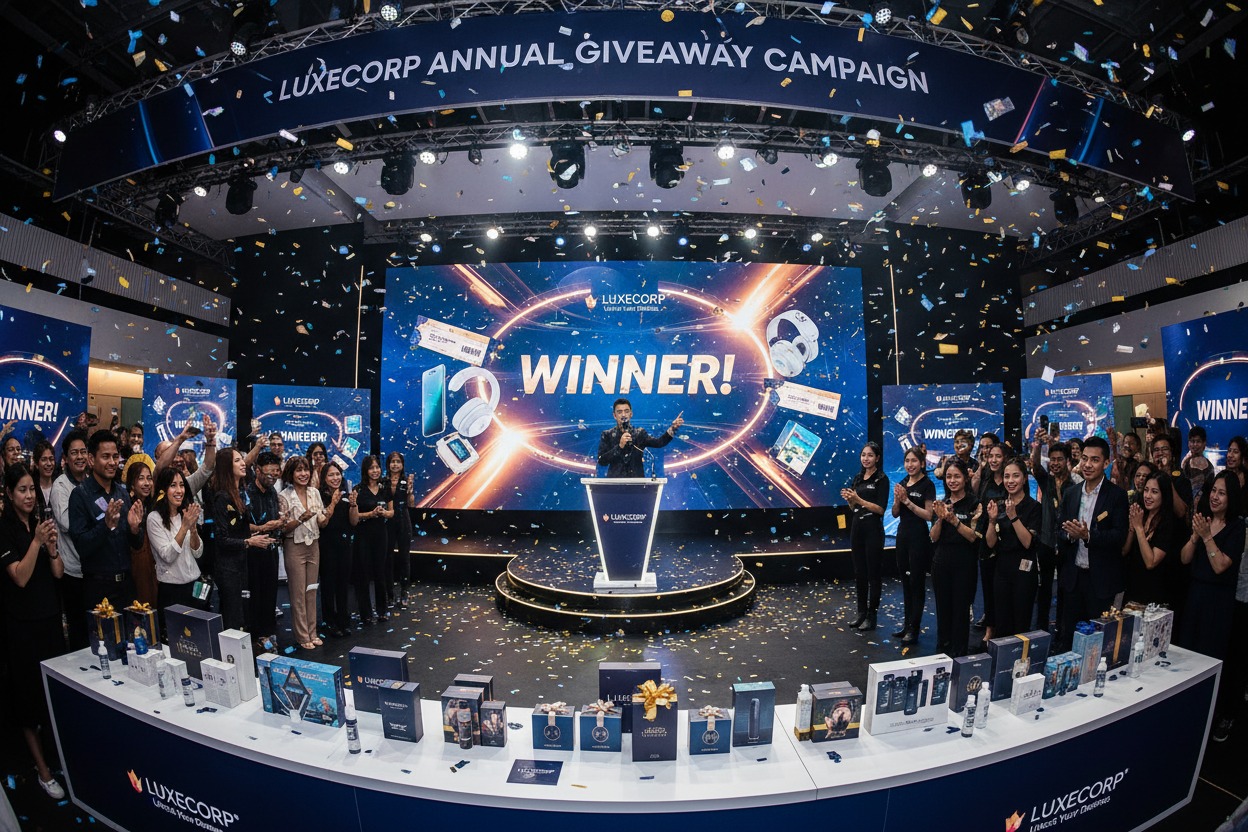
Creating a successful giveaway campaign requires careful attention to multiple interconnected elements. Each component plays a crucial role in determining whether your campaign achieves its objectives or falls flat. Understanding these components allows you to design campaigns that maximise participation, engagement, and business impact.
| Component | Purpose | Key Consideration |
|---|---|---|
| Prize Selection | Attracts target audience | Must align with brand and audience interests |
| Entry Mechanics | Defines participation pathway | Balance ease of entry with desired actions |
| Promotion Channels | Reaches target audience | Select platforms where audience actively engages |
| Timeline and Duration | Creates urgency | Typically 1-4 weeks for optimal results |
| Legal Compliance | Protects business | Follow platform and jurisdictional regulations |
| Winner Selection | Ensures fairness | Use transparent, verifiable methods |
| Follow-up Strategy | Converts participants | Nurture leads post-campaign |
Running a viral giveaway involves careful planning and strategic promotion to maximize participation and shareability. Start by choosing a desirable prize that appeals to your target audience and set clear, simple entry rules to encourage more people to join. Use social media platforms to spread the word, leveraging hashtags and partnering with influencers to increase reach. Encourage participants to share the giveaway with their friends, perhaps by offering additional entries for each referral. Make sure to create eye-catching visuals and engaging content to capture attention. Lastly, set a deadline to create urgency and announce the winner publicly to build trust and excitement for future giveaways. Read here How to Run a Viral Giveaway.
Prize Selection and Value Proposition
The prize you offer represents the foundation of your entire campaign. Successful giveaway marketing hinges on selecting prizes that genuinely appeal to your target demographic whilst remaining financially sustainable for your business. The prize should align closely with your brand offerings—a fitness brand giving away workout equipment, a software company offering annual subscriptions, or a fashion retailer providing clothing vouchers.
Your value proposition must feel substantial to participants. The prize value should be significant enough to motivate action, yet realistic enough that your business can afford it without compromising profitability. Many successful campaigns feature multiple prize tiers, offering a grand prize alongside several secondary prizes, which increases overall perceived value whilst distributing costs.
Entry Mechanics and Participation Requirements
Entry mechanics define what participants must do to qualify for the giveaway. These requirements should align with your business objectives. Common entry requirements include following social media accounts, subscribing to email newsletters, visiting your website, making a minimum purchase, or tagging friends in comments.
The key is balancing accessibility with intent. Overly complicated entry processes discourage participation, whilst entry requirements that are too simple may attract unqualified participants. Effective campaigns typically require 3-5 specific actions that progressively build engagement and capture valuable customer information.
Promotion Channels and Audience Targeting
Where you promote your giveaway determines who discovers it and participates. Multi-channel promotion ensures maximum reach across your audience’s preferred platforms. Instagram, TikTok, Facebook, email lists, and your website represent primary channels for most businesses, though LinkedIn works well for B2B giveaways and Twitter suits tech-focused brands.
Targeted promotion means tailoring your messaging and channel selection to reach people most likely to become customers. Rather than promoting broadly, focus resources on platforms and communities where your ideal customers already congregate. This strategic targeting improves campaign efficiency and ensures higher-quality participant pools.
The 7 Proven Giveaway Marketing Strategies

Giveaway marketing encompasses numerous tactical approaches, each suited to different business goals and audience types. These seven strategies represent the most effective methods for generating measurable results across various industries and business models.
- Viral Loop Giveaways that incentivise sharing and referrals
- Email List Building Giveaways focused on newsletter subscriptions
- Social Media Follower Growth Campaigns targeting platform-specific audiences
- Product Launch Giveaways that introduce new offerings to wider markets
- Partnership Giveaways collaborating with complementary brands
- Engagement-Based Giveaways rewarding existing community participation
- Seasonal and Holiday Giveaways capitalising on peak shopping periods
Strategy 1: Viral Loop Giveaways
Viral loop giveaways incorporate exponential sharing mechanisms that reward participants for inviting friends and expanding the campaign’s reach. These campaigns typically offer bonus entries for each successful referral, creating a self-perpetuating cycle where participants become active promoters.
The mechanics work by providing participants with unique referral links or codes. When friends use these codes to enter, the original participant receives additional entries, increasing their chances of winning. This structure transforms passive participants into brand ambassadors, exponentially expanding reach without additional advertising spend.
Brands like Dropbox pioneered this approach, offering storage space for successful referrals. Modern implementations across e-commerce platforms and SaaS companies consistently demonstrate that viral loop giveaways generate 3-5 times more reach than traditional giveaways, making them exceptionally valuable for growth-focused businesses.
Strategy 2: Email List Building Giveaways
Email remains one of the highest-ROI marketing channels available. Email list building giveaways specifically target growing your subscriber base by requiring email subscription as the primary entry requirement. This strategy directly supports long-term marketing objectives whilst generating immediate engagement.
The most effective email list building giveaways offer exclusive value to subscribers—perhaps additional entries for early subscribers, bonus prize drawings for email subscribers, or exclusive content accessible only through email. This dual-value approach incentivises both giveaway participation and genuine subscription interest.
Successful implementations require seamless integration with your email marketing platform, ensuring new subscribers are properly segmented and nurtured. The giveaway becomes a lead generation mechanism that populates your email list with qualified prospects actively interested in your offerings.
Strategy 3: Social Media Follower Growth Campaigns
Social media algorithms increasingly favour accounts with substantial follower bases and engagement metrics. Follower growth giveaways specifically target expanding your social media presence by requiring follows, likes, and shares as entry conditions.
These campaigns work particularly well on Instagram, TikTok, and Facebook, where visual content and community engagement drive algorithm visibility. By requiring participants to follow your account, like the post, and tag friends, you simultaneously increase your follower count, boost post engagement metrics, and expand reach through tagged participants’ networks.
Authentic engagement matters more than raw follower counts. Giveaways attract engaged participants genuinely interested in your content, resulting in higher-quality followers more likely to interact with future posts and become customers. This contrasts sharply with purchased followers, who provide no real value.
How Giveaway Marketing Works
The mechanics of giveaway marketing operate through a series of interconnected psychological and practical principles that drive participation, engagement, and conversion. Understanding these mechanisms helps you design campaigns that resonate with your audience and achieve measurable business outcomes.
“The success of giveaway marketing lies not in the prize itself, but in creating an irresistible opportunity for your audience to engage with your brand whilst receiving genuine value in return.”
Giveaway campaigns operate through the following foundational processes:
- Awareness and Discovery – Participants discover your giveaway through promotional channels, social shares, and word-of-mouth referrals
- Interest Generation – The prize offering and campaign messaging create compelling reasons to participate
- Action and Participation – Participants complete specified entry requirements, providing valuable data and engagement signals
- Community Building – The giveaway creates positive brand associations and fosters community amongst participants
- Conversion Opportunity – Post-campaign follow-up nurtures participants towards purchase decisions and long-term loyalty
- Amplification Effect – Successful participants share the campaign, exponentially expanding reach and participant pools
- Data Collection and Insights – Campaign data reveals audience preferences, demographics, and engagement patterns
The psychological principle underlying giveaway success is reciprocity—when people receive something valuable, they naturally feel inclined to reciprocate through loyalty, purchases, or further engagement. This reciprocity creates a foundation for long-term customer relationships that extends far beyond the initial giveaway campaign.
Successful campaigns leverage multiple engagement layers. Rather than simply offering a prize, they create pathways for progressively deeper engagement—from initial awareness through social follows, email subscriptions, website visits, and eventually purchases. Each layer strengthens the relationship and increases the likelihood of conversion.
Common Misconceptions About Giveaways
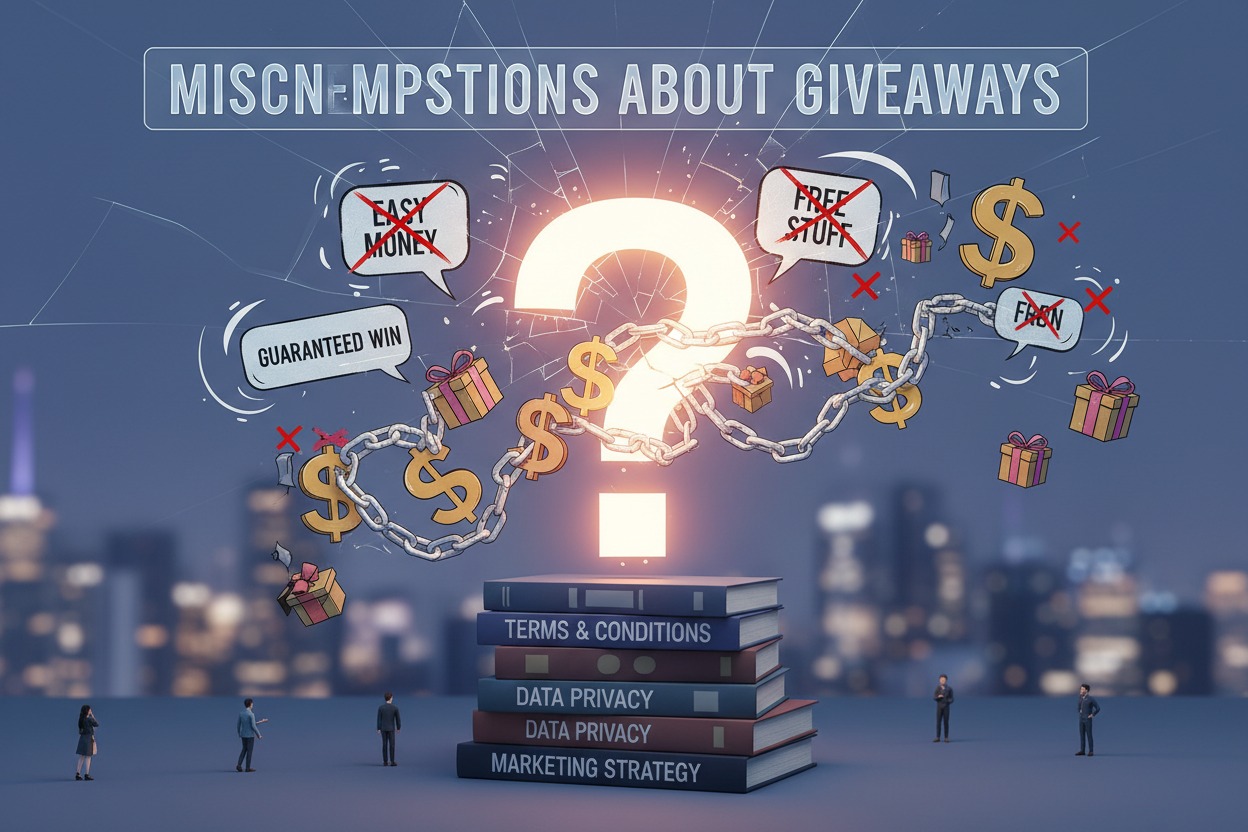
Giveaway marketing has become increasingly popular, yet numerous misconceptions persist about how these campaigns work and what they can achieve. Understanding and dispelling these myths helps you approach giveaway strategy with realistic expectations and optimised tactics.
| Misconception | Reality | Impact on Campaign |
|---|---|---|
| Giveaways attract only bargain hunters | Quality prizes attract genuinely interested prospects | Attracts qualified leads, not just deal-seekers |
| Any prize works equally well | Prize relevance directly impacts participant quality | Misaligned prizes waste resources and attract wrong audience |
| Giveaways damage brand perception | Strategic giveaways enhance brand credibility | Builds trust and positive brand associations |
| More entries always means better results | Conversion quality matters more than quantity | Fewer qualified leads outperform high-volume unqualified ones |
| Giveaways are one-time tactics | Campaigns create lasting audience assets | Builds email lists and follower bases for future campaigns |
| Winners must receive physical products | Digital prizes, services, and experiences work equally well | Expands possibilities and reduces fulfillment costs |
“The most damaging misconception is believing that giveaways are purely transactional. In reality, they’re relationship-building tools that create foundation for long-term customer loyalty.”
Many businesses incorrectly assume that low-quality participants represent campaign failure. In truth, giveaway participants who don’t immediately convert still represent valuable audience members. Through consistent nurturing and strategic follow-up, many eventually become customers. The key is recognising that giveaways generate lead generation opportunities rather than guaranteed immediate sales.
Another widespread myth suggests that larger prizes always produce better results. Whilst prize value matters, relevance matters more. A £50 prize perfectly aligned with your audience’s interests generates higher-quality participants than a £500 generic prize. Strategic prize selection—offering something your target customer genuinely wants—consistently outperforms expensive, irrelevant offerings.
Bold emphasis should be placed on understanding that giveaways aren’t standalone solutions. They function most effectively as components of integrated marketing strategies. Treating giveaways as isolated campaigns, rather than coordinated elements within broader customer acquisition and retention frameworks, significantly limits their potential impact.
Measuring Success and Optimising Results
Effective giveaway marketing requires systematic measurement and continuous optimisation. Rather than viewing campaigns as one-off promotional events, successful businesses treat them as ongoing learning opportunities that inform future strategy and improve performance over time.
The most critical metrics to track include participation rate, cost per acquisition, email list growth, social media follower increase, and post-campaign conversion rates. Participation rate reveals how compelling your campaign messaging and prize offering were relative to your promotional reach. Cost per acquisition calculates total campaign investment divided by new customers acquired, providing clear ROI visibility.
Email list quality deserves particular attention. Rather than focusing solely on subscriber count, analyse engagement metrics—open rates, click-through rates, and conversion rates—of participants acquired through giveaways versus other channels. High-quality participants from well-targeted giveaways typically demonstrate superior engagement and conversion potential compared to purchased or low-intent lists.
Post-campaign nurturing represents one of the most overlooked optimisation opportunities. The giveaway campaign itself is merely the beginning. Strategic follow-up through email sequences, exclusive offers, and targeted content transforms casual participants into paying customers. Businesses that implement sophisticated nurturing workflows see conversion rates 3-4 times higher than those treating participants as one-time contacts.
Attribution tracking ensures you understand which campaign elements drove success. Test different prize offerings, entry requirements, promotional channels, and messaging variations. Document what worked, what underperformed, and why. This data-driven approach transforms each campaign into a learning opportunity that informs increasingly effective future initiatives.
Analyse demographic data collected during campaigns to understand your actual audience composition. Do participants match your target customer profile? If not, adjust future campaign targeting, messaging, or prize selection to attract more qualified prospects. Continuous refinement based on real participant data significantly improves campaign efficiency and business outcomes.
Conclusion
Giveaway marketing represents one of the most powerful tools available to businesses seeking rapid audience growth, lead generation, and customer engagement. The seven strategies outlined—from viral loop mechanisms to seasonal campaigns—provide proven frameworks for achieving measurable business results across diverse industries and business models.
Success with giveaway marketing requires moving beyond simplistic approaches and embracing strategic sophistication. Effective campaigns carefully align prize selection with audience interests, design entry mechanics that serve specific business objectives, and leverage multiple promotion channels to maximise reach. Equally important is recognising that giveaways function as relationship-building tools rather than transactional promotions, with their true value emerging through consistent post-campaign nurturing and strategic follow-up.
Best giveaway software offers a seamless and efficient way to run contests and sweepstakes, helping businesses and influencers engage their audience and grow their following. These tools typically feature user-friendly interfaces, automated entry collection, fraud detection, and multiple entry methods such as social media actions, email sign-ups, and referrals. Popular giveaway software also provides customizable templates, analytics to track campaign performance, and integrations with popular marketing platforms. Choosing the right giveaway software can significantly boost participation rates, enhance brand visibility, and create valuable leads for future marketing efforts.
The businesses achieving the greatest success with giveaway marketing treat each campaign as a learning opportunity. They measure results systematically, analyse participant data thoroughly, and continuously refine their approach based on real performance metrics. This commitment to optimisation transforms giveaways from occasional promotional tactics into sustainable growth engines that compound value over time.
Whether you’re launching your first giveaway campaign or refining existing programmes, the strategies and insights presented here provide actionable pathways to meaningful business growth. By implementing these approaches with strategic intentionality and continuous improvement mindset, you’ll unlock the substantial potential that giveaway marketing offers for building engaged communities, acquiring qualified customers, and establishing lasting brand loyalty.
Frequently Asked Questions
What makes a giveaway prize attractive to participants?
The most attractive prizes align closely with your target audience’s genuine interests and needs rather than being generic or overly expensive. A £100 prize directly related to your industry—such as professional software for designers, fitness equipment for health enthusiasts, or beauty products for cosmetics followers—generates higher-quality participation than a £500 generic voucher. The prize should feel exclusive, valuable, and genuinely desirable to people already interested in your brand category. Consider surveying your audience or analysing competitor giveaways to understand what resonates most effectively.
How long should a giveaway campaign run?
Most effective giveaway campaigns run between 1-4 weeks, with 2-3 weeks representing the optimal timeframe for most businesses. Shorter campaigns (7-10 days) create urgency and work well for established audiences already familiar with your brand. Longer campaigns (4+ weeks) allow more time for organic reach expansion and participant discovery but risk losing momentum. The ideal duration depends on your promotional capacity, audience size, and campaign objectives. Monitor participation patterns during your campaign and adjust future timelines based on when you observe peak engagement.
Can giveaways work for B2B businesses?
Absolutely. B2B giveaways are highly effective when designed appropriately for business decision-makers. Rather than consumer products, B2B giveaways typically feature software subscriptions, professional services, consulting packages, or industry-specific tools. LinkedIn represents the primary promotion channel for B2B giveaways, complemented by industry publications, professional networks, and email outreach. The entry requirements should reflect B2B sales cycles—perhaps requesting company information, job titles, or business challenges—to generate genuinely qualified leads rather than casual participants.
How do I ensure my giveaway complies with platform regulations?
Each platform—Instagram, Facebook, TikTok, Twitter, and email providers—maintains specific giveaway guidelines you must follow. Generally, you must clearly state that the giveaway is not endorsed or administered by the platform, avoid requiring follows as the sole entry requirement, and comply with local gambling and promotional regulations. Many jurisdictions require specific disclaimers, age verification, or registration with regulatory bodies. Before launching any campaign, thoroughly review the current terms of service for each platform you’ll use and consult legal resources specific to your location to ensure full compliance.
What should I do with participants who don’t win?
Non-winning participants represent valuable audience members who demonstrated genuine interest in your brand. Implement strategic follow-up sequences that nurture these relationships without feeling exploitative. Send a personalised thank-you message, offer a consolation discount code, provide exclusive content, or invite them to join your email list for future opportunities. Many businesses find that non-winners who receive thoughtful follow-up eventually convert to customers at rates comparable to or exceeding actual winners. This approach transforms giveaway participants into long-term assets rather than one-time contacts.
Leave a Reply