Table of Contents
In today’s competitive digital landscape, businesses are constantly searching for innovative ways to capture customer attention and drive meaningful engagement. Giveaway contests have emerged as one of the most effective marketing tools available to entrepreneurs, influencers, and established brands alike. Whether you’re running a Shopify store, managing a growing social media presence, or leading a marketing agency, giveaway contests offer a powerful mechanism to expand your reach, build community, and create genuine connections with your audience.
The beauty of giveaway contests lies in their versatility and proven track record. They work across industries—from e-commerce and fashion to technology and lifestyle brands. When executed strategically, a well-designed giveaway can generate thousands of new followers, collect valuable customer data, increase website traffic, and ultimately boost sales. More importantly, giveaways create a sense of excitement and goodwill around your brand that traditional advertising simply cannot replicate.
This comprehensive guide explores ten creative giveaway contest ideas specifically designed to elevate your engagement strategy. You’ll discover how to structure contests that resonate with your target audience, learn the critical components that make giveaways successful, and gain practical insights into execution and promotion. Whether you’re a small business owner looking to make your mark or an established brand seeking fresh engagement tactics, these ideas and strategies will help you design contests that deliver real results.
What Is a Giveaway Contest?
A giveaway contest is a promotional campaign where businesses offer valuable prizes to participants in exchange for specific actions or engagement. These contests create a mutually beneficial exchange: customers get the chance to win something desirable, whilst businesses gain increased visibility, customer data, and engagement metrics.
Giveaway contests differ from sweepstakes and raffles in meaningful ways. Whilst sweepstakes typically require no action beyond entry and raffles focus purely on chance-based selection, giveaway contests often incorporate engagement requirements that benefit your marketing objectives. Participants might be asked to follow your social media accounts, subscribe to your email list, share your content, tag friends, or visit your website—actions that organically amplify your reach.
The structure of a giveaway contest typically includes four essential elements: a desirable prize, clear entry requirements, a defined timeline, and transparent winner selection. The prize serves as the incentive that motivates participation. Entry requirements determine how participants engage with your brand. The timeline creates urgency and helps manage campaign logistics. Winner selection, whether random or merit-based, must follow legal requirements and maintain fairness.
“Giveaways are not just about giving away products—they’re about building relationships with people who genuinely care about what you offer.” — Marketing strategist insights
Effective giveaway contests leverage psychological principles like reciprocity and social proof. When people receive something of value, they naturally feel inclined to reciprocate by engaging with your brand. Additionally, seeing others participate creates social proof, encouraging further participation. This cascade effect can exponentially increase your contest’s reach and impact, transforming a simple giveaway into a viral marketing phenomenon that generates awareness far beyond your initial audience.
Why Giveaway Contests Matter for Your Business
Giveaway contests represent far more than simple promotional tactics—they’re strategic marketing investments that deliver measurable returns across multiple business objectives. For small business owners, Shopify store operators, influencers, and growth-focused brands, giveaways provide a cost-effective method to achieve results that would otherwise require significantly larger advertising budgets.
The impact of well-executed giveaway contests extends across your entire marketing funnel. They generate immediate awareness, drive audience growth, and create lasting brand loyalty. Unlike traditional advertising that interrupts potential customers, giveaways invite participation, making your brand feel more approachable and human.
Benefits for Brand Awareness
Giveaway contests dramatically expand your brand’s visibility across digital platforms. When participants enter your contest, they often share it with their networks—tagging friends, reposting content, and discussing your brand organically. This word-of-mouth amplification creates exponential reach without additional advertising spend.
Consider how brands like Glossier and GoPro leverage giveaways to reach millions. Their contests generate thousands of user-generated content pieces, each serving as authentic social proof to potential customers. Hashtag campaigns associated with giveaways create searchable content trails that persist long after the contest ends, continuing to drive discovery months later. Additionally, giveaways attract media coverage and influencer mentions, extending your reach into communities you might never reach through paid advertising alone.
Benefits for Customer Engagement and Loyalty
Beyond awareness, giveaways create emotional connections between your brand and customers. Participants who engage with your contest develop a sense of investment in your brand’s success. Even those who don’t win often remain loyal because they’ve experienced your brand’s generosity and community spirit.
Giveaways provide opportunities to collect first-party data—email addresses, preferences, and demographic information—that fuels future marketing efforts. This data collection, combined with the goodwill generated by the contest, creates a foundation for long-term customer relationships. Winners become natural brand advocates, sharing their excitement about your products with their networks. This authentic testimonial carries far more weight than paid endorsements, driving genuine conversions and repeat purchases that sustain business growth.
Key Components of Successful Giveaway Contests
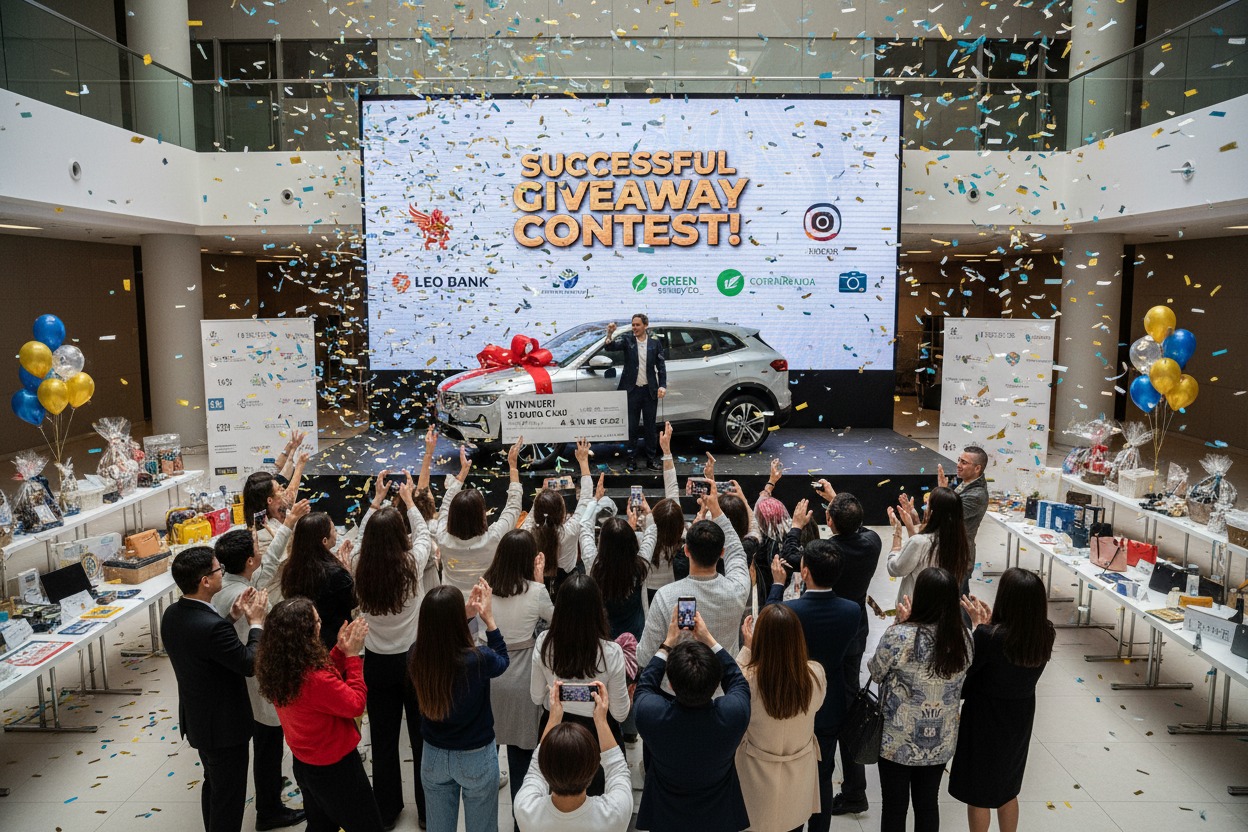
Creating a giveaway contest that actually delivers results requires understanding the critical elements that work together to drive participation and achieve your business goals. Each component serves a specific purpose in the contest ecosystem, and neglecting any one of them can significantly diminish your results.
| Component | Purpose | Example |
|---|---|---|
| Prize Value | Motivates participation and attracts target audience | £500 product bundle, exclusive access, cash reward |
| Entry Mechanism | Defines how participants engage with your brand | Follow account, share post, tag friends, email signup |
| Timeline | Creates urgency and manages campaign logistics | 14-30 days, clearly marked start and end dates |
| Winner Selection | Ensures fairness and legal compliance | Random draw, merit-based judging, hybrid approach |
| Promotion Strategy | Amplifies reach and drives awareness | Influencer partnerships, email marketing, paid ads |
| Legal Framework | Protects your business and participants | Terms and conditions, privacy policies, regulatory compliance |
Prize Selection Strategy
The prize selection is arguably the most critical decision in your giveaway design. Your prize must align perfectly with your target audience’s desires whilst remaining economically feasible for your business. A mismatched prize—one that doesn’t appeal to your ideal customer—will generate participation from the wrong audience, wasting resources and delivering poor conversion rates.
Consider your audience’s demographics, interests, and purchasing power. A luxury skincare brand should offer premium beauty products, not gaming equipment. A tech startup should feature cutting-edge gadgets, not fashion items. The prize should be something your ideal customers genuinely want, not something you’re simply trying to offload from excess inventory.
Prize bundling creates perceived value that exceeds actual cost. Combining complementary products—a handbag with matching accessories, for instance—feels more valuable than a single item of equivalent price. You can also partner with other brands to create bundles, distributing costs whilst offering expanded value to winners.
Entry Mechanism Design
Your entry requirements directly influence both participation volume and audience quality. Simple entry mechanisms—requiring only an email address—generate high volume but potentially lower-quality leads. Complex mechanisms requiring multiple actions generate fewer entries but attract more engaged participants.
- Single-action entries (follow account, like post, visit website)
- Multi-step entries (follow + tag friends + share story)
- Skill-based entries (submit creative content, answer questions)
- Tiered entries (earn multiple entries for different actions)
- Community-based entries (referral bonuses, group participation rewards)
The most effective entry mechanisms balance accessibility with engagement value. Requiring a social media follow or email signup captures essential data whilst remaining low-friction. Adding a secondary action—like tagging friends or sharing to stories—amplifies organic reach without overwhelming participants. Avoid overly complicated requirements that frustrate users and reduce completion rates.
10 Creative Giveaway Contest Ideas
The most successful giveaway contests move beyond simple “follow and win” mechanics to create genuinely engaging experiences that align with how your audience naturally interacts with your brand. These ten ideas span different platforms, engagement styles, and business types, offering templates you can customise to your specific needs.
“The most viral giveaways aren’t about the prize—they’re about creating a moment worth sharing.” — Social media marketing research
Idea 1-3: Social Media-Based Contests
Instagram Reels Duet Challenge invites followers to create their own version of your branded content, encouraging creativity whilst generating user-generated content you can repurpose. Participants film themselves using your product, dancing to your audio, or recreating a scene from your original Reel. Winners are selected based on creativity, engagement, or random draw. This approach works exceptionally well for beauty brands, fitness companies, and lifestyle influencers. The contest generates authentic content that showcases your product in real-life scenarios, providing social proof far more convincing than traditional advertising.
TikTok Sound Creation Contest leverages TikTok’s unique audio ecosystem by having participants create videos using a custom sound you’ve produced. Offer prizes for the most creative uses, highest engagement, or best interpretations of your brand message. This format explodes in reach because TikTok’s algorithm actively promotes content using trending sounds, giving your contest organic amplification. Fashion retailers, music-related brands, and entertainment companies particularly benefit from this approach.
LinkedIn Professional Achievement Giveaway targets B2B audiences by asking participants to share how they’ve used your product or service to achieve professional success. Entries become case studies and testimonials you can feature in marketing materials. This positions your brand as a professional resource whilst building credibility within your industry. Software companies, business tools, and professional services benefit tremendously from this format.
Idea 4-6: Interactive and Gamified Contests
Spin-to-Win Wheel embeds an interactive wheel on your website where visitors spin daily for prizes, with entries tracked across multiple spins. This gamified approach keeps users returning repeatedly, increasing engagement frequency and data collection opportunities. E-commerce stores, SaaS companies, and subscription services use this effectively to boost repeat visits and email list growth.
Photo Caption Contest asks followers to submit witty or creative captions for a branded image you provide. This low-barrier-to-entry format encourages participation from less confident content creators. Winners are selected by community voting or your team’s judgment. The contest generates user-generated content, reveals audience perspectives on your brand, and creates shareable moments that extend reach organically. Beverage brands, fashion retailers, and humour-focused accounts excel with this format.
Scavenger Hunt Across Platforms requires participants to find specific content, products, or clues distributed across your website, social media accounts, and email newsletters. Participants submit screenshots or answers proving they completed each step. This format drives traffic across all your digital properties, increases email engagement, and rewards your most dedicated followers. Retail brands, subscription boxes, and content creators use scavenger hunts to deepen audience relationships whilst gathering valuable engagement data.
Idea 7-10: Community-Driven Contests
Referral Rewards Program gives existing customers bonus entries for each friend they refer who enters the contest. Participants earn multiplied chances to win based on how many friends they successfully refer. This transforms your customer base into active promoters, exponentially expanding reach through trusted personal networks. E-commerce stores, fitness apps, and SaaS platforms generate remarkable growth through referral mechanics that reward both the referrer and the new participant.
User-Generated Content Showcase asks customers to submit photos or videos featuring your product in their daily lives. Rather than selecting one winner, you feature the best submissions across your social media and marketing materials, offering all featured creators prize packages. This inclusive approach encourages broader participation because multiple people win recognition and rewards. Fashion brands, outdoor companies, and lifestyle businesses particularly benefit from authentic customer content that showcases real-world product use.
Community Voting Contest presents multiple entries or contestants and lets your audience vote for winners. This transforms your followers into active participants in the selection process, increasing investment in the contest outcome. Voting mechanisms drive repeated visits to your contest page, boost engagement metrics, and create community discussion around your brand. Restaurants, entertainment venues, and consumer brands use community voting to generate buzz and deepen audience connection.
Charity Partnership Giveaway combines your contest with a charitable cause, donating a portion of proceeds or offering matching donations based on participation. Participants feel good about supporting a cause whilst entering to win, creating positive brand association. This format appeals to socially conscious audiences and generates goodwill that extends far beyond the contest period. Sustainable brands, socially-focused companies, and purpose-driven businesses leverage charity partnerships to align their marketing with their values whilst driving meaningful engagement.
How to Execute Your Giveaway Contest Successfully
Successfully executing a giveaway contest requires meticulous planning, strategic promotion, and careful attention to legal and operational details. The difference between a contest that generates thousands of engaged participants and one that fizzles with minimal response often comes down to execution quality.
Launch preparation should begin at least two weeks before your contest goes live. This timeline allows sufficient planning, legal review, platform setup, and promotional groundwork. Timing considerations matter significantly—launching contests on Tuesdays or Wednesdays generates better engagement than Friday or weekend launches when audiences are less attentive to promotional content.
- Establish clear contest objectives and define success metrics (email list growth, follower increase, website traffic, sales)
- Design your contest mechanics, entry requirements, and prize structure
- Draft comprehensive terms and conditions with legal review
- Set up contest platforms, landing pages, and entry collection systems
- Create promotional assets (graphics, copy, video content)
- Coordinate with team members and partners on their roles
- Schedule promotional activities across all marketing channels
Setting Clear Rules and Terms
Transparent, comprehensive rules protect both your business and participants. Your terms and conditions must specify eligibility requirements, entry deadlines, winner selection methods, prize details, and how you’ll use collected data. Legal compliance varies by location—some regions require specific disclosures, age restrictions, or contest registration with regulatory bodies.
| Legal Element | Requirement | Example |
|---|---|---|
| Eligibility | Age, location, professional restrictions | Must be 18+, UK residents only |
| Entry Period | Clear start and end dates with timezone | Opens Monday 1st April, closes Sunday 14th April |
| Winner Selection | Method and timeline | Random draw, announced within 7 days |
| Prize Details | Exact contents, value, restrictions | £300 product voucher, non-transferable |
| Data Usage | How you’ll use collected information | Email marketing, audience insights, no third-party sharing |
| Disqualification | Reasons entries may be rejected | Incomplete information, suspicious activity, rule violations |
Your rules should be accessible and understandable, not buried in dense legal jargon. Use clear headings, bullet points, and plain language. Participants should instantly understand how to enter, what they’re agreeing to, and what happens if they win.
Choosing the best giveaway software that automates all work for you is essential for running successful and hassle-free promotions. The ideal software should offer features like easy entry management, automatic winner selection, social media integrations, and real-time analytics. By automating tasks such as participant tracking, verification, and prize distribution, it saves valuable time and ensures a smooth experience for both organizers and participants. Look for user-friendly platforms that provide robust security measures and customizable options to tailor giveaways to your specific needs. Read full article here.
Promoting Your Contest Effectively
Contest promotion determines whether your giveaway reaches hundreds or hundreds of thousands of people. A brilliantly designed contest with poor promotion underperforms dramatically, whilst even a modest contest with strategic promotion can generate exceptional results.
Multi-channel promotion amplifies your reach exponentially. Email your existing list immediately—they’re your warmest audience and most likely to participate and share. Post across all social media platforms, adapting messaging and creative assets for each channel’s unique audience and format. Instagram Stories work differently than LinkedIn posts; TikTok audiences expect different energy than Facebook groups. Paid advertising accelerates reach—even modest budgets of £100-500 can generate thousands of impressions and qualified entries.
Influencer partnerships extend your reach into new communities. Micro-influencers (10,000-100,000 followers) in your niche often deliver better engagement and conversion rates than massive accounts, whilst remaining cost-effective or willing to participate for free entry into your prize pool. Timing your promotional pushes creates waves of momentum—launch announcements generate initial interest, mid-contest reminders capture procrastinators, and final-day urgency drives last-minute entries. Repurpose promotional content across multiple formats: short video clips, static graphics, carousel posts, email sequences, and website banners ensure your message reaches audiences wherever they’re most active.
Common Mistakes to Avoid
Even well-intentioned giveaway contests can underperform dramatically when common pitfalls derail execution. Understanding these mistakes helps you avoid costly errors that waste resources, frustrate participants, and damage brand reputation.
“The contests that fail aren’t usually missing a great prize—they’re missing clarity, promotion, or genuine value alignment with their audience.” — Contest marketing analysis
Choosing the wrong prize tops the list of giveaway failures. A prize that doesn’t resonate with your target audience generates participation from irrelevant users who’ll never become customers. A tech company offering luxury handbags attracts fashion enthusiasts, not technology adopters. These mismatched participants inflate your metrics without improving conversion rates or customer lifetime value. Your prize must align perfectly with your ideal customer’s genuine desires, not what you think sounds impressive or what you’re trying to clear from inventory.
Overcomplicating entry requirements frustrates potential participants and reduces completion rates significantly. Asking users to follow your account, tag five friends, share to three story formats, visit your website, and subscribe to your newsletter creates friction that abandons entries mid-process. Each additional requirement drops completion rates by 15-30%. Balance accessibility with engagement value—typically two to three actions maximum maintains acceptable completion rates whilst generating meaningful brand interactions.
Insufficient promotion represents perhaps the most common and costly mistake. Even exceptional contests generate minimal results without strategic promotion. Many businesses launch contests and expect organic growth, forgetting that most of your audience won’t see the announcement unless you actively promote it multiple times across multiple channels. Allocate at least 40% of your contest effort to promotion—email sequences, social media posts, paid advertising, and influencer partnerships determine whether your contest reaches hundreds or hundreds of thousands.
Neglecting legal compliance creates serious consequences. Different regions have specific requirements for sweepstakes, contests, and giveaways. Some jurisdictions require registration, specific disclosures, or prohibit certain entry mechanisms. Using vague terms and conditions, failing to specify winner selection methods, or collecting data without proper privacy disclosures exposes your business to regulatory penalties and legal liability. Invest in proper legal review—it’s far cheaper than potential fines or lawsuits.
Poor data management wastes the valuable asset your contest generates. Collecting thousands of email addresses without a clear plan for follow-up email sequences means you’ve invested resources for minimal return. Failing to segment participants by engagement level, entry method, or expressed interests prevents you from delivering relevant follow-up communications. Winners who never receive their prizes damage trust irreparably. Data security failures—inadequate protection of collected information—violate privacy regulations and expose participants to risk, destroying brand credibility.
Ignoring post-contest engagement abandons your momentum at the critical moment. The period immediately following contest conclusion represents peak audience interest and engagement. Failing to announce winners promptly, deliver prizes quickly, or follow up with non-winners through targeted email campaigns wastes the audience you’ve built. Your post-contest communication strategy should be as detailed as your promotion strategy, transforming contest participants into long-term customers through strategic nurturing.
Conclusion
Giveaway contests represent one of the most versatile and effective tools available to modern marketers. Whether you’re a small business owner building your first audience, a Shopify store operator seeking to accelerate growth, an influencer deepening community connection, or a marketing agency executing campaigns for clients, the ten ideas explored throughout this guide provide proven templates for success.
The most effective giveaway contests balance strategic design with authentic value creation. They align perfectly with your audience’s genuine interests, incorporate entry mechanisms that serve your marketing objectives, and receive promotion sufficient to reach meaningful numbers of participants. They protect both your business and participants through clear, legally compliant terms whilst creating genuine excitement around your brand.
Success with giveaway contests requires moving beyond simple “follow and win” mechanics to create experiences that feel valuable, engaging, and share-worthy. Whether you implement social media-based contests, interactive gamified experiences, or community-driven initiatives, the underlying principle remains consistent: create genuine value for participants, deliver on your promises, and build relationships that extend far beyond the contest period itself.
Start with one contest idea that aligns perfectly with your audience and resources. Execute it meticulously, promote it strategically, and measure results against clear objectives. Learn from what works, refine your approach, and build giveaway contests into your regular marketing rhythm. Over time, these campaigns will generate compounding returns—growing email lists, expanding social followings, increasing brand awareness, and ultimately driving revenue growth that justifies the investment many times over.
Frequently Asked Questions
How long should a giveaway contest run?
Most successful giveaway contests run between 14 and 30 days. This timeframe balances urgency with sufficient time for organic reach and word-of-mouth promotion. Shorter contests (7-10 days) create intense urgency but limit reach potential. Longer contests (45+ days) lose momentum and urgency, reducing participation rates. Consider your promotion strategy when setting duration—if you’re investing heavily in paid advertising, a 14-21 day window maximises ROI. If relying primarily on organic reach, 21-30 days provides adequate time for your audience to discover and share the contest.
Should I require participants to make a purchase to enter?
Generally, no. Requiring a purchase violates sweepstakes laws in most jurisdictions and dramatically reduces participation. Most successful giveaways use free entry mechanisms that don’t require spending. However, you can offer bonus entries for customers who make purchases, creating an incentive for buying whilst maintaining legal compliance and broad accessibility. This approach rewards your existing customers whilst remaining open to new audience members, maximising reach and participation volume.
How do I select a winner fairly and legally?
Random selection using verified drawing methods provides the most defensible legal approach. Use random number generators, drawing software, or third-party services that document the selection process. Announce your selection method clearly in your contest terms before drawings occur. If using merit-based judging, establish clear criteria in advance and document how judges evaluated entries. For contests involving community voting, ensure voting mechanisms are transparent and tamper-proof. Whatever method you choose, document everything and maintain records proving the selection process was fair and unbiased.
What should I do with email addresses collected during the contest?
Treat collected emails as valuable marketing assets through strategic nurturing. Immediately send a welcome email thanking participants for entering and confirming their subscription. Segment participants into groups—winners, non-winners, and those who completed multiple actions—and deliver targeted follow-up sequences. Winners should receive prize information and delivery details. Non-winners might receive a special discount code or exclusive offer to convert them into customers. All participants should be added to your regular email marketing sequence, but only those who explicitly opted in should receive marketing communications, respecting privacy preferences and regulations like GDPR.
Can I run multiple giveaway contests simultaneously?
Yes, but strategically. Running contests simultaneously across different platforms (Instagram contest, email exclusive giveaway, TikTok challenge) allows you to reach different audience segments without overwhelming any single platform. However, avoid running multiple identical contests on the same platform simultaneously, which confuses audiences and dilutes promotion impact. Space major contests 4-6 weeks apart to maintain freshness and prevent audience fatigue. Some brands successfully run monthly contests, creating regular engagement rhythms that audiences anticipate and participate in consistently.
Can I Automate My Giveaway Contest? Here’s What You Need to Know.
Yes, you can automate your giveaway contest to save time and ensure a smooth process. Automation tools can help you manage entries, select winners randomly, and even notify participants automatically. However, it’s important to choose reliable software that complies with legal regulations and protects participant data. Additionally, clearly outline the rules and deadlines in your contest to avoid confusion. Automating your giveaway can boost efficiency and engagement but always monitor the process to address any issues promptly. Read Best software for automation here.
Leave a Reply