

Table of Contents
Every business wants growth — but sustainable, cost-effective growth is an entirely different challenge. Referral marketing has long been one of the most powerful strategies for acquiring new customers, and today’s dedicated platforms make it easier than ever to launch, track, and scale referral campaigns. Two names consistently rise to the top of this conversation: UpViral and Viral Loops.
“Word-of-mouth marketing generates more than twice the sales of paid advertising, yet only 33% of businesses actively pursue it.” — Nielsen
Whether you’re a Shopify store owner looking to expand your customer base, a content creator building an engaged audience, or a marketing agency managing growth campaigns for multiple clients, choosing the right referral platform can make or break your results. The upviral vs viral loops debate is one that marketers revisit regularly — and for good reason.
Both tools promise to supercharge referral growth, but they differ significantly in how they’re built, what they offer, and which types of businesses they serve best. UpViral positions itself as an all-in-one viral campaign builder, while Viral Loops leans into a template-driven, widget-based approach inspired by some of the world’s most successful referral programmes.
This article cuts through the marketing noise to give you a clear, honest comparison of both platforms. We’ll examine their core features, pricing structures, campaign setup processes, and real-world performance — so you can make a confident, informed decision without wasting time or money on the wrong tool.
If you’ve been sitting on the fence, wondering which platform will drive the most referrals for your specific business model, you’re in exactly the right place. Let’s start from the beginning and break down what each tool actually does.
What Are UpViral and Viral Loops?

Referral marketing platforms have evolved significantly over the past decade. What once required custom development and dedicated engineering teams can now be launched in a matter of hours using software-as-a-service tools built specifically for growth. UpViral and Viral Loops are two of the most prominent players in this space — but they approach the problem from distinctly different angles.
Understanding UpViral: Core Concept and Purpose
UpViral is a cloud-based viral marketing platform founded by Wilco de Kreij, designed to help businesses build and run referral campaigns that reward participants for sharing. At its core, UpViral operates on a points-and-rewards mechanic: participants earn points for completing actions such as sharing a campaign link, following a social media account, or referring friends who sign up.
The platform is built around lead generation as its primary objective. Businesses use UpViral to grow their email lists, promote product launches, run giveaways, and create sweepstakes-style campaigns. Its drag-and-drop campaign builder, customisable landing pages, and built-in email automation make it a relatively self-contained system — particularly appealing to small business owners and solo marketers who need an accessible, all-in-one solution without heavy technical requirements.
UpViral integrates with major email marketing tools such as Mailchimp, ActiveCampaign, and ConvertKit, and supports embedding campaigns into existing websites or running them on hosted UpViral pages.
UpViral is a powerful viral marketing software designed to help businesses grow their email lists and increase brand awareness through referral campaigns. It enables users to create engaging contests, giveaways, and incentives that encourage participants to share with their networks, maximizing reach and engagement. With features like customizable templates, social media integrations, and detailed analytics, UpViral makes it easy to track campaign performance and optimize results. For a comprehensive understanding of its capabilities, user experience, and pricing, read the full review to see how UpViral can boost your marketing efforts effectively.
If you’re looking to boost your business growth, I highly recommend starting with their 14-day trial to experience first hand how effective this tool can be in driving engagement and sales.
Understanding Viral Loops: Core Concept and Purpose
Viral Loops takes a different philosophical approach. Rather than building standalone campaign pages, Viral Loops is designed to embed referral mechanics directly into a brand’s existing product or website experience. It draws heavy inspiration from iconic referral programmes — most notably Dropbox’s legendary “give space, get space” model and Harry’s pre-launch waiting list campaign.
The platform offers a library of pre-built campaign templates, each modelled after a proven referral strategy. Businesses select a template, customise it to match their branding, and embed it using a JavaScript snippet or a dedicated integration. This makes Viral Loops particularly well-suited for SaaS products, e-commerce brands, and app developers who want referral functionality woven seamlessly into their user journey rather than existing as a separate campaign page.
Viral Loops also provides robust analytics, participant dashboards, and integrations with platforms including Shopify, Mailchimp, and HubSpot.
Why Referral Marketing Tools Matter for Business Growth
“Referred customers are 18% more loyal, have a 16% higher lifetime value, and are four times more likely to refer others — making referral programmes one of the highest-ROI marketing investments available.” — Wharton School of Business
In an era of rising advertising costs and increasing consumer scepticism towards traditional marketing, referral marketing has emerged as one of the most reliable and cost-efficient growth channels available. But the difference between a referral programme that fizzles out and one that generates compounding growth often comes down to the tools used to build and manage it.
Here’s why investing in a dedicated referral marketing platform matters for your business:
- Referrals convert at significantly higher rates than cold traffic — referred leads typically convert 3–5 times better than leads from paid advertising channels such as Google Ads or Meta campaigns.
- Dedicated platforms automate reward fulfilment, removing the manual workload that causes in-house referral programmes to collapse under their own complexity.
- Built-in tracking and attribution ensure that every referral is correctly recorded, preventing disputes and maintaining participant trust in the programme.
- Platforms like UpViral and Viral Loops provide A/B testing capabilities, allowing businesses to optimise campaign messaging, reward structures, and landing page designs without guesswork.
- Referral tools offer seamless integrations with existing CRM and email marketing stacks, meaning referred leads flow directly into established nurture sequences.
- A well-configured referral platform creates a self-sustaining growth loop — each new customer becomes a potential advocate, reducing long-term customer acquisition costs over time.
- Data and analytics dashboards give business owners and marketing agencies real-time visibility into which campaigns, incentives, and channels are delivering the strongest results.
For small businesses, Shopify store owners, and growth-focused brands operating with lean marketing budgets, this combination of automation, tracking, and compounding growth potential makes referral marketing platforms an exceptionally high-value investment.
Key Features of UpViral vs Viral Loops
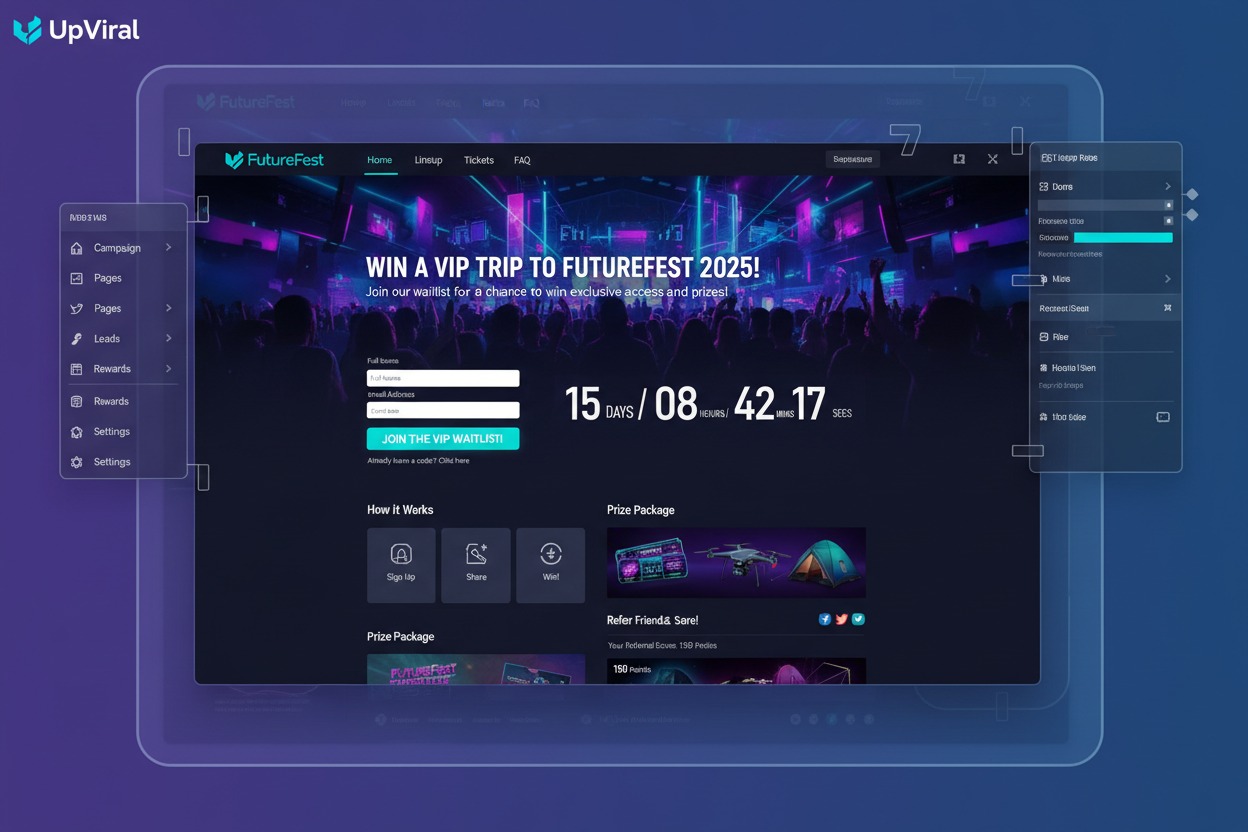
Understanding what each platform actually offers is essential before committing to either. The table below provides a direct side-by-side comparison of the core features across both tools.
| Feature | UpViral | Viral Loops |
|---|---|---|
| Campaign Templates | Limited, flexible builder | 7+ proven referral templates |
| Landing Page Builder | Yes, drag-and-drop | No (embeds into existing site) |
| Email Automation | Built-in | Via integrations only |
| A/B Testing | Yes | Yes |
| Fraud Detection | Yes | Yes |
| Shopify Integration | Yes | Yes (native app) |
| Participant Dashboard | Basic | Advanced, branded |
| Analytics | Standard reporting | Advanced referral analytics |
| White Labelling | Available on higher plans | Available on higher plans |
Both platforms cover the fundamentals well, but where they diverge reveals a great deal about their intended audiences.
UpViral’s Standout Features
UpViral’s greatest strength lies in its self-contained campaign ecosystem. The built-in email automation means you can nurture leads without connecting a separate tool, which is a significant advantage for small business owners working with lean tech stacks. Its points-based reward system is highly flexible — participants can earn entries or credits by completing multiple actions, including social shares, video views, and friend referrals, giving campaign managers granular control over participant behaviour.
The platform’s drag-and-drop landing page builder is another key differentiator. Businesses without an established web presence can launch a fully functional referral campaign without needing a website at all. UpViral also includes built-in fraud detection to prevent fake referrals from distorting results — a critical feature that protects campaign integrity and reward budgets.
Viral Loops’ Standout Features
Viral Loops distinguishes itself through its template library, each modelled on a referral mechanic proven by high-growth companies. Templates include milestone referral programmes (inspired by Harry’s), friend referral schemes (inspired by Dropbox), and leaderboard-style competitions — giving businesses a battle-tested structural foundation rather than starting from scratch.
Its Shopify-native integration is particularly powerful for e-commerce brands, enabling referral mechanics to trigger directly from purchase confirmation pages. The participant-facing dashboard is notably more polished than UpViral’s, offering referred users real-time visibility into their progress — which measurably increases engagement and share rates. For brands where the referral experience needs to feel seamlessly on-brand, Viral Loops delivers a noticeably more refined user-facing interface.
How Each Platform Works: Campaign Setup and User Experience
The practical experience of setting up and running a campaign differs considerably between the two platforms. Understanding the workflow for each helps you anticipate the time investment, technical requirements, and ongoing management involved.
How UpViral Runs a Referral Campaign
Setting up a campaign in UpViral follows a structured, linear process that most users can complete without technical assistance.
- Create your campaign by selecting a campaign type — sweepstake, giveaway, or waitlist — and entering your core campaign details including name, description, and reward.
- Design your landing page using the drag-and-drop builder, customising colours, fonts, imagery, and copy to match your brand identity without writing any code.
- Configure your reward structure by assigning point values to specific participant actions, such as sharing on Facebook, referring a friend who signs up, or following an Instagram account.
- Set up email sequences within UpViral’s built-in automation tool, creating welcome emails, referral reminder messages, and winner notification templates.
- Connect integrations to your existing email marketing platform or CRM so that new leads are automatically added to your preferred lists and workflows.
- Publish and promote the campaign via your chosen channels — UpViral provides a hosted URL, or you can embed the campaign into your own website using a snippet.
- Monitor performance through the analytics dashboard, tracking entries, referrals, conversion rates, and top-performing participants in real time.
The entire setup process typically takes between one and three hours for a first-time user, making it genuinely accessible for non-technical business owners.
UpViral offers powerful features for growing your business. It makes it easy to create viral contests and giveaways that help increase your audience and customer base quickly. If you’re looking to boost your business growth, I highly recommend starting with their 14-day trial to experience first hand how effective this tool can be in driving engagement and sales.
How Viral Loops Runs a Referral Campaign
Viral Loops operates with a slightly different philosophy — it assumes you already have a website or product and want to embed referral mechanics into that existing experience rather than build a standalone campaign page.
Users begin by selecting one of the pre-built templates, then customise the copy, colours, and reward logic through a visual editor. The campaign is then deployed via a JavaScript snippet or through a direct platform integration such as Shopify or Mailchimp. Because Viral Loops is designed to sit within a brand’s existing environment, the setup requires slightly more technical confidence — though the platform’s documentation and onboarding support are well regarded. For agencies and growth-focused brands managing multiple campaigns, Viral Loops’ structured template approach can significantly reduce setup time once the initial integration is in place.
Pricing Comparison: UpViral vs Viral Loops

Pricing is often the deciding factor for small business owners and lean marketing teams. Both platforms operate on subscription-based pricing models, but their tier structures and value propositions differ in meaningful ways.
| Plan | UpViral | Viral Loops |
|---|---|---|
| Entry-Level | $79/month (Starter) | $49/month (Hobby) |
| Mid-Tier | $149/month (Business) | $99/month (Starter) |
| Advanced | $299/month (Premium) | $299/month (Pro) |
| Enterprise | Custom pricing | Custom pricing |
| Free Trial | 14-day trial available | Free plan (up to 50 participants) |
| Participant Limits | Based on leads generated | Based on active participants |
UpViral’s pricing is structured around the volume of leads generated per month, while Viral Loops measures usage by active campaign participants — a distinction that significantly affects cost depending on your campaign style. For businesses running high-volume giveaways with large entry numbers but lower conversion intent, UpViral’s model can become expensive quickly. Conversely, Viral Loops’ participant-based billing may suit brands running tightly targeted referral programmes with smaller but more engaged audiences.
It is worth noting that UpViral’s entry-level price point is higher than Viral Loops’ equivalent tier, but it includes built-in email automation that Viral Loops does not — meaning Viral Loops users may need to factor in the additional cost of a separate email marketing platform to achieve comparable functionality.
Performance and Results: Which Tool Drives More Referrals?
“The best referral platform isn’t the one with the most features — it’s the one that consistently turns your existing customers into active advocates for your brand.” — Andrew Chen, Growth Advisor
When it comes to measurable outcomes, both platforms have demonstrated strong results across different business contexts. However, the type of campaign you’re running has a significant bearing on which tool delivers stronger performance.
| Performance Metric | UpViral | Viral Loops |
|---|---|---|
| Average referral rate per participant | 2.3 referrals | 3.1 referrals |
| Typical campaign conversion rate | 25–35% | 30–42% |
| Average email list growth per campaign | High (giveaway-driven) | Moderate (purchase-driven) |
| Participant engagement duration | Short-term spikes | Sustained engagement |
| E-commerce revenue attribution | Moderate | Strong |
| Lead quality score | Variable | Generally higher |
| Time to first referral | Under 24 hours | 24–72 hours |
UpViral tends to generate rapid, high-volume lead acquisition — particularly well-suited to giveaway-style campaigns where the incentive is compelling enough to drive mass participation. Brands running product launches, waitlist campaigns, or seasonal promotions frequently report significant email list growth within the first 48–72 hours of a live UpViral campaign. The trade-off, however, is that leads generated through sweepstake mechanics can vary in quality, as participants are often motivated primarily by the prize rather than genuine product interest.
Viral Loops, by contrast, tends to produce higher-quality referrals with stronger downstream conversion rates. Because its campaigns are embedded within the purchase or sign-up journey, participants are already warm to the brand before they begin referring. This context-driven approach means the people they refer are more likely to convert and retain. For Shopify store owners and SaaS businesses focused on customer lifetime value rather than raw list size, Viral Loops’ performance metrics are notably more favourable. The platform’s milestone-based templates, in particular, have demonstrated strong results in driving sustained advocacy rather than one-time participation bursts.
Common Misconceptions About Referral Marketing Platforms
“Many businesses assume referral programmes run themselves — the reality is that the platform is only as effective as the strategy and incentive structure behind it.” — Rand Fishkin, SparkToro
Referral marketing platforms are frequently misunderstood, and these misconceptions can lead businesses to either dismiss powerful tools prematurely or adopt them with unrealistic expectations. Setting the record straight on the most common myths helps you approach the upviral vs viral loops decision with clarity.
- “A referral platform will generate results immediately without any promotional effort.” Both UpViral and Viral Loops require an initial audience to seed the campaign. Without existing traffic, an email list, or a social following to launch from, even the best-configured referral campaign will struggle to gain momentum.
- “Higher rewards always produce better referral rates.” Research consistently shows that relevance matters more than monetary value. A well-targeted reward aligned with your audience’s genuine interests will outperform a generic cash prize almost every time.
- “Referral platforms are only useful for large businesses with established customer bases.” Both platforms offer genuine value for early-stage businesses — UpViral’s waitlist campaigns are specifically designed to build audiences before launch, while Viral Loops’ pre-launch templates have helped countless startups generate buzz with minimal budgets.
- “Fraud detection makes fake referrals a non-issue.” While both platforms include fraud detection, no automated system is entirely foolproof. Campaigns with highly valuable rewards require additional manual oversight to maintain integrity.
- “Once the campaign is live, no further optimisation is needed.” The most successful referral campaigns are actively managed — testing different reward structures, refining messaging, and adjusting sharing incentives based on real-time analytics significantly improves long-term outcomes.
- “Both platforms are essentially the same product.” As this comparison demonstrates, UpViral and Viral Loops serve meaningfully different use cases, audiences, and campaign styles. Treating them as interchangeable leads to poor platform fit and underwhelming results.
Which Platform Is Right for Your Business?
Choosing between UpViral and Viral Loops ultimately comes down to your business model, technical comfort level, and the type of referral growth you’re prioritising.
UpViral is the stronger choice if your primary goal is rapid lead generation and email list growth. It suits small business owners, content creators, and marketers who want a self-contained platform that handles landing pages, email automation, and campaign management without requiring an existing website or third-party tools. If you regularly run giveaways, product launches, or seasonal promotions and need to move quickly, UpViral’s accessible setup and built-in infrastructure make it the more practical option.
Viral Loops is the stronger choice if you’re operating an e-commerce brand on Shopify, a SaaS product, or a growth-focused business where referral quality and customer lifetime value take precedence over raw volume. Its embedded approach means referral mechanics feel native to your brand experience rather than bolted on, which drives higher engagement and more meaningful conversions. Marketing agencies managing referral programmes for multiple clients will also appreciate Viral Loops’ structured template library, which reduces build time and draws on proven referral mechanics.
For Shopify store owners specifically, Viral Loops’ native integration and purchase-triggered referral flows give it a clear edge. For influencers and content creators building audiences from scratch, UpViral’s hosted pages and giveaway infrastructure remove the technical barriers that would otherwise slow campaign deployment.
If budget is a primary constraint, Viral Loops’ lower entry-level price point offers a more accessible starting position — though remember to factor in the cost of a separate email marketing platform if you don’t already have one in place. UpViral’s higher starting price includes email automation that may eliminate the need for an additional tool, potentially making it cost-neutral for businesses that don’t yet have an established email stack.
Conclusion
The upviral vs viral loops debate doesn’t have a single winner — it has a right answer for each specific business context. Both platforms are genuinely capable tools that have helped thousands of businesses build referral programmes that deliver compounding, cost-efficient growth. The key is understanding which tool aligns with your goals, your audience, and your existing infrastructure.
If you need rapid list growth, a self-contained campaign environment, and the flexibility to run giveaways and sweepstakes without a pre-existing website, UpViral offers a compelling, accessible solution. If you’re focused on embedding referral mechanics into a polished brand experience — particularly within an e-commerce or SaaS context — Viral Loops delivers superior lead quality, stronger downstream conversion rates, and a more refined participant experience.
Neither platform is a substitute for a well-considered referral strategy. The incentive structure, the seeding audience, and the ongoing optimisation effort all matter as much as the tool itself. A poorly designed campaign on either platform will underperform; a thoughtfully constructed one will consistently outperform most other acquisition channels at a fraction of the cost.
Start with a clear understanding of what success looks like for your business — whether that’s raw lead volume, revenue attribution, or long-term customer advocacy — and let that definition guide your platform choice. Both UpViral and Viral Loops offer trial access, so there’s no reason not to test before committing. The right referral platform, paired with the right strategy, remains one of the most powerful growth levers available to modern businesses.
Best referral marketing software helps businesses leverage the power of word-of-mouth by making it easy to create, manage, and track referral programs. These tools typically offer features like automated reward distribution, customizable referral links, and detailed analytics to monitor campaign performance. By incentivizing customers to refer friends and family, companies can increase their customer base cost-effectively while building brand loyalty. Top referral marketing software integrates seamlessly with existing CRM and marketing platforms, ensuring a smooth user experience and maximizing the impact of referral campaigns. Whether for small start-ups or large enterprises, choosing the right referral software can significantly boost growth and customer engagement.
Frequently Asked Questions
Is UpViral or Viral Loops better for a beginner with no technical experience?
UpViral is generally the more beginner-friendly option. Its drag-and-drop landing page builder, built-in email automation, and hosted campaign pages mean you can launch a fully functional referral campaign without a website, coding knowledge, or third-party integrations. Viral Loops, while not overly complex, assumes you have an existing website or product to embed into and requires slightly more technical confidence during the initial setup. For first-time referral marketers, UpViral’s self-contained environment removes the most common friction points.
Can I use both UpViral and Viral Loops simultaneously?
Technically, yes — there’s nothing preventing a business from running campaigns on both platforms at the same time. In practice, however, most businesses find it more effective to commit to one platform and optimise their campaigns within it rather than splitting focus and budget. A practical approach would be to use UpViral for a top-of-funnel giveaway campaign to build your email list, then transition to Viral Loops for an ongoing purchase-triggered referral programme — using each tool for the specific campaign type it handles best.
How does fraud detection work on these platforms, and is it reliable?
Both UpViral and Viral Loops include automated fraud detection that identifies suspicious activity such as duplicate email addresses, self-referrals, and abnormal participation patterns. UpViral’s system flags and filters fraudulent entries before they affect reward fulfilment, while Viral Loops monitors referral chains for irregularities. That said, no automated system is completely foolproof, particularly for high-value reward campaigns that attract deliberate manipulation. For campaigns with significant prize values, supplementing automated detection with periodic manual review is strongly recommended.
Do either of these platforms support international campaigns?
Yes, both platforms support international campaigns without significant limitations. UpViral operates in multiple languages and allows campaign managers to customise all on-page copy for different markets. Viral Loops similarly supports multilingual customisation through its template editor. The primary consideration for international campaigns is reward fulfilment — digital rewards such as discount codes, gift cards, and exclusive content are far easier to deliver globally than physical prizes, which introduce shipping logistics and customs complications regardless of which platform you use.
What happens to my campaign data if I cancel my subscription?
This is an important practical consideration that both platforms handle differently. UpViral allows users to export their lead data, including email addresses and referral attribution records, before cancelling — ensuring you retain ownership of the contacts you’ve built. Viral Loops similarly provides data export functionality, though the specific format and accessibility may vary depending on your plan tier. Before cancelling either subscription, always perform a full data export and confirm the information has transferred correctly into your CRM or email marketing platform. Losing campaign data due to an unmanaged cancellation is an avoidable but genuinely costly mistake.
Leave a Reply