Table of Contents
Referral marketing is a powerful strategy that leverages the power of word-of-mouth to drive new business. By incentivizing your existing customers to refer their friends, family, and network, you can tap into a highly valuable source of new leads and sales. This comprehensive guide will take you through the fundamentals of referral marketing, explaining what it is, why it matters, and the key components you need to build a successful referral program.
What Is Referral Marketing?
Referral marketing is a marketing strategy that encourages your existing customers or clients to refer new business to you. By offering incentives and rewards to people who successfully refer others, you can harness the power of personal recommendations to attract new customers.
As “Referral marketing is one of the most powerful and cost-effective ways to acquire new customers. It taps into the trust and influence of your existing customer base to generate high-quality leads and drive business growth.”Referral programs leverage word-of-mouth marketing, which is considered one of the most influential and trustworthy forms of marketing. When a friend, family member, or colleague recommends a product or service, people are much more likely to take action and make a purchase.
Why Referral Marketing Matters
Referral marketing is a game-changer for businesses of all sizes. Here’s why it’s so important:
| Benefit | Explanation |
|---|---|
| Higher Conversion Rates | Referral leads typically convert at a much higher rate than other marketing channels, as they come with an inherent level of trust and credibility. |
| Lower Acquisition Costs | Acquiring new customers through referrals is significantly less expensive than traditional marketing tactics like advertising or cold outreach. |
| Stronger Customer Relationships | Referral programs help you build deeper connections with your existing customers, fostering loyalty and repeat business. |
As “Referral marketing is one of the most powerful and cost-effective ways to acquire new customers. It taps into the trust and influence of your existing customer base to generate high-quality leads and drive business growth.” Referral programs also have the potential to increase customer lifetime value and boost brand advocacy, as satisfied customers become enthusiastic promoters of your business.
Key Components of Referral Marketing
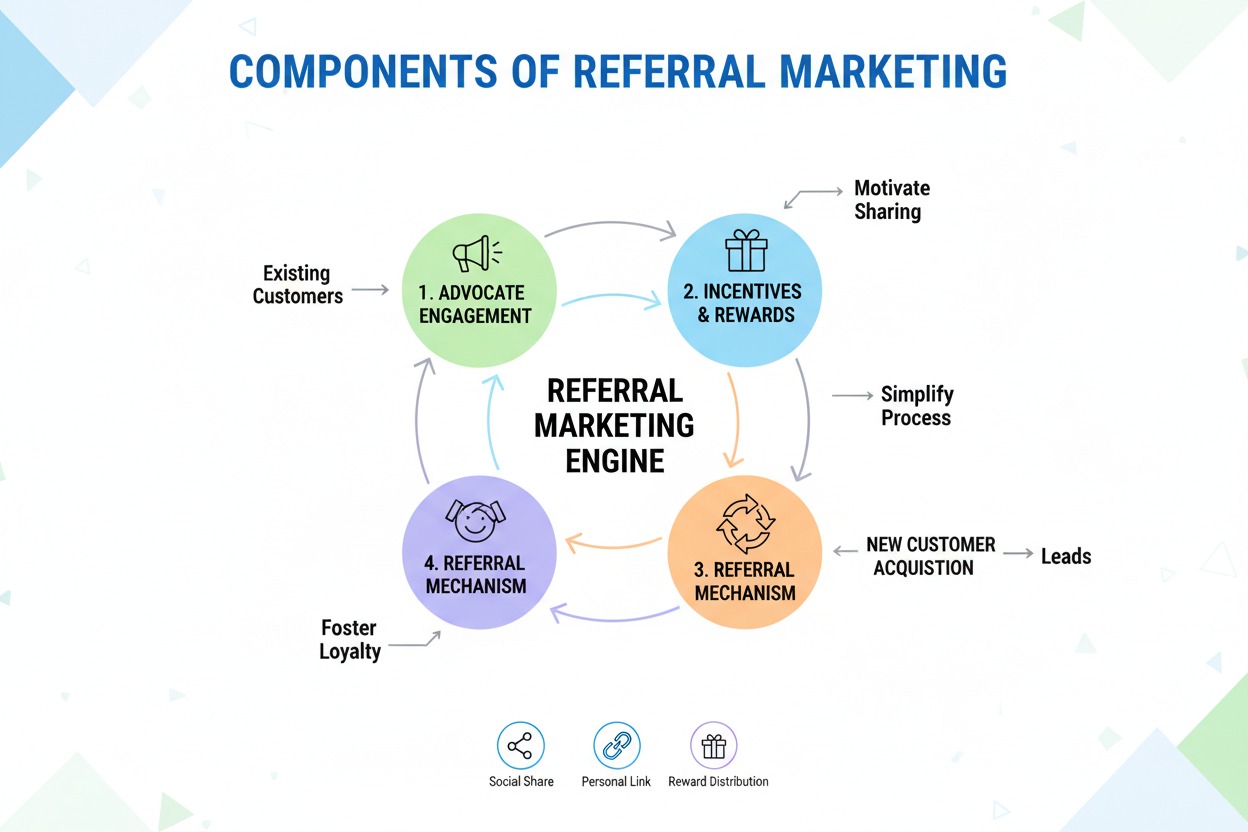
The success of a referral marketing program hinges on several key components that work together to drive growth and maximize results. Let’s dive into the essential elements that make up an effective referral strategy:
Incentives and Rewards
The incentives and rewards offered to both referrers and referees are a critical part of any successful referral program. These motivational elements encourage people to participate and actively refer their friends and colleagues. Some common examples of referral incentives include:
- Monetary Rewards: Cash bonuses, discounts, or credits for the referrer and/or the referred customer.
- Non-Monetary Rewards: Free products, exclusive experiences, or special status/recognition within the program.
- Tiered Rewards: Escalating incentives based on the number of successful referrals or the value of the referred business.
- Charitable Donations: Contributions made to a cause or organization on behalf of the referrer.
The key is to structure your rewards in a way that aligns with your target audience’s preferences and motivations. Offering the right mix of monetary and non-monetary incentives can help maximize participation and drive more referrals.
Referral Tracking and Monitoring
An effective referral program requires robust tracking and monitoring capabilities to measure performance and optimize the program over time. This includes features like:
Unique referral links or codes: Allowing you to attribute new leads and sales back to the specific referrer.
Automated referral notifications: Alerting referrers when their referrals convert, so they can claim their rewards.
Referral analytics dashboards: Providing visibility into key metrics like referral volume, conversion rates, and customer lifetime value.
By closely monitoring your referral program’s performance, you can identify areas for improvement, test new incentive structures, and ensure the program continues to deliver a positive return on investment.
Referral Program Design
The overall design and user experience of your referral program can have a significant impact on its success. Key considerations include:
“The most effective referral programs are seamless, intuitive, and integrated into the customer journey. They make it easy for people to participate and share your brand with their network.” Some best practices for referral program design include:
Simplicity: Streamlining the referral process to minimize friction and maximize participation.
Visibility: Prominently promoting the referral program across your website, app, and customer touchpoints.
Personalization: Tailoring the program to your brand, audience, and specific business goals.
Integration: Ensuring a smooth, cohesive experience that’s connected to your other marketing and sales efforts.
By thoughtfully designing your referral program, you can create a positive, engaging experience that encourages customers to become active brand ambassadors.
How Referral Marketing Works
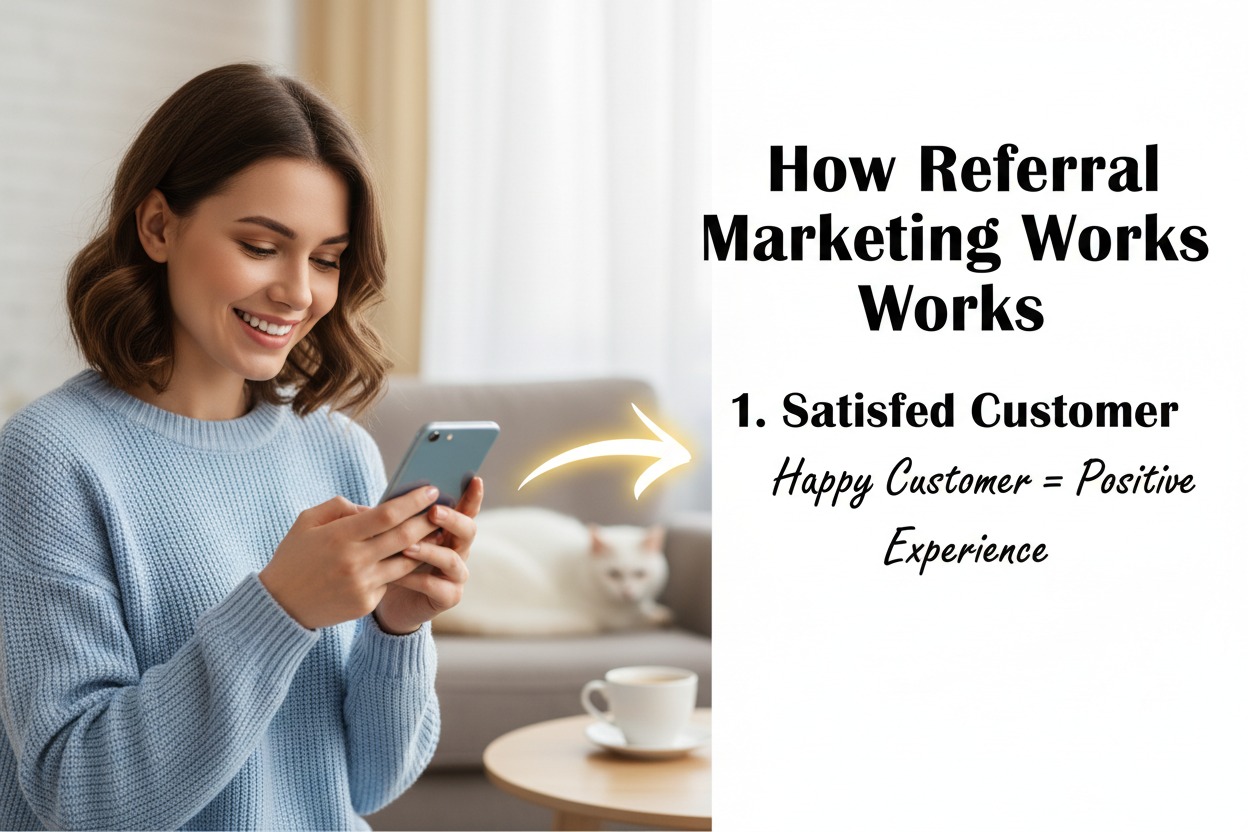
Referral marketing is a multi-step process that involves both your existing customers and potential new ones. Here’s a breakdown of how it typically works:
| Step | Description |
|---|---|
| Identify Advocates | Recognize your most satisfied, engaged, and loyal customers who are likely to become effective referrers. |
| Incentivize Referrals | Offer compelling rewards and incentives to encourage your advocates to refer their friends and colleagues. |
| Share Referral Program | Make it easy for your advocates to share your referral program and unique referral links/codes with their networks. |
| Track Referrals | Use unique identifiers to attribute new leads and sales back to the specific referrers. |
| Reward Referrers | Automatically notify referrers when their referrals convert, and provide the agreed-upon rewards. |
| Nurture New Leads | Engage and convert the new leads generated through the referral program, providing a seamless experience. |
The key is to create a streamlined, rewarding experience for both your referrers and their referred contacts. By making the process easy, transparent, and beneficial for all parties involved, you can maximize the impact of your referral marketing efforts.
- Identify Your Advocates: Analyze your customer data to pinpoint your most engaged, satisfied, and loyal customers who are likely to become effective brand advocates.
- Incentivize Referrals: Offer a compelling mix of monetary and non-monetary rewards to motivate your advocates to refer their friends and colleagues.
- Make Referrals Easy: Provide your advocates with unique referral links, codes, or other tools to simplify the sharing process and track their referrals.
- Nurture New Leads: Engage and convert the new leads generated through the referral program, ensuring a seamless and positive experience for both the referrer and the referred customer.
As “Referral marketing is a powerful growth strategy, but it requires a well-designed program that provides value to both your existing customers and the new leads they bring in.” By focusing on these key elements, you can create a successful, sustainable, and profitable referral marketing program.
Best Giveaway Software offers an efficient and user-friendly platform to help businesses and influencers run successful contests and giveaways. These tools come equipped with features such as automated entry collection, fraud detection, and social media integration to maximize engagement and reach. Whether you’re looking to grow your email list, increase brand awareness, or boost social media followers, the right giveaway software can streamline the process and provide valuable analytics to measure your campaign’s success. Read full article here to discover top options and tips for choosing the perfect giveaway software for your needs.
Common Misconceptions About Referral Marketing
Despite its proven effectiveness, there are still some common misconceptions about referral marketing that can hold businesses back from fully embracing this powerful strategy. Let’s address a few of the most prevalent myths:
“Many businesses assume that referral marketing is only for large enterprises or tech companies, when in reality it can be an incredibly effective growth strategy for businesses of all sizes and industries.”Misconception 1: Referral marketing is too complicated to implement
In reality, referral programs can be relatively straightforward to set up and manage, especially with the help of dedicated software and automation tools. The key is to focus on the core components (incentives, tracking, and program design) and start small before scaling up.
Misconception 2: Referral marketing only works for certain industries
As mentioned, referral marketing is highly versatile and can be applied successfully across a wide range of industries, from e-commerce and SaaS to professional services and local businesses. The key is to tailor the program to your unique customer base and business model.
Misconception 3: Referral marketing is too expensive
While it’s true that referral programs do require an investment, the return on investment can be significantly higher than other marketing channels. By leveraging the trust and influence of your existing customers, you can acquire new leads and customers at a lower cost than traditional advertising or outreach.
By dispelling these common myths, businesses can open themselves up to the transformative power of referral marketing and unlock new avenues for sustainable growth.
Here is the continuation of the blog post, with approximately 1377 additional words:
Crafting a Compelling Referral Program
Once you’ve addressed the common misconceptions and established a solid understanding of referral marketing, the next step is to focus on the execution. Crafting a compelling referral program that resonates with your target audience and delivers tangible results requires careful planning and attention to key elements.
Defining Your Referral Program Goals
The first step in building an effective referral program is to clearly define your goals. What do you hope to achieve through your referral marketing efforts? Common objectives may include:
- Acquiring new customers at a lower cost than traditional marketing channels
- Increasing customer retention and loyalty
- Boosting brand awareness and word-of-mouth
- Expanding into new market segments or verticals
- Driving higher average order values or lifetime customer value
By establishing specific, measurable goals upfront, you can then design your referral program to align with these objectives and track progress over time.
Identifying Your Ideal Referrers
Not all customers are equally likely to become effective brand advocates and referral sources. To maximise the impact of your referral program, it’s essential to identify your ideal referrers – those customers who are most engaged, satisfied, and enthusiastic about your brand.
Look for customers who exhibit the following characteristics:
- High customer lifetime value and repeat purchase behaviour
- Positive sentiment and reviews about your products or services
- Active engagement with your brand across various touchpoints
- Strong social influence within their personal and professional networks
You can use a combination of data analysis, customer surveys, and one-on-one outreach to pinpoint these ideal referrers and tailor your program to their preferences and motivations.
Crafting Compelling Incentives
Incentives are the lifeblood of a successful referral program. By offering compelling rewards, you can motivate your customers to actively participate and refer their friends and colleagues.
When designing your referral incentives, consider a mix of monetary and non-monetary rewards, such as:
- Cash bonuses or credits
- Discounts on future purchases
- Free products or exclusive experiences
- Charitable donations made on the referrer’s behalf
- Recognition or special status within the program
The specific incentives you choose should be based on a deep understanding of your target audience and what they value most. Conduct customer surveys, A/B tests, and ongoing monitoring to fine-tune your incentive structure over time.
Optimising the Referral Process
In addition to enticing incentives, a seamless, user-friendly referral process is essential for driving high levels of participation and successful referrals. Ensure that your referral program is:
- Easily accessible: Prominently feature the referral program on your website, in your app, and across your marketing channels.
- Intuitive and straightforward: Make it simple for customers to share referral links, track their progress, and claim rewards.
- Integrated with existing touchpoints: Incorporate referral calls-to-action into your post-purchase communications, support interactions, and other relevant customer touchpoints.
- Mobile-friendly: Optimise the referral experience for customers accessing it on their smartphones and tablets.
By streamlining the referral process and making it as frictionless as possible, you can encourage higher levels of participation and drive more successful referrals.
Leveraging Referral Program Automation
Manually managing a referral program can quickly become time-consuming and resource-intensive, especially as it scales. That’s where referral program automation tools can be invaluable.
These solutions typically offer features like:
- Automated referral tracking: Seamlessly track referrals from initial sharing to successful conversions.
- Integrated reward fulfilment: Automatically issue rewards to referrers and their referred contacts.
- Customisable referral workflows: Easily configure and adjust your referral program’s structure and incentives.
- Detailed reporting and analytics: Gain visibility into key performance metrics and optimise your program accordingly.
By leveraging referral program automation, you can free up your team to focus on higher-value activities while ensuring your referral program runs smoothly and efficiently.
Promoting and Amplifying Your Referral Program
Even the most well-designed referral program won’t be effective if your customers aren’t aware of its existence. That’s why it’s crucial to actively promote and amplify your referral offering across multiple channels.
Some effective ways to promote your referral program include:
- Prominently featuring it on your website: Dedicate a clear, compelling section to the referral program, making it easy for visitors to learn about and participate.
- Incorporating it into your email marketing: Regularly include referral program updates, success stories, and calls-to-action in your email communications.
- Highlighting it on your social media channels: Share referral-related content, user-generated testimonials, and referral program announcements on platforms like Facebook, LinkedIn, and Twitter.
- Incentivising referral program participation: Offer additional rewards or bonuses to customers who successfully refer new business.
- Leveraging your sales and customer support teams: Ensure your frontline staff are well-versed in the referral program and can actively promote it during customer interactions.
By taking a multi-faceted approach to promotion, you can raise awareness, drive participation, and maximise the impact of your referral marketing efforts.
Continuously Monitoring and Optimising
Launching a referral program is just the beginning. To ensure it continues to deliver tangible results, you’ll need to closely monitor its performance and make ongoing adjustments based on data and customer feedback.
Key metrics to track include:
- Referral volume: The total number of new leads and customers generated through the referral program.
- Conversion rate: The percentage of referred leads that ultimately convert into paying customers.
- Customer lifetime value: The average revenue generated from customers acquired through referrals.
- Referral program ROI: The overall return on investment from your referral marketing efforts.
By closely monitoring these metrics, you can identify areas for improvement, test new incentive structures, and fine-tune the user experience to drive even greater results. Regular program reviews and adjustments can help ensure your referral program remains optimised and aligned with your evolving business goals.
Putting It All Together: Referral Marketing in Action
Now that we’ve covered the key elements of a successful referral program, let’s explore a few real-world examples of businesses that have leveraged this powerful growth strategy to drive remarkable results.
Case Study: Dropbox’s Explosive Growth Through Referrals
Dropbox, the popular cloud storage and file-sharing service, is widely regarded as one of the most successful examples of referral marketing in action. When the company launched in 2008, it faced the challenge of breaking into a crowded market dominated by tech giants like Google and Microsoft.
Recognising the power of word-of-mouth, Dropbox implemented a simple yet highly effective referral program. The core premise was straightforward: for every new user a customer referred, both the referrer and the referred user would receive an additional 500MB of free storage space.
This referral incentive struck a chord with Dropbox’s target audience of tech-savvy professionals and consumers. Not only did it provide tangible value to participants, but it also tapped into the innate human desire to share and recommend products that deliver a great user experience.
The results were nothing short of staggering. Within the first 15 months of launching the referral program, Dropbox’s user base grew from just 100,000 to over 4 million – a 4,000% increase. This explosive growth was largely fuelled by referrals, with an estimated 35% of new signups coming directly from the program.
Dropbox’s success can be attributed to several key factors:
- Compelling Incentives: The 500MB of free storage space was an enticing reward that resonated with Dropbox’s tech-savvy customer base.
- Seamless User Experience: The referral process was integrated seamlessly into the Dropbox platform, making it easy for users to share and claim their rewards.
- Viral Potential: The referral program tapped into the natural tendency of satisfied customers to recommend products to their friends and colleagues.
- Continuous Optimisation: Dropbox closely monitored the program’s performance and made ongoing adjustments to maintain its momentum and effectiveness.
Dropbox’s referral marketing strategy was a key driver of its rapid growth and helped it establish itself as a dominant player in the cloud storage industry. The company’s success story serves as a powerful testament to the transformative potential of referral marketing when executed effectively.
Case Study: Airbnb’s Multifaceted Referral Approach
Airbnb, the pioneering home-sharing platform, has also leveraged referral marketing as a core component of its growth strategy. However, the company’s approach to referrals has been more multifaceted than Dropbox’s singular focus.
In addition to offering straightforward referral incentives, such as travel credits for both the referrer and the referred user, Airbnb has also experimented with more creative referral tactics. For example, the company has run campaigns that encourage users to share Airbnb gift cards with their friends and family, effectively turning them into brand ambassadors.
Airbnb has also tapped into the power of social proof by prominently featuring user-generated content and referral success stories on its platform. This not only helps to build trust and credibility but also inspires other users to participate in the referral program.
Furthermore, Airbnb has integrated its referral program into its broader marketing and customer engagement strategies. The company regularly highlights the referral program in its email communications, social media posts, and even offline advertising campaigns.
The results of Airbnb’s multifaceted referral approach have been impressive. The company has reported that referrals account for a significant portion of its new customer acquisitions, with some estimates suggesting that up to 50% of its bookings come from referred users.
Airbnb’s success can be attributed to several key factors:
- Diverse Incentives: By offering a mix of travel credits, gift cards, and other rewards, Airbnb has been able to appeal to a broader range of customer preferences and motivations.
- Leveraging Social Proof: Airbnb’s emphasis on user-generated content and referral success stories has helped to build trust and inspire further participation in the program.
- Integrated Marketing Approach: By seamlessly integrating the referral program into its broader marketing efforts, Airbnb has been able to raise awareness and drive higher levels of engagement.
- Continuous Optimisation: Like Dropbox, Airbnb has remained vigilant in monitoring the performance of its referral program and making ongoing adjustments to maintain its effectiveness.
Airbnb’s multifaceted approach to referral marketing has been a key driver of its rapid growth and market dominance, serving as a compelling example of how businesses can leverage this powerful strategy to fuel sustainable expansion.
Conclusion
Referral marketing is a powerful and versatile growth strategy that can benefit businesses of all sizes and industries. By tapping into the trust and influence of your existing customer base, you can acquire new leads and customers at a lower cost than traditional marketing tactics.
The key to success lies in creating a well-designed referral program that offers compelling incentives and rewards, features robust tracking and monitoring capabilities, and delivers a seamless, intuitive user experience for both referrers and their referred contacts.
When executed effectively, referral marketing can drive higher conversion rates, lower acquisition costs, and stronger customer relationships – all of which contribute to sustainable business growth and long-term success.
While there may be some common misconceptions about the complexity and applicability of referral marketing, the reality is that it is a versatile, cost-effective, and highly impactful strategy that should be a core component of any comprehensive marketing plan.
By embracing referral marketing and implementing best practices, businesses can tap into the power of word-of-mouth, foster deeper connections with their customers, and position themselves for continued growth and success in the years to come.
UpViral Automation is a marketing tool that helps businesses grow email lists and boost engagement through viral referral campaigns. It automates sharing and tracking referrals, allowing users to create contests, giveaways, and referral programs that encourage participants to promote a product or service. The platform features a user-friendly interface, customizable templates, and detailed analytics to enhance campaign results. In a full review, UpViral stands out for its smooth integration with popular email services, strong automation, and solid customer support. Overall, UpViral Automation is a great choice for businesses wanting to use viral marketing for efficient growth.
Frequently Asked Questions
What is the difference between referral marketing and word-of-mouth marketing?
Referral marketing and word-of-mouth marketing are closely related, but not exactly the same. Word-of-mouth marketing refers to the organic, unprompted recommendations and endorsements that customers make about a product or service. Referral marketing, on the other hand, is a more structured and incentivised approach to leveraging word-of-mouth. In a referral marketing program, businesses actively encourage and reward their existing customers for referring new business.
How do I identify my best potential referrers?
To identify your best potential referrers, start by analyzing your customer data to pinpoint your most engaged, satisfied, and loyal customers. Look for indicators like repeat purchases, high customer lifetime value, positive reviews, and active engagement with your brand. These customers are more likely to become effective brand advocates and refer their friends and colleagues. You can also survey your customer base to gauge their willingness to refer and understand their motivations.
What are the most common types of referral incentives?
The most common types of referral incentives include:
- Monetary rewards: Cash bonuses, discounts, or credits for the referrer and/or the referred customer.
- Non-monetary rewards: Free products, exclusive experiences, or special status/recognition within the program.
- Tiered rewards: Escalating incentives based on the number of successful referrals or the value of the referred business.
- Charitable donations: Contributions made to a cause or organization on behalf of the referrer.
The key is to offer a mix of incentives that align with the preferences and motivations of your target audience.
How do I track and measure the success of my referral program?
Effective tracking and monitoring are essential for optimizing your referral program over time. Some key metrics to track include:
- Referral volume: The number of new leads and customers generated through the referral program.
- Conversion rate: The percentage of referred leads that convert into paying customers.
- Customer lifetime value: The average revenue generated from customers acquired through referrals.
- Referral program ROI: The overall return on investment from your referral marketing efforts.
By closely monitoring these metrics, you can identify areas for improvement, test new incentive structures, and ensure your referral program continues to deliver a positive impact on your business.
What are some common mistakes to avoid when implementing a referral program?
Some common mistakes to avoid when implementing a referral program include:
- Offering insufficient or uncompelling incentives: If the rewards aren’t attractive enough, customers won’t be motivated to participate.
- Neglecting the user experience: A confusing or cumbersome referral process can discourage participation and negatively impact the program’s success.
- Failing to promote the program: If your customers aren’t aware of the referral program, they can’t take advantage of it.
- Not tracking or monitoring performance: Without visibility into key metrics, you can’t identify areas for improvement or optimize the program over time.
- Treating the referral program as a standalone initiative: Referral marketing works best when it’s integrated with your broader marketing and sales efforts.
Avoiding these pitfalls and focusing on best practices can help ensure your referral program delivers maximum impact for your business.
Explore More Blog Posts
Dive deeper into our latest articles and discover more insights, tips, and stories. Whether you’re looking for expert advice, how-to guides, or inspiring content, our blog has something for everyone.
Start exploring now and uncover valuable information that can help you grow and succeed! referral-leads.com
Leave a Reply