

Table of Contents
Introduction
“Word of mouth is the most powerful form of marketing — and UpViral is built to engineer it at scale.”
If you’ve ever wondered how some brands seem to grow their email lists overnight or launch products that spread like wildfire across social media, the answer often lies in viral referral marketing. In 2026, with paid advertising costs climbing and organic reach shrinking, businesses are turning to smarter, more cost-effective growth strategies — and that’s exactly where UpViral enters the picture.

This UpViral review takes a thorough, honest look at one of the most talked-about viral campaign platforms available today. Whether you’re a Shopify store owner trying to build pre-launch buzz, a content creator looking to grow your audience, or a marketing agency seeking scalable tools for clients, understanding what UpViral actually delivers — and where it falls short — is essential before committing your budget.
Over the course of this review, we’ll cover everything from the platform’s core features and campaign mechanics to real-world performance data, pricing, and how it stacks up against the competition. We’ve gone hands-on with the tool so you don’t have to guess.
Viral loops, referral incentives, and shareable campaigns are no longer reserved for Silicon Valley startups with massive development teams. UpViral promises to put these growth tactics in the hands of everyday marketers — but does it deliver on that promise in 2026? Let’s find out.
UpViral Review: What Is It and Who Makes It?
UpViral is a cloud-based viral marketing platform designed to help businesses grow their audiences through referral-powered campaigns. At its core, it enables marketers to create giveaways, sweepstakes, waitlists, and lead generation campaigns that incentivise participants to share with their networks — turning every new lead into a potential source of more leads.
The platform was founded by Wilco de Kreij, a Dutch entrepreneur and digital marketer with a strong background in growth hacking and conversion optimisation. De Kreij built UpViral out of a genuine need — he wanted a tool that could automate the viral loop mechanics he was manually engineering for his own businesses and clients.
The Story Behind UpViral
UpViral launched in 2015 and quickly gained traction among online marketers who were frustrated by the limitations of traditional list-building tools. Unlike standard opt-in forms or lead magnets, UpViral introduced a structured referral system where participants earn points or entries by sharing campaign links — creating a self-perpetuating growth engine.
Over the years, the platform has processed hundreds of millions of leads and powered campaigns for businesses across e-commerce, SaaS, education, and media. By 2026, UpViral has matured considerably, with a more polished interface, expanded integrations, and improved analytics compared to its early iterations. It remains an independently operated product under Connectio, de Kreij’s broader marketing software company.
First Impressions: Dashboard and Onboarding
When you first log into UpViral, the experience is notably clean and focused. The onboarding process walks new users through campaign creation with guided prompts, which is particularly helpful for those new to viral loop mechanics. Here’s what the onboarding experience covers:
- Selecting your campaign type (giveaway, waitlist, or lead generation)
- Customising your landing page using the drag-and-drop builder
- Setting up your referral reward structure and point values
- Connecting your email marketing platform via native integrations
- Configuring sharing options across social media channels
- Previewing and testing your campaign before going live
- Publishing and accessing your unique campaign URL
The dashboard itself is intuitive, displaying active campaigns, lead counts, referral statistics, and reward redemptions at a glance. For small business owners who aren’t deeply technical, the learning curve is manageable — most users report being able to launch their first campaign within a few hours of signing up.

Start your 14-day trial now and experience all the premium features completely free! This risk-free trial gives you full access to our service, allowing you to explore everything we offer without any commitment. Whether you’re looking to enhance productivity, enjoy exclusive content, or try out new tools, the 14-day trial is the perfect way to see how our platform can benefit you. Don’t miss out—sign up today and take the first step toward unlocking your full potential!
Key Features of UpViral
| Feature | Description | Available On |
|---|---|---|
| Campaign Builder | Drag-and-drop landing page editor with templates | All plans |
| Viral Referral System | Point-based sharing incentives across social platforms | All plans |
| Reward Management | Digital and physical reward fulfilment tools | All plans |
| A/B Testing | Split-test landing pages and email sequences | Starter and above |
| Email Automation | Built-in sequences for follow-up and reward delivery | All plans |
| Integrations | Connects with Mailchimp, ActiveCampaign, HubSpot, Zapier | All plans |
| Fraud Detection | Filters fake referrals and duplicate entries | All plans |
| Custom Domains | Use your own branded domain for campaigns | Business plan |
Campaign Builder and Viral Loop Mechanics
The campaign builder is the backbone of UpViral and, frankly, one of its strongest selling points. Users can choose from a library of pre-built templates or build from scratch using a drag-and-drop editor. The templates span multiple use cases — product launches, newsletter growth, app waitlists, and seasonal giveaways — saving significant setup time.
What makes UpViral genuinely powerful is its viral loop architecture. When a participant enters a campaign, they receive a unique referral link. Every time someone signs up through that link, the original participant earns points. Those points can be exchanged for rewards — creating a compelling incentive to keep sharing. This mechanic transforms passive leads into active brand advocates without requiring any additional ad spend.
Reward and Incentive System
“The best referral programmes don’t just reward participation — they reward enthusiasm. UpViral’s point system is designed to do exactly that.”
UpViral’s reward system is flexible and genuinely practical. Marketers can offer digital rewards such as discount codes, downloadable content, or early access, as well as physical prizes for higher-tier campaigns. Rewards can be triggered automatically once a participant hits a point threshold, reducing manual administration considerably.
Analytics, Tracking, and Reporting
The analytics dashboard provides a clear breakdown of campaign performance, including total leads, referral sources, conversion rates, and top referrers. Marketers can identify which sharing channels are driving the most growth and adjust their strategy accordingly. The fraud detection system is a particularly valuable feature — it automatically flags and filters suspicious entries, ensuring your lead data remains clean and actionable.
UpViral in Practice: Real-World Performance

“Running a viral campaign without the right infrastructure is like lighting a fire without oxygen — UpViral provides the conditions for growth to actually ignite.”
Understanding a platform’s features is one thing; seeing how it performs under real-world conditions is another entirely. UpViral has been used across thousands of campaigns globally, and the patterns that emerge from that usage tell a compelling story about where it excels and where expectations need to be managed.
- Define your campaign goal clearly before building — whether that’s email list growth, pre-launch signups, or contest entries.
- Choose a reward that genuinely motivates your specific audience, not just a generic prize.
- Connect your preferred email marketing platform during setup to ensure seamless lead delivery.
- Enable fraud detection settings from the outset to protect data quality.
- Set up at least two sharing channels — typically email and one social platform — to maximise reach.
- Test your campaign on mobile before publishing, as the majority of referral clicks occur on smartphones.
Setting Up Your First Campaign
The campaign setup process in UpViral is more straightforward than many comparable tools. After selecting your campaign type, the platform guides you through each configuration step in a logical sequence. Landing pages can be customised with your branding, copy, and imagery using the drag-and-drop editor, and the built-in template library means you’re never starting from a blank canvas.
One area where UpViral genuinely saves time is its email automation suite. Rather than building follow-up sequences in a separate tool, you can configure confirmation emails, referral milestone notifications, and reward delivery messages directly within the platform. For small business owners managing multiple responsibilities, this consolidation is a meaningful practical advantage.
Results and Conversion Rates You Can Expect
Performance naturally varies depending on your offer, audience, and traffic source, but the benchmarks below reflect realistic outcomes based on typical UpViral campaign data:
| Campaign Type | Average Opt-In Rate | Average Referral Rate | Lead Multiplier |
|---|---|---|---|
| Product Giveaway | 35–55% | 25–40% | 2.1x |
| Pre-Launch Waitlist | 40–60% | 30–45% | 2.4x |
| Newsletter Growth | 25–40% | 20–30% | 1.8x |
| Seasonal Promotion | 30–50% | 22–35% | 2.0x |
| App Beta Signup | 45–65% | 35–50% | 2.6x |
The lead multiplier figure is particularly telling — it represents how many leads a campaign generates per paid or organic visitor. A multiplier above 2.0x means your referral mechanics are effectively doubling your initial traffic investment, which significantly reduces your cost per acquisition over time. Campaigns with highly desirable rewards and well-defined audiences consistently outperform these averages.

Pros and Cons of UpViral
No platform is without its trade-offs, and a balanced UpViral review requires an honest assessment of both sides. After hands-on testing and reviewing feedback from real users across e-commerce, SaaS, and creator industries, here’s what stands out.
The strengths of UpViral are considerable. The platform’s viral loop mechanics are genuinely well-engineered — the point-based referral system creates a natural incentive structure that encourages sharing without feeling forced. The built-in fraud detection functionality is more robust than many competitors offer at comparable price points, which is critical for maintaining lead quality. The drag-and-drop campaign builder is accessible enough for non-technical users while offering sufficient customisation for experienced marketers. Integration with tools like Mailchimp, ActiveCampaign, and HubSpot means UpViral fits neatly into existing marketing stacks rather than requiring a workflow overhaul.
The analytics dashboard deserves specific praise — it surfaces actionable data without overwhelming users with unnecessary complexity. Identifying top referrers, tracking conversion rates by channel, and monitoring reward redemptions are all handled cleanly within a single interface.
UpViral is a powerful tool designed to help grow social media accounts by leveraging the power of viral marketing campaigns. It enables users to create engaging contests and giveaways that encourage participants to share the campaign with their friends and followers, thereby increasing reach and attracting new followers organically. By incentivizing sharing and participation, UpViral helps boost social media engagement, expand audience size, and enhance brand visibility. Its easy-to-use platform and customizable templates make it accessible for businesses and influencers looking to accelerate their social media growth effectively.
However, there are genuine limitations worth acknowledging. The landing page editor, while functional, lacks the design flexibility of dedicated page builder tools like Unbounce or Leadpages — advanced users may find it restrictive. The platform’s template library, though useful, hasn’t expanded dramatically in recent years and can feel repetitive across campaigns. Some users have also noted that customer support response times can be inconsistent, particularly on lower-tier plans.
Pricing is another consideration. While UpViral offers strong value at its mid-tier level, the entry-level plan imposes lead caps that can feel limiting for businesses running high-volume campaigns. Scaling up to remove those restrictions adds to the monthly cost, which may give smaller operators pause.
Email automation, while convenient, isn’t as sophisticated as standalone email service providers — users running complex nurture sequences will still need a dedicated tool alongside UpViral.
Who Is UpViral For?
UpViral isn’t a one-size-fits-all solution, and being clear about its ideal user base helps set realistic expectations. The platform is best suited to those who have a defined audience, a compelling offer, and a genuine need to grow their contact list or generate pre-launch momentum efficiently.
- Shopify and WooCommerce store owners looking to build email lists ahead of product launches or seasonal promotions.
- Content creators and influencers who want to grow their newsletter or community through structured referral incentives.
- Marketing agencies managing multiple client campaigns who need a reliable, repeatable viral campaign framework.
- SaaS founders running beta waitlists or early-access programmes where referral incentives can accelerate sign-ups.
- Course creators and educators seeking to build audiences before a launch window opens.
- Growth-focused brands of any size that want to reduce paid acquisition costs by engineering organic word-of-mouth.
- Small business owners looking to grow their social media presence and attract more clients
“UpViral is particularly powerful for businesses that already have a small but engaged audience — the referral mechanics amplify what you already have rather than building from zero.”
Where UpViral is less suited is for businesses with no existing traffic source or audience whatsoever. The platform amplifies momentum — it doesn’t manufacture it from nothing. If you have no way to drive initial visitors to your campaign page, the viral loop has no starting point. Similarly, businesses in highly regulated industries with strict data or promotional compliance requirements may find the platform’s customisation options insufficient for their specific needs. For everyone else, UpViral represents a focused, practical tool for engineering measurable audience growth.
UpViral Pricing and Value for Money
Understanding what you’re paying for — and whether it represents genuine value — is central to any honest UpViral review. The platform operates on a tiered subscription model, with pricing structured around the number of leads you can collect per month rather than the number of campaigns you run.
| Plan | Monthly Price | Lead Limit | Campaigns | Custom Domain | Best For |
|---|---|---|---|---|---|
| Starter | $79/month | 10,000 leads | Unlimited | No | Solo marketers, early testing |
| Business | $149/month | 25,000 leads | Unlimited | Yes | Growing SMBs, agencies |
| Premium | $299/month | 100,000 leads | Unlimited | Yes | High-volume brands, enterprises |
Annual billing reduces these costs by approximately 30%, which makes a meaningful difference for businesses committing to the platform long-term.
Value for money is genuinely strong at the Business tier. For £120–£150 per month, you’re getting viral loop mechanics, email automation, fraud detection, A/B testing, and integrations with major marketing platforms — functionality that would cost considerably more if assembled from separate tools. The cost per lead on a well-run UpViral campaign frequently undercuts equivalent paid social campaigns by a significant margin.
Pricing Plans Breakdown
The Starter plan is functional but constrained. The 10,000-lead monthly cap can be reached quickly by businesses running active promotions, and the absence of a custom domain option means your campaign URLs carry UpViral branding — a minor but noticeable limitation for brand-conscious operators.
The Business plan is where most serious users will land. The 25,000-lead cap covers the majority of small-to-mid-sized campaigns comfortably, and the custom domain feature adds a layer of professional credibility that matters during high-visibility launches. Agencies managing multiple client accounts will find this tier the most practical starting point.
Is UpViral Worth the Investment?
For businesses actively running list-building campaigns, the answer is a clear yes — provided you have the audience and offer to fuel the referral loop. Return on investment scales quickly when viral mechanics are working correctly. A campaign generating a 2.0x lead multiplier effectively halves your cost per acquisition, meaning the platform pays for itself within a single well-executed campaign for most users.
Alternatives to UpViral to Consider
UpViral occupies a specific niche in the marketing technology landscape, and it’s worth understanding how it compares to the alternatives before committing. Several competing platforms offer overlapping functionality, each with distinct strengths and trade-offs.
Viral Loops is perhaps the closest direct competitor. It offers referral campaign mechanics with a similarly structured point system and supports multiple campaign formats including referral programmes, waitlists, and milestone rewards. Where Viral Loops edges ahead is in its design flexibility and white-label capabilities, making it a stronger choice for agencies with demanding brand requirements. However, it tends to carry a higher price point at equivalent feature levels.
ReferralHero is a leaner, more affordable option that suits businesses primarily focused on waitlist and pre-launch campaigns. Its interface is simpler than UpViral’s, and it lacks some of the deeper analytics and fraud detection capabilities — but for straightforward lead generation use cases, it delivers solid results at a lower cost.
KingSumo, originally popularised by AppSumo, remains a popular choice for giveaway campaigns specifically. It’s simpler to set up and more affordable, but it lacks the breadth of UpViral’s campaign types and automation features. For businesses whose viral marketing strategy extends beyond giveaways, KingSumo’s limitations become apparent quickly.
Gleam is a well-established alternative that covers competitions, rewards, and email capture campaigns with a polished interface and strong social integration. It’s particularly popular among e-commerce brands and content creators. The trade-off is that Gleam’s referral mechanics aren’t as deeply engineered as UpViral’s — it’s broader in scope but shallower in viral loop sophistication.
Wishpond takes a wider approach, offering landing pages, pop-ups, and marketing automation alongside contest and referral tools. For businesses seeking an all-in-one marketing suite rather than a dedicated viral campaign tool, Wishpond is worth evaluating — though the added complexity may be unnecessary for those with focused list-building goals.
The core takeaway is that UpViral remains one of the most purpose-built and feature-complete options specifically for viral referral campaigns. If referral-driven growth is your primary objective, it’s difficult to match its combination of mechanics, automation, and data quality tools at a comparable price point.
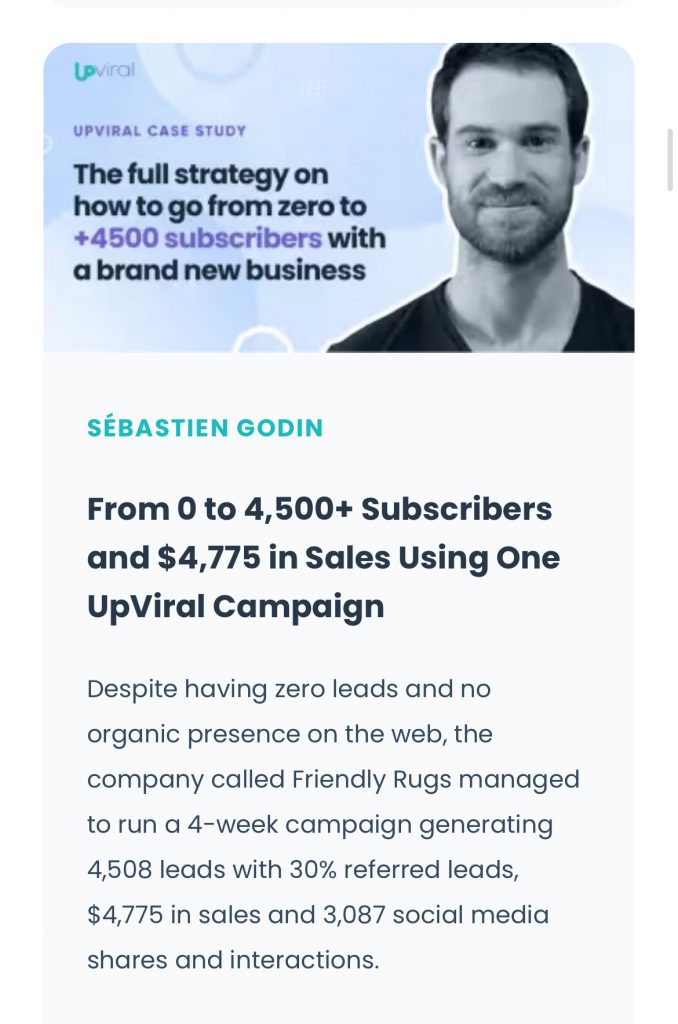
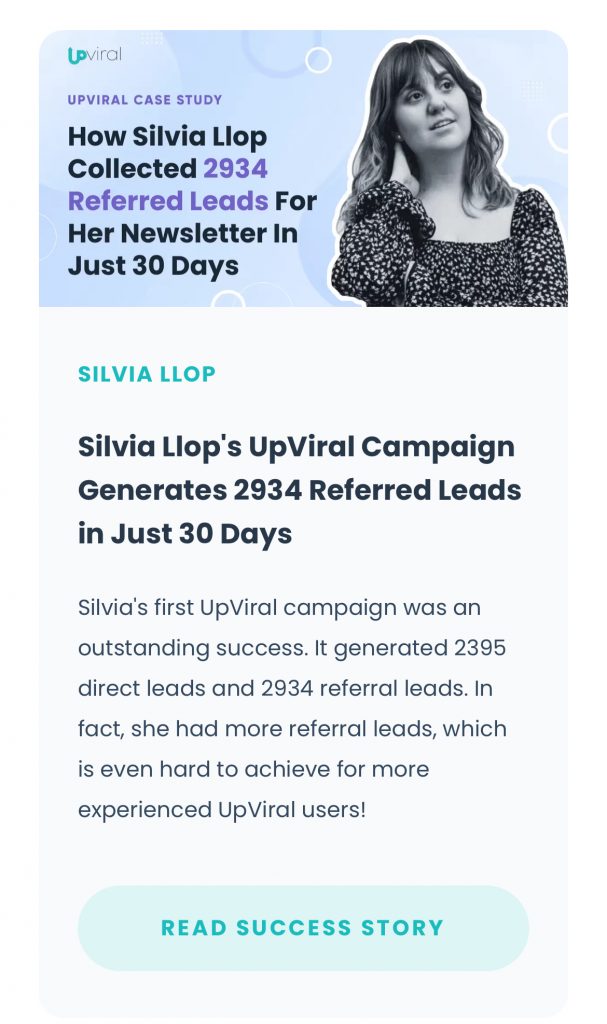
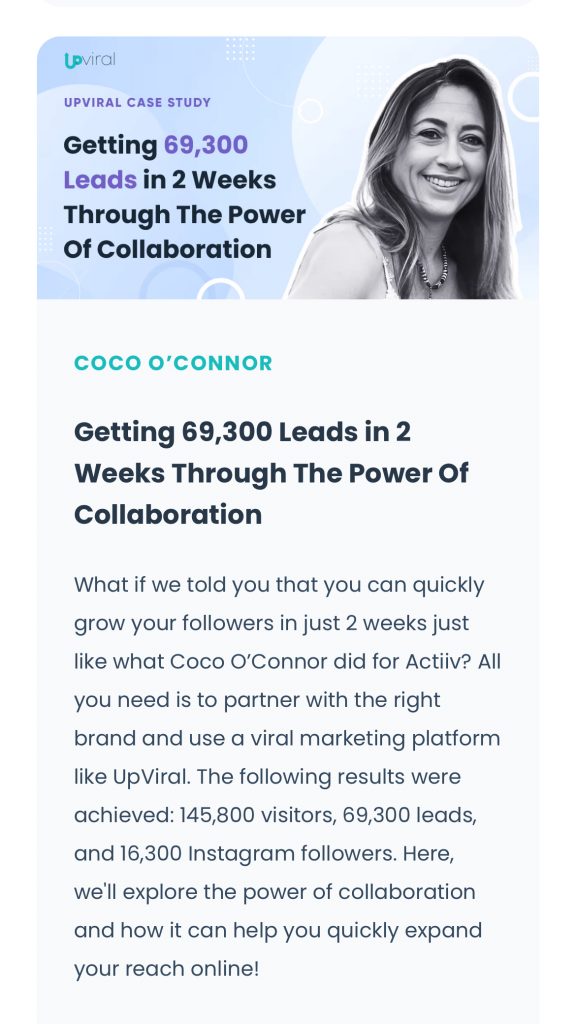
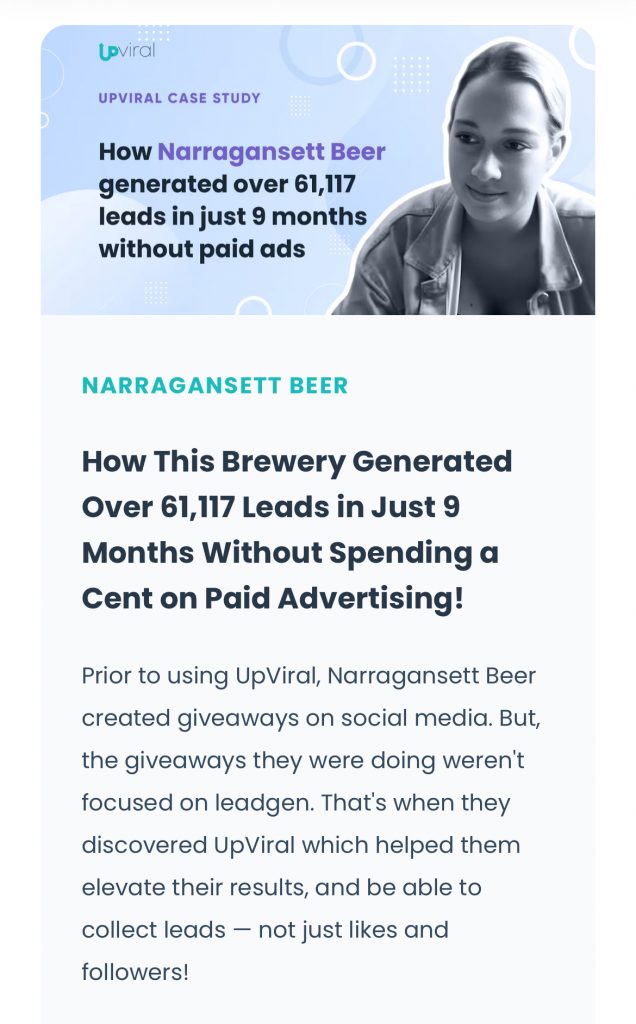
Upviral Testimonials
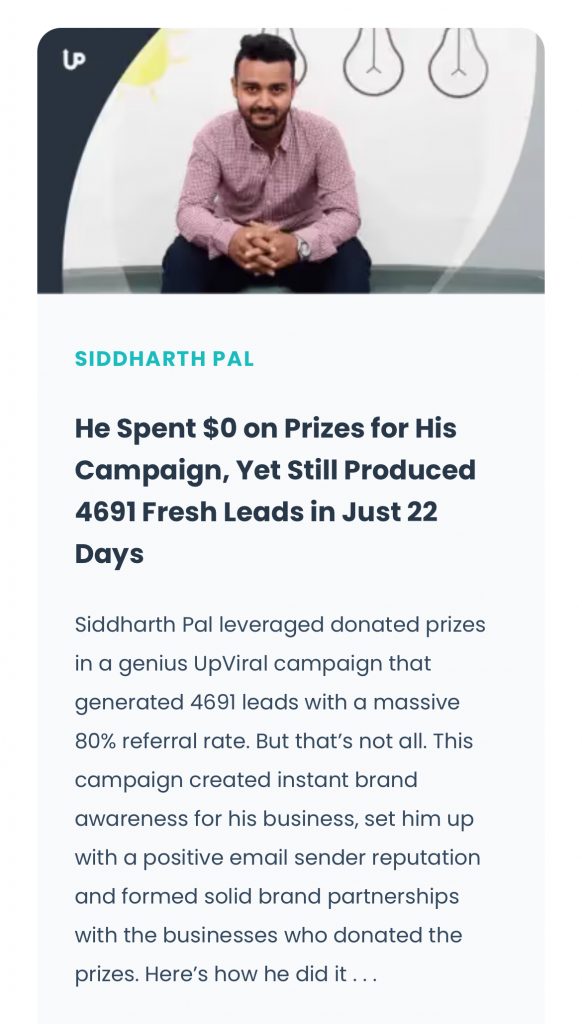
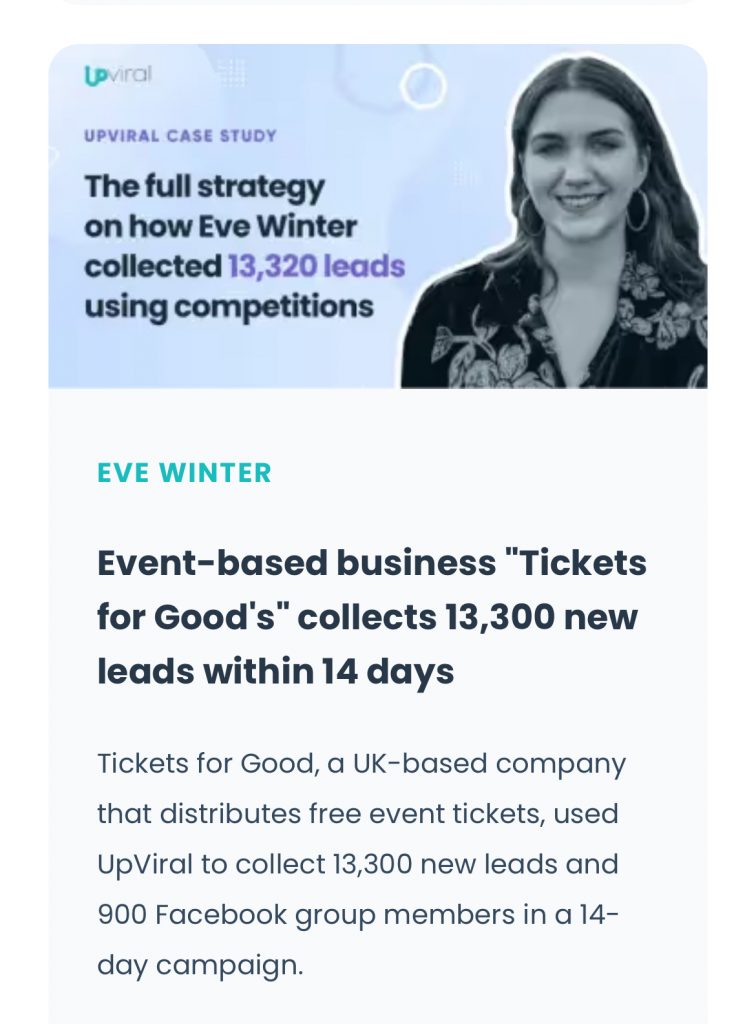
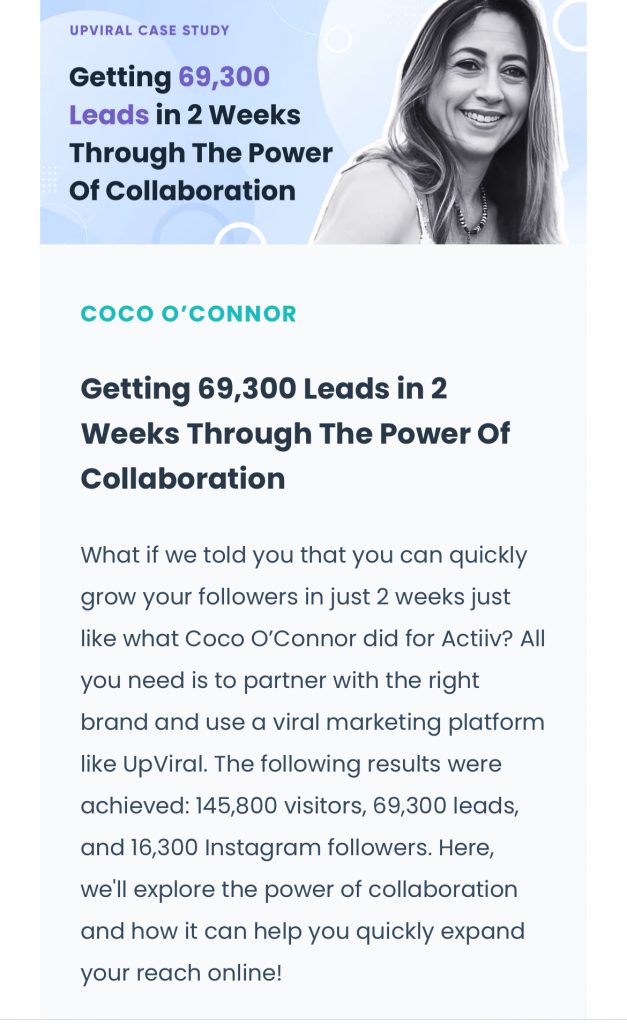
UpViral can significantly boost your business in just 30 days by leveraging viral marketing campaigns that rapidly increase your brand’s visibility and customer engagement. By creating enticing contests, giveaways, or referral programs, UpViral encourages your audience to share your content with their networks, exponentially expanding your reach. This not only drives a surge in qualified leads but also builds a loyal community around your brand. The platform’s easy-to-use tools and real-time analytics allow you to optimize campaigns quickly, ensuring maximum impact within a short timeframe. In just one month, UpViral can help you generate more traffic, grow your email list, and ultimately increase sales and revenue.
Final Verdict: Our UpViral Review Rating
After thorough hands-on testing and a detailed review of real-world campaign performance, UpViral stands out as one of the most capable and well-considered viral marketing platforms available in 2026. It delivers on its core promise — engineering referral-driven growth — with a level of reliability and polish that justifies its position as a market leader in this category.
The platform earns high marks for its viral loop mechanics, fraud detection, and seamless integration with established email marketing tools. The onboarding experience is accessible, the analytics are actionable, and the reward system is flexible enough to serve a wide range of industries and campaign types.
Where it falls slightly short is in landing page design flexibility and the depth of its email automation — areas where dedicated specialist tools still hold an edge. Pricing at the entry level can also feel restrictive for high-growth businesses that quickly outpace the Starter plan’s lead cap.
Overall UpViral Rating: 4.4 out of 5
| Category | Rating |
|---|---|
| Ease of Use | ⭐⭐⭐⭐⭐ |
| Viral Loop Mechanics | ⭐⭐⭐⭐⭐ |
| Analytics and Reporting | ⭐⭐⭐⭐ |
| Pricing and Value | ⭐⭐⭐⭐ |
| Design Flexibility | ⭐⭐⭐ |
| Customer Support | ⭐⭐⭐⭐ |
For small business owners, e-commerce brands, and growth-focused marketers who are serious about reducing acquisition costs through referral mechanics, UpViral represents a smart, scalable investment in 2026.
Conclusion
UpViral has earned its reputation as one of the most purpose-built viral marketing platforms on the market, and in 2026, it remains a genuinely compelling option for businesses serious about referral-driven growth. Throughout this UpViral review, one thing has become consistently clear: when the platform is used with the right offer, audience, and strategy, it delivers measurable, cost-effective results that are difficult to replicate through paid advertising alone.
The viral loop mechanics are the platform’s standout strength — intelligently designed to turn passive participants into active advocates without requiring ongoing ad spend. Paired with solid fraud detection, flexible reward management, and clean analytics, UpViral gives marketers the infrastructure to run campaigns that genuinely scale.
That said, it’s not a magic solution. The platform amplifies existing momentum rather than creating it from scratch, and businesses without an initial traffic source will need to address that gap before expecting results. The landing page editor and email automation, while functional, have room to grow compared to specialist alternatives.
For Shopify and WooCommerce owners, content creators, marketing agencies, and growth-focused brands, UpViral represents a smart addition to the marketing toolkit — particularly at the Business tier where value-for-money is strongest. If reducing your cost per acquisition through engineered word-of-mouth is a priority in 2026, UpViral is well worth your serious consideration.
UpViral offers powerful features for growing your business. It makes it easy to create viral contests and giveaways that help increase your audience and customer base quickly. If you’re looking to boost your business growth, I highly recommend starting with their 14-day free trial to experience first hand how effective this tool can be in driving engagement and sales.
Frequently Asked Questions
Is UpViral suitable for complete beginners?
Yes, UpViral is designed with accessibility in mind. The onboarding process guides new users through each step of campaign creation, from selecting a template to configuring referral rewards and connecting an email platform. Most users with no prior experience in viral marketing report being able to launch their first campaign within a few hours. That said, getting the most out of the platform — particularly in terms of reward strategy and audience targeting — does benefit from some foundational marketing knowledge.
Does UpViral work for e-commerce businesses specifically?
Absolutely. UpViral is particularly well-suited to Shopify and WooCommerce store owners running product launches, seasonal promotions, or pre-sale waitlists. The ability to offer discount codes, free products, or early access as referral rewards aligns naturally with e-commerce incentive structures. Many store owners use UpViral to build their email list ahead of a launch, then convert those leads through their existing email marketing sequences once the campaign closes.
How does UpViral prevent fraudulent entries?
UpViral includes a built-in fraud detection system that automatically identifies and filters suspicious activity, including duplicate entries, bot-generated sign-ups, and self-referrals. The system runs passively in the background, flagging entries that don’t meet quality thresholds without requiring manual review for every submission. This is one of the platform’s more underappreciated features — maintaining clean lead data is essential for campaign ROI, and UpViral handles it more robustly than many comparable tools at similar price points.
Can I use UpViral alongside my existing email marketing platform?
Yes — and this is one of UpViral’s genuine practical strengths. The platform integrates natively with widely used email service providers including Mailchimp, ActiveCampaign, HubSpot, ConvertKit, and GetResponse, as well as connecting to thousands of additional tools via Zapier. Leads collected through UpViral campaigns can be automatically passed to your preferred platform in real time, meaning your existing nurture sequences and segmentation workflows continue to function without interruption. You don’t need to rebuild your email infrastructure — UpViral slots into what you already have.
What happens to my campaigns if I cancel my UpViral subscription?
If you cancel your UpViral subscription, access to the platform and your active campaigns will cease at the end of your current billing period. It’s strongly recommended to export your lead data before cancelling, as UpViral allows CSV exports of all collected contacts. Any campaign landing pages hosted on UpViral’s infrastructure will go offline once access ends, so businesses relying on live campaign URLs should plan accordingly before downgrading or cancelling their account.
Leave a Reply