Table of Contents
Every marketer loves the idea of rapid growth — more followers, more email subscribers, more customers, seemingly overnight. Giveaway marketing has long promised exactly that. But as platforms evolve, algorithms shift, and audiences become more discerning, many business owners are asking a fair question: is giveaway marketing worth it in 2026, or has it become an outdated tactic that delivers vanity metrics without real results?
“The best marketing doesn’t feel like marketing — but a well-structured giveaway can blur that line in the most profitable way possible.” — Jay Baer, Marketing Strategist
The honest answer is nuanced. Giveaways can be extraordinarily powerful growth tools when executed with intention, or they can drain your budget and attract an audience that disappears the moment the prize is claimed. This article cuts through the noise to give small business owners, Shopify store owners, content creators, and growth-focused brands a clear, evidence-based picture of what giveaway marketing looks like in 2026 — what works, what doesn’t, and how to decide whether it belongs in your strategy.
What Is Giveaway Marketing?
Giveaway marketing is a promotional strategy in which a brand, creator, or business offers a prize — a product, service, experience, or cash equivalent — to participants who complete specific entry actions. Those actions typically include following a social media account, subscribing to an email list, tagging friends, or sharing content. The goal is to accelerate audience growth, boost brand awareness, and generate leads in a compressed timeframe.
At its core, it is a value exchange: participants receive the chance to win something desirable, and the brand receives engagement, exposure, and data in return.
The Core Mechanics of a Giveaway Campaign
A standard giveaway campaign involves several interconnected components working together:
- A clearly defined prize that is relevant and desirable to the target audience
- Specific entry requirements that align with business objectives (follows, shares, sign-ups)
- A defined campaign duration, typically between 3 and 14 days
- A transparent winner selection method, whether randomised or merit-based
- Post-campaign follow-up to convert participants into customers
Platforms such as Gleam, Rafflecopter, and KingSumo have made the technical execution of giveaways significantly more accessible, enabling even solo entrepreneurs to run sophisticated, multi-channel campaigns without a dedicated development team.
How Giveaway Marketing Has Evolved Over Time
Early giveaways were largely offline — think in-store prize draws and competition postcards. The rise of social media in the early 2010s transformed the landscape dramatically. Facebook competitions, Instagram follow-to-win posts, and YouTube subscriber giveaways became mainstream growth tactics almost overnight.
By the mid-2010s, influencer-hosted giveaways emerged as a dominant format, with brands partnering with creators to reach highly targeted audiences. Then came the regulatory scrutiny — platforms began enforcing stricter rules around contest mechanics, and consumer trust became harder to earn.
In 2026, giveaway marketing has matured into a data-driven discipline. Brands are no longer simply chasing follower counts; they are designing campaigns around customer lifetime value, segmentation, and measurable ROI. The tactics have become more sophisticated, the audiences more selective, and the results more predictable for those who understand the mechanics.
Why Giveaway Marketing Still Matters in 2026
Despite the evolution of digital marketing — from short-form video dominance to AI-personalised advertising — giveaway marketing continues to hold a meaningful place in the growth toolkit. The reason is straightforward: human psychology has not changed. People are motivated by the prospect of winning, by scarcity, and by social proof.
| Metric | Industry Average | Top-Performing Giveaway Campaigns |
|---|---|---|
| Email list growth rate | 2–5% per month | 15–40% during campaign period |
| Social media follower growth | 1–3% per month | 20–70% spike during campaign |
| Referral traffic increase | Baseline | 3x–8x above baseline |
| Average cost per lead | £3–£15 (paid ads) | £0.50–£3 (giveaway campaigns) |
| Conversion rate (post-campaign) | 1–3% | 4–12% with proper follow-up |
“Contests and giveaways generate 34% more new followers per campaign than standard content — and that number has held remarkably consistent across the last five years.” — Tailwind Social Media Research, 2024
The Business Case for Running Giveaways
From a purely financial perspective, the cost per acquisition through a well-run giveaway is often significantly lower than through paid advertising channels. A £500 prize paired with a targeted campaign can generate thousands of qualified leads — leads that paid social campaigns would cost considerably more to reach.
For Shopify store owners in particular, giveaways offer a dual benefit: immediate traffic spikes and longer-term retargeting audiences built from competition entrants.
How Giveaways Fit Into a Modern Growth Strategy
Giveaways are most effective when they are not treated as standalone events but as integrated components of a broader marketing funnel. In 2026, the most successful campaigns pair giveaways with automated email sequences, retargeting ads, and community-building initiatives. The giveaway becomes the entry point — the mechanism that brings new audiences into an ecosystem designed to convert and retain them over time.
Key Components of a High-Performing Giveaway
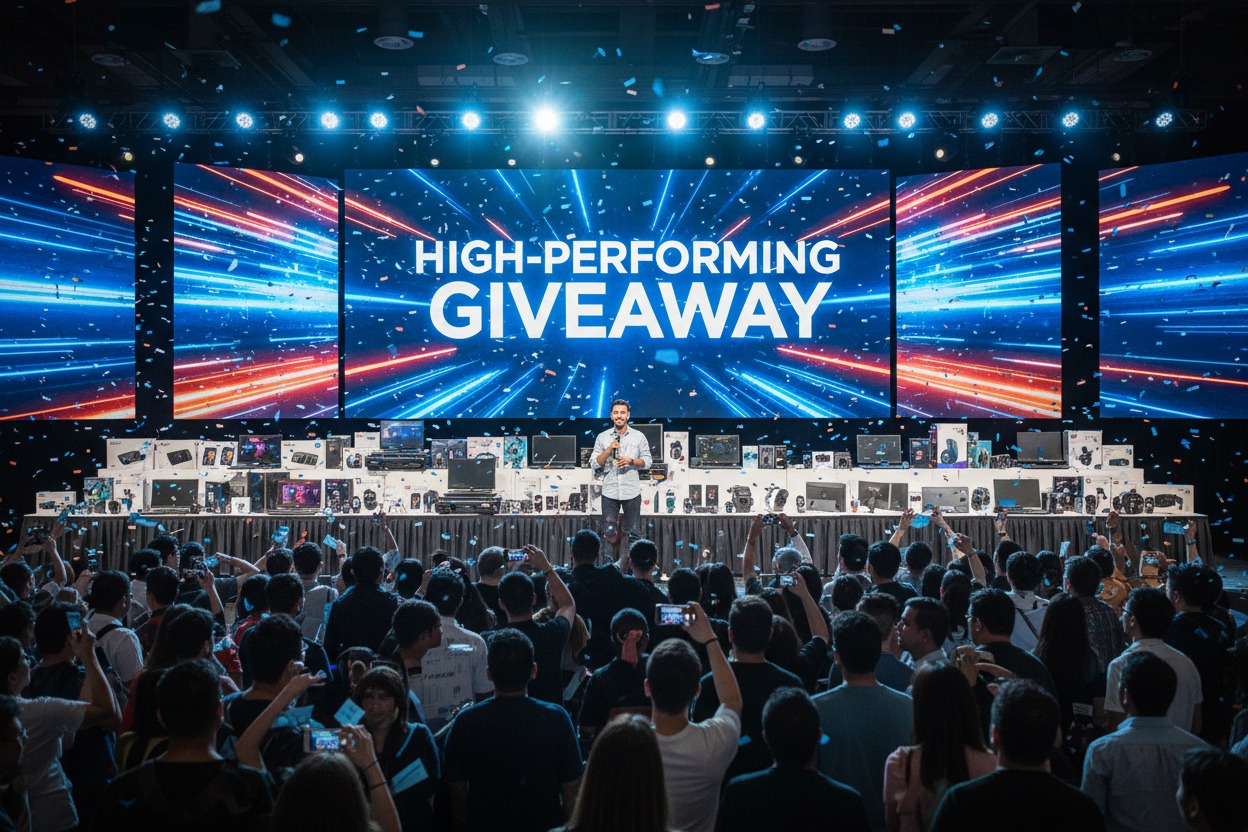
Not all giveaways are created equal. The difference between a campaign that generates genuine business growth and one that simply inflates vanity metrics almost always comes down to structural decisions made before the campaign even launches. Understanding the core components of a high-performing giveaway is essential for anyone serious about making this tactic work.
Prize relevance is arguably the single most important factor. A well-chosen prize attracts the right audience; a poorly chosen one attracts everyone — and everyone is rarely useful. Entry mechanics determine the quality and quantity of participation. Platform alignment ensures your campaign reaches the audience most likely to convert. And post-campaign strategy is what separates brands that see lasting results from those that experience a temporary spike followed by a rapid drop-off.
Choosing the Right Prize for Your Audience
The instinct to offer a high-value, universally appealing prize — an iPhone, a cash sum, a luxury hamper — is understandable but often counterproductive. These prizes attract mass participation regardless of interest in your brand, flooding your list with people who will unsubscribe the moment the winner is announced.
The most effective prizes are tightly aligned with your product or service. A Shopify skincare brand offering a curated product bundle will attract participants who are genuinely interested in skincare. A marketing agency offering a free strategy session will draw in business owners actively seeking that expertise. The prize should function as a pre-qualification filter, ensuring that entrants are already warm prospects rather than prize tourists.
Entry Methods, Rules, and Platform Selection
The entry mechanics you choose should directly serve your business objectives. If your primary goal is email list growth, require an email subscription as the core entry action. If brand awareness is the priority, incentivise sharing and tagging. Layered entry systems — where participants earn additional entries for completing multiple actions — can significantly increase campaign reach without complicating the core entry requirement.
When selecting a platform, consider where your target audience is most active:
- Instagram and TikTok are ideal for visually driven brands targeting younger demographics.
- Facebook remains highly effective for community-based and local business giveaways.
- Email-first platforms like Klaviyo integrations work best for Shopify and e-commerce brands prioritising list growth.
- LinkedIn giveaways suit B2B brands and professional service providers.
- Dedicated tools such as Gleam or Vyper allow multi-platform entry tracking with built-in compliance features.
- YouTube giveaways work particularly well for content creators seeking to grow subscriber counts alongside engagement.
Regardless of platform, ensure your rules are clearly written, legally compliant for your jurisdiction, and transparent about the winner selection process. Ambiguity erodes trust and can damage your brand reputation.
Best giveaway software offers an efficient and user-friendly solution for businesses and individuals looking to run promotional contests and sweepstakes. These tools streamline the process of creating, managing, and tracking giveaways, ensuring fairness and compliance with legal regulations. Top giveaway software typically includes features such as multi-platform entry options, automated winner selection, social media integration, and detailed analytics. By using the best giveaway software, users can increase engagement, grow their audience, and boost brand awareness, making it an essential tool for modern marketing strategies. Read full article here.
How Giveaway Marketing Works: From Launch to Results
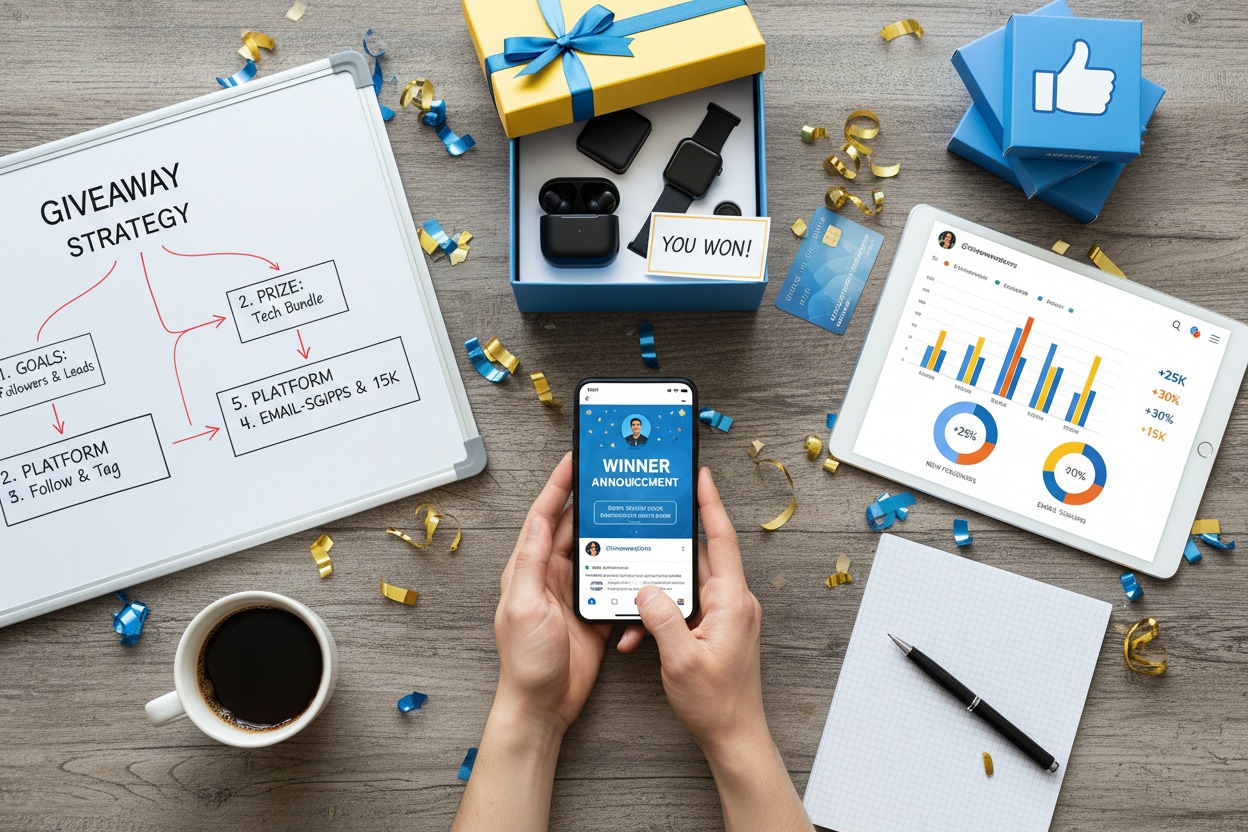
Understanding the mechanics of a giveaway campaign from start to finish allows you to approach each stage with intention rather than improvisation. A structured campaign follows a predictable arc — and knowing that arc means you can optimise at every stage rather than simply hoping for the best outcome.
Setting Goals and Measuring Success
Before any campaign goes live, you must define what success looks like in measurable terms. Vague objectives produce vague results. Are you trying to grow your email list by a specific number of subscribers? Increase your Instagram following by a defined percentage? Generate a set number of referral visits to a product page?
Establishing key performance indicators (KPIs) before launch ensures you can evaluate the campaign honestly afterwards. Common KPIs for giveaway campaigns include cost per lead, email open rates from new subscribers, post-campaign conversion rates, and social media engagement lift. Without these benchmarks, it is impossible to determine whether the campaign delivered genuine return on investment.
The Typical Giveaway Funnel Explained
A well-structured giveaway follows a clear funnel from initial awareness through to post-campaign conversion. Understanding each stage helps you allocate effort and budget appropriately:
- Awareness phase — Paid promotion, influencer partnerships, or organic content drives initial traffic to the giveaway landing page.
- Entry phase — Participants complete the required entry actions, generating email sign-ups, follows, or shares depending on campaign objectives.
- Amplification phase — Referral mechanics encourage existing entrants to share the giveaway, creating organic reach beyond the initial paid or organic promotion.
- Closing phase — The campaign deadline creates urgency, typically producing a spike in entries during the final 24–48 hours.
- Winner announcement — Transparent selection and public announcement reinforces trust and generates a final wave of engagement.
- Nurture phase — Automated email sequences, retargeting ads, and exclusive offers convert non-winning participants into paying customers.
The nurture phase is where most brands underinvest — and where the greatest long-term value is generated. A giveaway that ends at the winner announcement has captured attention without converting it.
Common Misconceptions About Giveaway Marketing
Scepticism around giveaway marketing is understandable, and some of it is warranted. But a significant portion of the doubt surrounding this tactic is rooted in misconceptions rather than evidence. Separating fact from assumption is critical for making an informed decision about whether giveaway marketing belongs in your strategy.
Confirmation bias plays a role here — brands that ran poorly structured campaigns and saw poor results often conclude that giveaways do not work, rather than examining what went wrong in their specific execution.
“The failure of a tactic is rarely evidence that the tactic is flawed — it is usually evidence that the execution was.” — Seth Godin
“Giveaways Only Attract Freebie Hunters”
This is perhaps the most common objection, and it contains a kernel of truth that is frequently overgeneralised. Yes, a poorly targeted giveaway with a universally appealing prize will attract participants with no genuine interest in your brand. But this is a prize selection problem, not a fundamental flaw in giveaway marketing itself.
When a brand offers a prize that is directly relevant to its products or services, the entrant pool self-selects. Someone entering a giveaway for a year’s supply of specialty coffee is, by definition, a coffee enthusiast. Someone entering for a free Shopify store audit is a business owner considering e-commerce. The audience quality is determined almost entirely by the prize and the targeting — both of which are within the brand’s control.
The Truth About Follower Quality and Conversion Rates
The concern that giveaway-acquired followers are low quality and will never convert is a persistent one — and the data tells a more nuanced story. Research from Woobox and Tailwind consistently shows that giveaway participants who opt in via email demonstrate open rates comparable to organic subscribers when nurtured correctly in the weeks following a campaign.
The critical variable is the post-campaign sequence. Brands that immediately follow up with a relevant offer, a personalised welcome series, or exclusive content see measurably higher conversion rates than those who add new subscribers to a generic newsletter list and hope for the best. Follower quality is not fixed at the point of entry — it is shaped by what happens after the campaign ends.
Is Giveaway Marketing Worth It? Weighing the Pros and Cons
The honest answer to whether giveaway marketing is worth it in 2026 depends almost entirely on how it is executed. To make a clear-eyed assessment, it helps to lay out the genuine advantages and limitations side by side.
| Factor | Pros | Cons |
|---|---|---|
| Cost efficiency | Low cost per lead vs. paid advertising | Prize and tool costs can add up without planning |
| Audience growth | Rapid follower and subscriber spikes | Growth may include low-intent participants |
| Brand awareness | High organic reach through sharing mechanics | Short-lived if no nurture strategy follows |
| Lead quality | High when prize is tightly relevant | Poor when prize is generic or mass-appeal |
| Conversion potential | Strong with automated follow-up sequences | Weak if post-campaign engagement is neglected |
| Platform compliance | Manageable with dedicated tools like Gleam | Rules vary by platform and jurisdiction |
| Time investment | Scalable once a repeatable process is built | First campaigns require significant setup time |
For small business owners and Shopify store owners working with lean budgets, the cost-to-impact ratio of a well-structured giveaway is difficult to match through most other channels. For brands that lack a post-campaign nurture strategy, however, the investment may produce little beyond a temporary engagement spike that fades within days.
The brands that consistently see the strongest returns treat giveaways as systematic growth infrastructure rather than one-off promotions. They test prize types, refine entry mechanics, and iterate on their follow-up sequences with each campaign. Over time, this approach transforms giveaways from a gamble into a repeatable acquisition channel with predictable performance benchmarks.
The tactic is not without risk. Poorly executed campaigns can attract low-quality audiences, invite platform penalties if rules are violated, and generate negative sentiment if the winner selection process appears unclear. These are real considerations — but they are manageable ones for any brand willing to invest in proper planning and execution.
Best giveaway software offers powerful automation and lead tracking capabilities that streamline the entire campaign process. These tools allow businesses to effortlessly create, manage, and promote giveaways while automatically capturing participant information. With integrated lead tracking, marketers can monitor engagement in real-time, analyse participant behaviour, and segment leads for targeted follow-ups. Automation features reduce manual work by handling tasks such as email notifications, winner selection, and social media sharing. Overall, using top giveaway software enhances lead generation efficiency, boosts audience interaction, and maximizes the return on marketing efforts.
Conclusion
So, is giveaway marketing worth it in 2026? For the vast majority of small businesses, Shopify store owners, content creators, and growth-focused brands — yes, it absolutely can be. But the returns are not automatic. They are earned through deliberate prize selection, clear campaign objectives, compliant entry mechanics, and a robust post-campaign nurture strategy that converts entrants into loyal customers.
The brands that dismiss giveaway marketing as outdated are often the same ones that ran underprepared campaigns and blamed the tactic for the results. Those that approach it as a structured, data-informed discipline consistently find it to be one of the most cost-effective growth levers available.
If you are willing to plan carefully, measure honestly, and follow up strategically, giveaway marketing in 2026 remains a genuinely powerful tool — one well worth adding to your growth strategy.
Frequently Asked Questions
How much should I budget for a giveaway campaign?
There is no universal figure, but a practical starting point for small businesses is to allocate between £200 and £1,000 for a campaign — covering the prize value, any paid promotion, and campaign tools. The prize itself should represent genuine value to your target audience without being so expensive that it attracts entirely the wrong crowd. Many successful Shopify brand campaigns have achieved strong results with a prize value of £150–£300 when paired with precise targeting.
How long should a giveaway campaign run?
Most high-performing campaigns run for between 5 and 14 days. Shorter campaigns create urgency and maintain momentum; longer ones risk losing audience interest before the deadline. A 7-day campaign is a reliable default for most brands, with a promotional push at launch and a reminder in the final 24 hours to capture late entries.
Do giveaways work for B2B brands and service businesses?
Yes, though the mechanics differ slightly. B2B giveaways tend to perform best on LinkedIn or via email, with prizes such as free consultations, software subscriptions, or industry reports rather than physical products. The audience is smaller but typically higher intent, which means conversion rates post-campaign can be notably strong when the follow-up is well crafted.
Will I lose followers after the giveaway ends?
Some attrition is normal and should be expected. A drop of 10–30% in newly acquired followers within the first two weeks is common. This is not necessarily a failure — it is the audience self-selecting. The followers who remain are demonstrably more engaged than those who leave, and those are the ones worth nurturing.
Are giveaways legal, and what rules do I need to follow?
Giveaway legality varies by country and platform. In the UK, prize draws based on random selection are generally permissible, while competitions requiring skill have different regulatory requirements. Always include clear terms and conditions, specify eligibility, and review the promotional guidelines of whichever platform you use. When in doubt, consult a legal professional familiar with promotional marketing law.
Leave a Reply